If today’s cockroach control products and management techniques are the most effective the industry has ever seen, why are cockroaches still such a problem, especially in sensitive environments like schools, where they need to be controlled the most?
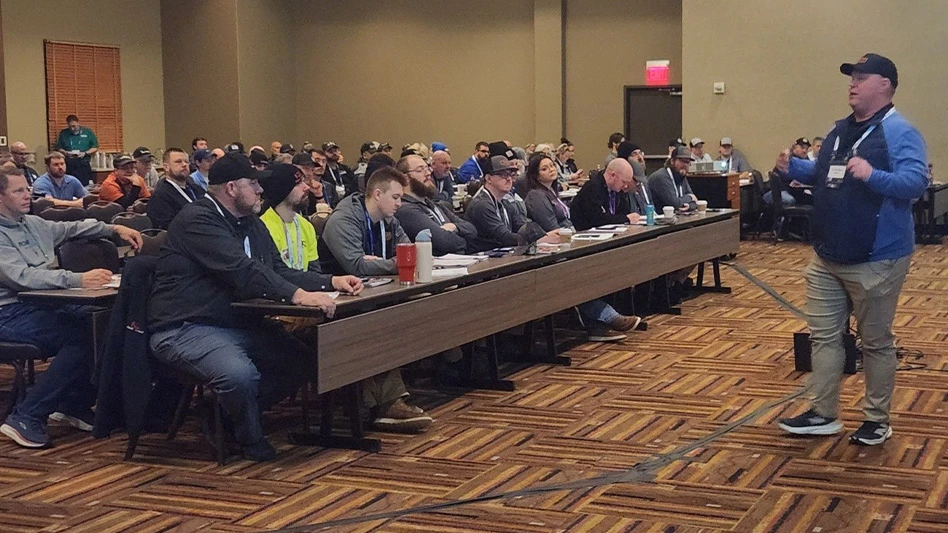
Three representatives from the University of Florida Department of Entomology and Nematology shared their insights at PestWorld 2007 during an educational session about bait-averse cockroach control and treating sensitive environments.
IMPORTANCE OF CONTROL. “If people think we don’t have a problem with cockroaches anymore, believe me, we do,” said Dr. Philip Koehler, professor of entomology. “At one clean out, the infestation was so bad the cockroaches came raining down from the ceiling like a thundershower. And when you have a very severe infestation like that, it can extend into the bedroom, where cockroaches cause problems with sleeping people when they feed around their eyes, noses and mouths.”
In addition to causing mental distress and physical damage in humans, cockroaches can cause allergies and asthma, and transmit potentially harmful bacteria.
More than 10 years ago, an article published in the New England Journal of Medicine studied the role of asthma related to cockroach allergen exposure among inner-city children. The article reported that more than 25 percent of asthma cases were caused by cockroaches. These children missed more school, had a higher hospitalization rate, made two times more medical visits and spent more sleepless nights than other children.
“This was a landmark study that still holds true today. Given the implications of heavy cockroach infestations and their impact on human health, it’s no surprise that there has been an explosion of asthma in this country,” Koehler said.
Koehler also shared results of research conducted by the United States Department of Agriculture and the University of Arkansas, where test structures that had been cockroach free for more than five years were sampled to see if any allergens remained.
“Even after five years, researchers found enough cockroach allergens to kill an allergic child,” he said. “That tells us we not only need to control the cockroaches, we need to remove the allergens they are leaving behind as part of a total pest management service.”
BAIT-RESISTANT STRAINS. Today’s bait-averse cockroaches present additional challenges for pest management professionals, especially when working with sensitive accounts. The first bait-resistant strain was isolated in 1993, when it was demonstrated that although the cockroaches were susceptible to the insecticide, they were resistant or “averse” to the bait. Since then, many other strains have been identified.
“There are two strains of bait-averse cockroaches that are quite famous right now,” said Koehler. “The ‘Bubba’ strain was isolated at Virginia Tech and we identified the ‘Daytona’ strain at the University of Florida.”
Bait-averse cockroach strains demonstrate a significant difference in bait feeding and mortality compared to “normal” cockroach strains.
“In one experiment, we fed the normal and bait-averse strains lab chow and bait. The bait-averse cockroaches gathered around the food vs. the normal cockroaches that gathered around the bait,” Koehler said. “When monitored 24 hours later, all of the normal cockroaches were dead and the Daytona strain cockroaches were hiding in the harborages.”
Based on this information, University of Florida researchers began an ongoing study in 2006 to determine normal and bait-averse cockroach preferences, using traditional gel baits as well as those specifically developed for bait-averse strains. They also wanted to find out if cockroach preferences would change as the baits aged, as well as how quickly the baits would take effect.
Koehler’s graduate assistant, Barbara Bayer, presented the initial findings as well as results after three months.
“The normal strain preferred most of the baits over food,” she said. “Most of the baits killed 92 to 100 percent of the normal cockroaches within seven days.”
While the bait-averse cockroaches avoided certain brands of bait, they preferred both fresh and three-month-old brands of other bait over food.
SUCCESSFUL MANAGEMENT. These results demonstrate the critical importance of removing competitive food sources and strategically placing bait, as well as involving clients in the cockroach management program, according to Dr. Rebecca Baldwin, assistant extension scientist.
“Clients possess the knowledge that is key to your success, so communicating effectively and enlisting their participation is crucial,” she said.
Involving clients during the inspection helps them understand how and why sanitation and exclusion have an impact on cockroach control.
“About 90 percent of any cockroach management program is good client management,” said Baldwin. “They control the sanitation and building repairs, and also know who their vendors are in case you find that new shipments are causing reinfestation.”
For example, soda is shipped as syrup in bags packed in cardboard boxes. The boxes are a more likely to serve as cockroach harborages than soda dispensers. Teach clients to look for fecal smears on any boxes and unpack them outside if possible.
“However, sugar can build up in the dispenser, so advise your clients to have the vendor come out and clean them several times during the year,” she suggested.
Cleaning the establishment prior to placing bait helps remove competitive food sources and disrupts harborages. Old bait should be removed, and when roach populations are high, Baldwin recommends vacuuming with a HEPA-filter vacuum.
“Then when you are ready to bait, be sure you document what you apply, how much you use, and where you put it,” she said. “Proper documentation is important from a safety and a legal standpoint.”
CURIOUS CREATURES. Research by Durier and Rivault in 2002 revealed that cockroaches are curious creatures and as a result, pest control professionals should use that knowledge to their advantage when choosing baits and their placement.
“Cockroaches not only know where to find the good food, they’re curious about their food and like to try new things and foods in varying locations,” she said. “As such, move the bait to another location if the cockroaches are not feeding on it and rotate baits with different active ingredients every one to three months to keep the cockroaches curious.”
MONITOR = MANAGE. Another essential element of any cockroach management program, evaluation, often is also where programs break down, Baldwin said. She encourages pest management professionals to monitor before placing bait to target known harborages, as well as after to monitor consumption. According to the University of Florida data, pest management professionals can expect at least a 90 percent reduction within the first week if bait is placed properly.
“When you go back to monitor, you should only see females, as they only feed for five days within a 30-day cycle,” Baldwin explains. “If you see males or older nymphs, you’ll need to reevaluate the program.”
The author is a frequent contributor to PCT magazine.

Explore the May 2008 Issue
Check out more from this issue and find your next story to read.
Latest from Pest Control Technology
- Earn CEUs from Your State at Next Week’s Mosquito Control Virtual Conference
- Preserving Culture, Providing Opportunities Key in Hoffman’s Decision
- Winter Weather Could Decide How Bad Mosquito Season Gets
- Trent Frazer Discusses How Mosquitoes Survive Winter
- Barnes Exterminating Acquires Tennessee Pest Solutions
- Pest Index Up 9% YOY in January
- Arrow Exterminators Acquires Hoffman's Exterminating
- PMPs Plan Mera Peak Summit for Parkinson's