"It’s really hard to point to any one thing because he’s made so many contributions."
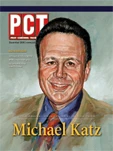
This acclamation on the industry contributions of Western Exterminator Company President Michael Katz was made by NPMA Senior Vice President Bob Rosenberg. Rosenberg has worked with Katz in countless capacities since starting at the National Pest Management Association in government affairs in 1989. But the statement characterizes the thoughts of all the industry professionals who provided input on Katz, a well-known and highly respected individual throughout the industry. And it is this career-spanning and industry-impacting range of contributions, most notably in legislative activities, that made Katz PCT’s 2006 Professional of the Year.
Rosenberg noted that some of PCT’s Professionals of the Year are recognized for a single or specific contribution made the year in which they were recognized. But, he says, "Mike is just the exact opposite. His is a career, a lifetime of contributions to the industry."
In commending Katz’s achievements, Rosenberg prefaced his comments with the "disclosure" that "Mike is my best buddy in the industry." But whether friend or associate, co-worker or peer, every person who gave input on Katz had similar words of praise and agreed with the selection of Katz as PCT’s Professional of the Year.
And, in fact, it is just such friendship-building traits of Katz’s personality — compassion, understanding, communication, conscientiousness, an inherent ability to build relationships and bring people together — that set the base for Katz’s success, and his dedication, diligence and intelligence that shape his achievements. "Mike is articulate. He’s very bright; he’s able to look at complex issues and understand and communicate them," says Western General Manager Debbie Byrne. "I don’t think there’s anyone who would not agree. I go to national meetings with Mike, and it’s hard to get through a room because everyone knows him."
"Even if I didn’t like him personally, I’d still respect him professionally," Rosenberg says, then quickly adding, "But I do like him personally. He’s fun; he’s personable."
With his initiatives and achievements in both business and government affairs creating two almost independent career lines within the industry, Katz’s renown is no surprise to those who know him. His journey has not only taken him from shipper/sweeper to president of the sixth largest pest management company in the United States, it also has led to enactment of regulations that impact the entire industry. "I always said you can only serve one master," says Western COO and past President Roy Ashton, "but Michael is able to do both. He works hard for the industry and for the company."
INDUSTRY CONTRIBUTIONS. Though impressive in and of itself, in many ways Katz’s ascension within the business of pest management simply sets the backdrop for his extensive contributions to the legislative side of the industry. "Mike runs the sixth largest company in the industry — a company which is kind of a trend setter in the industry, so there’s not a lot of time to work on government affairs. But he makes the sacrifice," Rosenberg says. "There’s probably not anything of a regulatory nature in the last 20 years that he’s not been involved with." And with broad Democrat influence in Washington after the last election, having a strong voice from the industry will be more important than ever, both Rosenberg and Katz agree.
When he started in the industry as a clerk for the Pest Control Operators of California (PCOC), Katz had no background in the industry or government or even understood what PCOC was about (it wasn’t in any way a requirement for the position). However, as Katz took on more responsibilities in the office, and got to know the association members, he became interested in its work and joined PCOC and NPMA himself when he went into the pest management business after graduation. Then in 1980, when Katz moved to the Western Exterminator corporate office, he also took on the chairmanship of the PCOC Legislative Committee. "That led to 10 really, really exciting years," Katz says.
PCOC Executive Vice President Harvey Logan worked with Katz "in every capacity" in the 10 years that Katz served as chair. "There were a lot of tough bills in those days," Logan says. "Mike walked a very good line between what the legislators wanted to accomplish and the resistance, if you will, of some members of the association; and he achieved excellent compromise."
Probably Katz’s greatest role, Logan says, was his contribution to the industry’s "maturation process." During the 1990s, there were a lot of association members who had a "kill-the-bill" mentality, he explains. "Mike did a wonderful job in bringing the association around to understand that compromise was needed and the industry needed to mature," he says. "Mike gave a tremendous amount of direction to the association."
Rosenberg has worked with Katz since he started in government affairs; days that held a general negative atmosphere for the industry. For example, the first month or so that Rosenberg was on the job, he was making the rounds on The Hill speaking with various government officials. One Congressman, who once had been a PCO, pointed out another group and noted, "You need to work with those folks because they’re against all the things you’re against." The incident reflects the negativity of those earlier days into which Katz was thrown — but which he was able to turn. "He’s been good at finding a definitive, proactive, positive industry message," Rosenberg says, explaining that Katz was good at finding allies, then bringing people together in cooperative efforts. And it is an aptitude that Katz continues to demonstrate and is able to communicate at all levels.
"One of the things we ask Mike to do often is to be the face of the NPMA government relations program," Rosenberg says. He represents the industry to EPA, state regulators, OSHA and other such governmental bodies.
"The funny thing about Mike," Rosenberg adds, "is he’s the most unassuming person imaginable. He hates to speak publicly. But he’s one of the best speakers I know. People hang onto every word — not because of the rhetoric but because it’s heartfelt."
In 2000, both Rosenberg and Katz were named by PCT magazine as two of the industry’s 25 most influential people. The paragraph on Katz opened: "As chairman of NPMA’s Government Affairs Committee for the past decade, Mike Katz has probably extended more effort than any other PCO in the area of presenting the industry’s story to regulatory and government officials across the nation." Following this statement was a quote from Rosenberg, who was then director of government affairs for NPMA, noting of Katz, "He’s provided the wisdom and leadership to keep us on the right course."
Rosenberg says he would make the same statement of Katz today. "He was then and is now a very positive person that people respect. He provides the kind of leadership the industry needs."
"There’s not any time of the day, month or year that Mike’s not available to work through an issue. That’s just how he is." And yet, Rosenberg adds, "Mike will only agree to do things that he feels he can do well and completely. I don’t know a more competent or diligent person. Period."
GIVE AND TAKE. Katz says that his early years with PCOC taught him a lot about compromise and consensus building, particularly, he says, "how to go about getting things of importance, not necessarily in totality but what you really need to accomplish." Katz gave the example of the first piece of legislation with which he worked: Assembly Bill 294. At that time, he says, there was a great deal of jurisdictional overlap in California, with regulations coming from various government entities, such as the Department of Food & Agriculture and the Structural Pest Control Board, making business conditions difficult for PCOs. The bill, which defined areas of jurisdiction, responsibilities and authority for each, created a non-overlapping structure and is still in effect today.
Another example Katz gave was that of the California notification bill. Although this is common today, it was revolutionary at that time and frightened a lot of PCOs. In fact, Katz says, "the first draft was pretty ludicrous," requiring notification to anyone within 1,000 feet, 48 to 72 hours prior to application, in any language needed for understanding. Originally, he adds, the author of the bill was unwilling to talk about any compromise, but after Katz and Harvey Logan discussed the issues with them, the author gave Katz and Logan the parameters of what he wanted to accomplish and told them to go back and write the bill to fit and he would sign it. The draft they provided became law.
Just this year, Katz’s involvement in helping California legislators understand the inadvisability of a proposed rodenticide regulation made headlines in California and inroads for the entire industry. The legislation under consideration would have imposed strict regulations on exterior uses of second-generation, anticoagulant rodenticides. Katz, with Rosenberg and NPMA Manager of Government Affairs Gene Harrington — both of whom Katz gives a great deal of credit — were able to persuade the California Department of Pesticide Regulation to adopt a more industry-friendly solution that can serve as a national model.
Though many of Katz’s legislative accomplishments are California based, with the state being a strong leader in pesticide regulations, there has always been significant potential for repercussions across the industry. "If it happened in California, it could eventually happen elsewhere," Katz says.
"There is still a highly vocal segment (of the population) which would be happy if we weren’t here or we were without tools," Katz says. With NPMA as the only national organization representing our industry before hitting the government level, he adds, "We’re in a battle; it’s an ongoing war. There is a whole segment of our population who fears pesticides. So we have to strive for balance constantly."
Despite this, Katz sees the industry as moving in a very good, strong direction. "People don’t want to live with pests, so there’s always opportunity in this business," he says. "How we go about doing this is what determines failure or success."
INTROSPECTIVE. While Katz’s peers rave about his accomplishments and character and are thrilled that he has been named Professional of the Year; and Katz himself can provide numerous examples of legislation in which he’s had a hand and will talk about Western and its growth and its people as long as you want to listen; he is, however, a bit more reticent to hype himself.
"I’m really honored and very humbled by the award," Katz says. "It’s hard to think of yourself as one who does outstanding things, so it surprised me." Especially when he thinks back, and realizes the hand that fate plays in our lives, he says, with his being dealt through a simple 3x5 card that changed his life. "Opportunity is always around you, but at the same time it just gives me the sense that some things are meant to be," Katz says.
The author is a frequent contributor to PCT magazine. She can be reached at llupo@giemedia.com.
-------------------------------------------------------------------------
3x5 Card Deals Destiny
t was actually a chance 3x5 college job-board card that brought this year’s PCT Professional of the Year into the pest management industry at the age of 19. Following his dad’s advice to take a part-time job during a light quarter, California State University-Los Angeles freshman Michael Katz checked out the college job board and decided the shipping/sweeping job at the Pest Control Operators of California (PCOC) office looked as good as anything else.
Little did he know that his nature would soon expand the job to assisting in the preparation of educational materials, working with members and taking the reins when Executive Secretary Phyllis Cartwright fell seriously ill from cancer. Nor did he know that this introduction to the pest management industry would lead him to his position as president of Western Exterminator.
Working His Way Up. Working 30 hours a week at PCOC his last two quarters at CSU, Katz graduated with a major in journalism, a minor in history and a dream of being a sports reporter. Because of the writing he had done and awards achieved, Katz was hired right out of school as a sports editor — until the hiring editor realized that Katz’s work was for university publications and revoked the offer, claiming that the work was therefore not professional. Somewhat soured on journalism, Katz then accepted a public relations position at the company of a PCOC member with whom he had become friendly while working with the association. Once again, he took on more than the original job description and assisted in the running of the pest control business.
It was in 1979, after Katz had been in the industry for almost 10 years, that Western Exterminator purchased the business for which Katz was working at the time, and Katz joined the company with which he was to spend the next 27 years (and counting). Brought in as a salesman in Western’s flagship office, Katz quickly assimilated himself into the company and the culture. Right from the start, says Western COO and Past President Roy Ashton, Katz was "fantastic." He integrated himself well with the sales and service teams, got along with all groups and was a strong manager, able to implement initiatives while communicating the how and why to those involved. "He is a good people person, and that’s what builds companies," Ashton says.
Over the next several years, Katz moved up in the company, reaching general manager in 1990. "Michael was a natural for the job as general manager," Ashton says. "I wanted someone who would continue the family aspect of the company and be able to manage it. Michael has done that very, very well." In 2000, Katz was promoted to president. "I don’t think there’s anybody in the industry that could run Western the way Michael’s doing it now," Ashton says.
As president, Katz’s primary goal is to continue the growth of the company and to "try to maintain the family atmosphere as much as possible even though that becomes harder as you get bigger," he says. "It’s critical.
"Companies have personalities, just like people," Katz continues. And a company’s people — which, he says, are what any company really is — learn to depend on the consistency of that personality. In fact, Western has a number of families working within it — some with six or seven members in different parts of the company. While some firms shy away from such relationships, Western sees it as a positive aspect of its growth. "More often than not, those things give you strength and continuity," Katz says.
As a leader, says Western General Manager Debbie Byrne, Katz is well respected both within the company and in the industry. "He’s a very strong leader; very decisive. He doesn’t hesitate to make decisions." However, she adds, "he is also a very compassionate person; very understanding of people as people."
Or, as Ashton put it, "He’s just one hell of a guy."
--------------------------------------------------------------------------------------------------------------------------------
Explore the December 2006 Issue
Check out more from this issue and find your next story to read.