Negative connotations related to urban sprawl can range from increased traffic to pollution to a sense of loss of a simpler way of life. Also included are the destruction of habitat and the displacement of many animals. These creatures invade yards, searching for food and shelter, and may even find entry into homes or businesses.
At this point, a person’s natural fear of wildlife kicks in, said Jerry Smith, co-owner of Dial Pest Control, Montclair, N.J. He explained that the homeowner just wants the animal removed immediately, and cost is less of an issue. For those already in the pest control industry, resolving a situation and calming the owner are part of the job. Could adding wildlife management services be a natural extension for such companies?
START-UP COSTS. A decision to add wildlife management services to an existing pest control company involves careful scrutiny. As Jim Vaive, president of Columbus, Ohio-based Varment Guard said, dealing with animals is entirely different from pests. "Animals think — sometimes better than humans," he said, "and the business is sustained through an ongoing learning process."
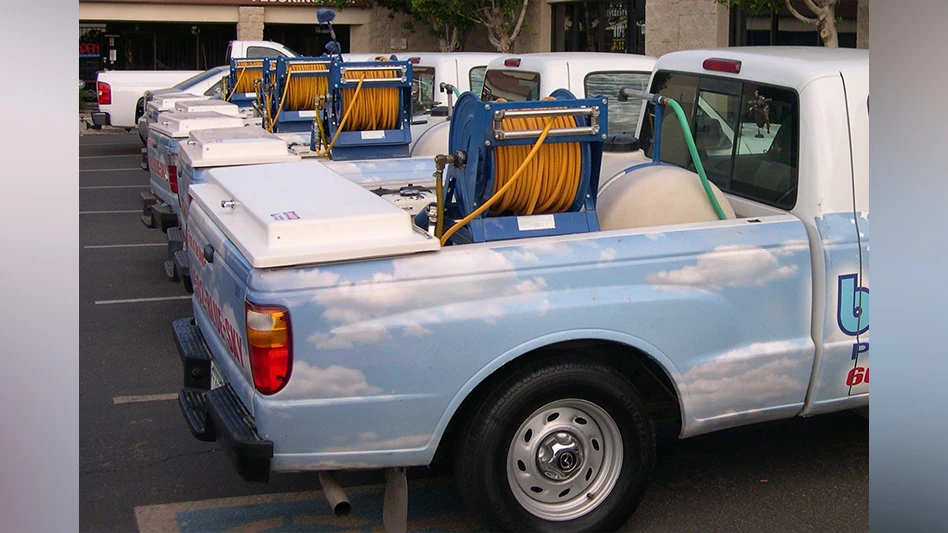
In addition to education, a company must invest in applicable equipment. Vaive said that a full-size truck with a custom cap is crucial, along with various sizes of ladders, traps and ancillary equipment. "I’d estimate the cost of outfitting one truck, with the cost of the truck included, to be $30,000," he said.
A concern of Vaive, echoed by Smith, is the ability of pest control companies to exhibit the same professionalism in the new venture. Wildlife management companies may operate under even stricter regulations than the pest control industry.
REGULATIONS. Vaive pointed out differences in the permit process. "In pest control, a person passes tests in various areas, and receives one license from the state," he said. "However, for wildlife control, in some states, an operator must have a federal permit. If birds of prey are transported, a raptor permit is needed. A carcass removal permit is required to euthanize and transport dead animals. A state permit, as well as a city permit in some states, is also mandatory," Vaive said.
Michael Dwyer, president of Critter Control, Columbus, Ohio, and regional director of the National Animal Damage Control Association, said he feels regulations should be reviewed and overhauled. He says many state laws are antiquated and the industry must champion modern regulations.
In order to raise the professionalism level of wildlife management companies, Dwyer said he believes three areas should be addressed at the federal level: animal handling, uniform testing and licensing, and the implementation of mandatory insurance requirements.
Gene Chafe, general manager of Senske Pest Control Company, Kennewick, Wash., is a PCO also deeply involved in regulatory issues. He has worked with the National Wildlife Services Advisory Committee, a coalition of approximately 25 stakeholder groups. The committee’s groups focus on issues of aquaculture, ranching, tribal entities, animal rights and pest control.
Chafe said that the committee has a two-fold objective: The group has established a dialogue with the federal government that has grown into a working relationship, replacing a secretive and combative past. In addition, dialogue with other stakeholders pertaining to common interests is opening up opportunities.
NEW OPPORTUNITIES. Any PCO considering adding wildlife management services will be faced with the choice of an appropriate approach or a combination of approaches with the animals.
"Twenty-five years ago, the industry mostly used toxic means," says Russ Ives, president, Rose Pest Solutions, Troy, Mich. "Today, operators can use structural modifications, repellent techniques, trapping or other creative, non-lethal approaches to avoid regulatory problems."
If an animal is trapped, the operator must make a decision between euthanasia and release. According to Vaive, most animals released will not survive in the wild and will die. If euthanasia is the preferred method, the operator must use gasses approved by the Veterinary Association of America. A euthanasia chamber on the company’s premises, away from customers or neighbors, is preferred.
Additional technician time will be needed if trapping is used, since the trap will need to be inspected daily. Problems can arise if a non-target animal, for example the neighbor’s cat, is trapped. Dwyer said he believes that communication and customer service skills are almost as important as learning the technical side of the business. Many wildlife management control companies elect to only operate through exclusion methods, and still have a lucrative business.
The humaneness issue is highly emotional. In a survey conducted by Dwyer’s company, 88 percent of the respondents indicated that humane treatment of the animals was very or moderately important to them. The problem lies with defining "humane." Some assume it means a non-lethal response, but Dwyer points out that some cage traps may not be humane.
The National Humane Society, according to Chafe, is also a member of the National Wildlife Services Advisory Committee, and champions issues related to urban pests such as raccoons, skunks and deer. The group opposes the use of glueboards for rodent control, and is the organization most likely encountered in any debate regarding pest control or wildlife control regulations.
Another interesting statistic from Dwyer’s survey showed the majority of respondents believed in lethal control of rats, mice, moles, bats, snakes, pigeons and skunks, but not deer, geese, woodpeckers, squirrels and raccoons. He likens this to the "Disney factor" — the cuter the animal, the less likely humans want to see it harmed.
A decision to add wildlife management control services involves many factors, and not all pest control operators may be able to successfully integrate these services into their existing companies. However, with an emphasis on education, the proper equipment, a professional attitude and patience, this sector can be a lucrative option.
The author is a frequent contributor to PCT magazine. She can be reached via e-mail at dtaylor@giemedia.com.

Explore the September 2005 Issue
Check out more from this issue and find your next story to read.
Latest from Pest Control Technology
- Suburban Pest Delivers 117 Books Through Its Book Drive
- Anchor Pest Discusses Billboard Marketing
- MGK Expands Coverage Through New Appointments
- Pest Pros Acquires Eagle Pest Control
- Clicki Referrals Partners With Denaro AI
- Beyond the Pest | Ep. 9 — Dr. Stan Cope
- Pro-Shield Nsulation: A New Frontier in Pest Control
- Pat Hottel Reflects on 90th Purdue Pest Management Conference Theme and History