Romolo Tavani | AdobeStock
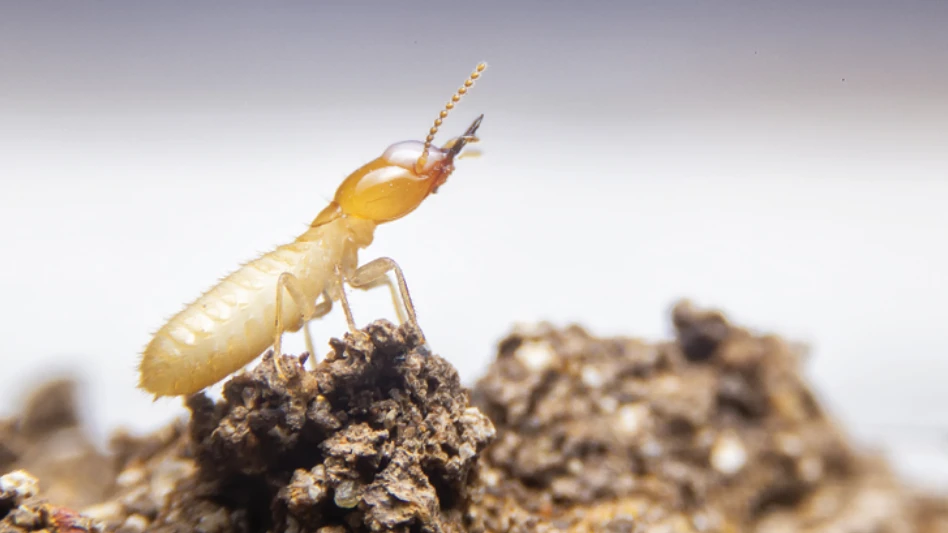
In a termite colony, there are workers, soldiers and reproductives. The workers make up the majority of the colony and do most of the work. Their roles include taking care of the queen as well as feeding and maintaining the young. Reproductives are responsible for mating, starting new colonies and continuing the current one. Finally, there are soldier termites. Soldier termites often do not get a lot of credit for their unique characteristics among the various termite species. This article is for them, the protectors and defenders of the colony.
COLONY DEFENDERS. Soldiers, as their name implies, are responsible for the defense of the colony. They have large sclerotized heads that they use for defense and we will explore further how they use these to defend colonies. Soldier termites also use a method of colony protection known as headbanging. These headbanging alarms vibrate through the walls of termite tunnels at about 130 meters per second and send an SOS to other members of the colony. Specifically, they are used to alert other soldier termites that it is time for battle (i.e., there is a threat to the colony). These alarms not only alert other soldiers but also give a precise location of the danger.
Soldier termites defend by using the exaggerated mandibles on their heads; however, depending on the colony, the exact method of defense and head shape will differ. Research from Prestwich in 1984 grouped soldier termites into four categories of defense mechanisms: phragmotic, mandibular, salivary and frontal. They were then further grouped based on their ability to chemically or mechanically defend their colony with their head. Prestwich grouped their defense mechanisms into nine different methods: phragmosis (using the head to plug entry), crushing mandible, slashing mandible, piercing mandible, glue squirting, daubing brush, symmetrical snapping, slashing, snapping and an asymmetrical snap.
A CLOSER LOOK. I don’t know about you, but I find it incredible that the tiny termite has such diversity not only in appearance but also in defense methods among the various species. Let’s look in a bit more detail at the different defense mechanisms that soldier termites use. Phragmotic soldiers have short mandibles and blunt heads that are used as an effective barrier to block gallery entrances into wood. Most of the species in the family Kalotermitidae use these mandibles. Crushing is considered a plesiomorphic condition and may or may not have a chemical association. Crushing mandibles are serrated and robust. Soldiers of these colonies are in low abundance and sluggish.

By comparison, termites with slashing mandibles have more slender, straighter, longer mandibles with greater angular motion. Termites with piercing mandibles have slender mandibles that are inwardly curved with prominent teeth. Piercing motions may be accomplished in conjunction with chemicals. Termites in the glue squirting category have what is referred to as mandibular regression, meaning they have developed an ejected terpenoid secretion instead of mandibles. Daubing brush soldiers also have a mandibular reduction and they defend with a topical application of lipophilic contact poisons.
The final three defense methods include different snapping functions. Symmetrical snapping termites store energy in an elastic distortion of the mandible and release it abruptly to strike a percussive blow. They are most effective in confined spaces where the soldier blocks the entry hole. As the naming suggests, slashing/snapping termite soldiers have mandibles that both snap and slash. Finally, the last method, the asymmetrical snapping termites, involves soldiers with highly elastic mandibles that allow lateral blows to be delivered only to the left.
There are also some species of termites that use not only their mandibles but also chemical defenses. Most of these chemical defenses are achieved through the fontanel, a small gland located on the front of their head. There are three main types of chemical defenses in termites (1) biting, with the injection of an oily or toxic material into the wound; (2) brushing, with the topical application of an irritant or contact poison onto the cuticle of an attacker; and (3) glue- squirting, in which a secretion is ejected at an aggressor. For example, Formosan termites (Coptotermes formosanus) and other species of Coptotermes, release a white sticky liquid from their gullet when they bite. However, research has shown that the release of this liquid while biting will cause their jaws to lock because of the extreme amount of energy used. Oftentimes they will not be able to unlock their jaws, but when they do it is likely a death sentence due to a lack of energy.
NEW PERSPECTIVE. So the next time you are looking negatively upon our little wood-eating “friends,” just remember how they employ a variety of defenses against threats to their colonies. As we often find when we take a look at insects more closely, they have a lot of highly developed features that will help them to better function and survive in a world that is much bigger than themselves.
Explore the February 2026 Issue
Check out more from this issue and find your next story to read.
Latest from Pest Control Technology
- Arrow Exterminators Acquires Hoffman's Exterminating
- Earn CEUs at Next Week's Mosquito Control Virtual Conference
- NCPMA Graduates New Premier Technicians
- Pest Management Foundation Announces New Scholarships
- Coast Releases Report on Fuel Spend
- WPCA Hosts Midwest Pest Con
- Google Ads Mistakes That Cost PCOs Thousands
- Zach DeVries Details his Cockroach Research, Importance of UK Short Course