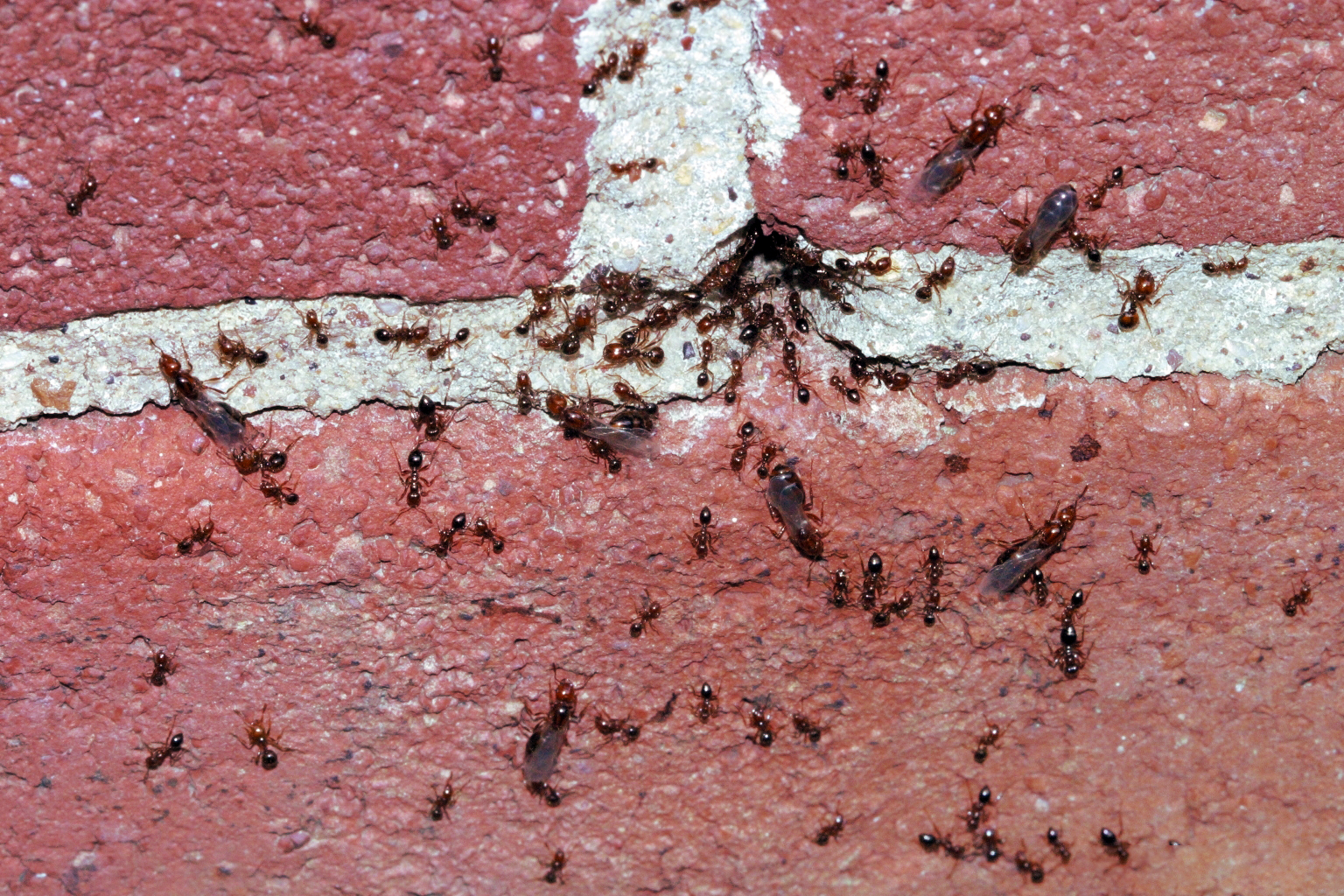
Perimeter pest control is part of every pest management program, but it is especially important in residential accounts. Treating the exterior helps block the most common structural pest, ants, before they enter a structure.
Ants are one of the leading reason customers call for new pest control services, and they are also the top cause of callbacks, according to Cory Goeltzenleuchter, director of technical services for the Northwest Family of Brands. Fire ants alone are estimated to cause as much as $5 billion in annual damages, medical treatments and control costs in the U.S., USDA-ARS reports.
Goeltzenleuchter leads training, safety, fleet and oversees the technical team at Northwest Exterminating. He is also a founding member and past president of the Urban Pest Management Technical Committee and is a board certified entomologist (B.C.E.).
In a MGK-sponsored PCT Pest Lessons webinar, “Perimeter Ant Control,” Goeltzenleuchter shared strategies pest management professionals can use to limit ant access and target treatments more effectively.
THE ANT PROBLEM. Ants pose a dual challenge. Some species are native to specific regions, while others are invasive. Of the roughly 12,000 ant species worldwide, five are listed on the Global Invasive Species Database, which is an index of the world’s most destructive plants and animals. These invasive ants include the little fire ant, red imported fire ant, big-headed ant, Argentine ant and yellow crazy ant.
Those species often enter the U.S. through shipping containers at major ports, from Seattle to Los Angeles and from Florida to New York and New Jersey. Shipments then spread inland through crates and packages, transporting ants to places they would not otherwise reach.
Controlling ants is also more complicated than managing many other crawling insects because of their social structure. Ant colonies function like families, with different members performing different roles.
“Ants are responsible for caring for one another, putting food on the table,” Goeltzenleuchter said. “I really think about [ant colonies] as your own families within your home. That’s how ants differ from cockroaches. There’s a reproductive division of labor. Some workers forage, some tend the eggs. The larvae are very important. When we talk about recognizing different species, this is also how we’re going to maintain control.”
CRITICAL IDENTIFICATION. The first step is identifying the level of the problem: Are ants merely a nuisance, or are they biting or stinging residents?
Ants may have one or multiple nests, sometimes both inside and outside a structure. Some technicians use a strategy of drawing ants out of the building to treat them more effectively.
Food preferences also change, sometimes seasonally and sometimes based on colony needs. “Whether they’re shifting from sugars to fats to proteins, they might shift at a different time of year,” Goeltzenleuchter said. “They also might shift based on the needs of the colony.”
That is why he recommends using multiple bait types, especially gels, at the start of a service. “Give them a smorgasbord of different baits to see what they’re truly going to feed on before you place one solid product across the entire account,” he said.
Customers and call center staff also play a role in treatment success. Many homeowners try to address ant problems themselves, sometimes washing away active trails with water. That can make it difficult for technicians to trace the ants’ path.
“For [customers], it’s like, ‘I tried to treat it, but I’m going to call you,’” Goeltzenleuchter said. “Then we come out and there’s nothing there for us to see, and it’s really difficult to determine how those ants are moving around that property. This is why I always recommend to our folks who answer the phones to instruct the customer to leave the trailing ants alone!”
CONTROL TIPS. Let’s take a closer look at commonly encountered ants and perimeter control tips.
Pharaoh ant. One of the most difficult indoor ants to control, Pharaoh ants nest inside homes and can spread by budding, where queens and workers split off to form new nests. They are attracted to warm areas, including electronics, and do not always follow predictable trails.
Recommended approach: Treat the entire home, cover wall voids and take a 30,000-foot view of the infestation.
Argentine ant. Invasive and non- stinging, Argentine ants are a common urban and ornamental pest. They often nest in yard litter and can form massive colonies with multiple queens and nesting sites, making them hard to eliminate.
Recommended approach: Reduce entry points by sealing cracks and crevices, follow strong indoor trails to locate nests, and use outdoor baits after tracing the path from the inside out.
Red imported fire ant. Fire ants are aggressive and deliver a painful sting. Their nests are visible, rounded domes, and they often outcompete other species. They are a common source of litigation in health care facilities, where patients may not be able to respond to stings.
Recommended approach: Broadcast baiting is typically most effective. For indoor fire ant sightings, liquid treatments may be necessary depending on state regulations. Prevention is also essential to keep ants from entering the structure in the first place.
Big-headed ant. This invasive ant often resembles a termite infestation because it nests in soil and leaves dirt trails. It can travel far from a structure, sometimes more than 500 yards, and can displace other ants.
Recommended approach: Use multiple product types and treat beyond the structure itself. Monitor carefully and follow trails before treating.
Odorous house ant. Highly adaptable, these ants can nest in shingles, bark and other outdoor environments. They emit a rotten coconut odor when crushed and can move nests frequently. They can bite but do not sting.
Recommended approach: Inspect thoroughly, especially in kitchens where food sources draw them. Prevent entry by addressing sanitation and sealing access points. OHAs feed on sap- producing insects such as aphids; controlling those pests can reduce ant pressure.
Carpenter ant. Carpenter ants excavate wood for nesting but do not eat it. There are more than 900 species worldwide. They can be mistaken for termites and are most active at dusk.
Recommended approach: Ask homeowners to inspect at night with a flashlight. Because daytime activity can be minimal, nighttime observation helps locate trails and nesting sites. Gel baits and targeted interior treatments can control activity, but finding the nest is key.
Tawny crazy ant. These ants, once called raspberry ants, form large super- colonies and are common in Gulf states. They spread by budding and may leave piles of dead ants near nests.
Recommended approach: Use multiple treatment methods and establish several barriers around the structure and property line. Liquid baits can be effective, but control is often about reduction rather than elimination. Regular servicing may be required.
BAITING AND EXCLUSION. Baiting is effective because many worker ants cannot digest solids. They feed solids to larvae, then share food through regurgitation, known as trophallaxis. That is why finding the colony and following trails is essential.
“Follow trails, draw them out and find the source,” Goeltzenleuchter said. He also stresses sanitation: eliminate food and trash sources so ants have no reason to enter the structure.
FINAL THOUGHTS. Perimeter ant control is essential because it creates a barrier that prevents ants from entering structures. Technicians can improve results by tracing trails, using multiple bait types and addressing sanitation and entry points to keep colonies from establishing inside.
Explore the March 2026 Issue
Check out more from this issue and find your next story to read.
Latest from Pest Control Technology
- Certus Acquires Termio Pest Control in Arizona
- The Alliance Releases 2025 Annual Report, Showcasing Growth
- David Poplin Discusses Military Experience and How it Applies to Pest Control
- David Poplin Named PestVet of the Year
- Consulting Biologist Dan Collins Details Approaches to Effective Rodent Control
- Massey Announces the Promotions of Campbell, Graham
- BOM Hosts Dinner at NPMA Legislative Day
- Rear Admiral Scott Moore Shares Five Essential Leadership Principles