While putting the finishing touches on this month’s issue, I took a break to peer out my office window and I saw something I hadn’t seen in what felt like was forever — green grass! According to National Weather Service data, the depth of snow on the ground at Cleveland Hopkins International Airport (our local airport) dropped to zero on Feb. 15, snapping a 31-day run with measurable snow on the ground.
For many of PCT’s readers, this frigid, snowy winter has been one for the ages. It got our staff wondering how pests and businesses have been, and will be, impacted this spring. In a reader poll, we asked: How has this winter’s frigid temperatures impacted rodent activity in accounts you service? Melissa Arnold, owner of Horizon Pest Solutions, New Cambria, Kan., commented: Rodents are confused. Our weather and temperatures have been all over the place: 70s, 30s, 60s, sub-zero. Rodent activity in our grain accounts is reflecting that.
Speaking of rodents, we asked PCT’s new digital editor Patrick Rhonemus to interview Natasha Wright, technical director and entomologist at Braman Pest Elimination, Agawam, Mass., about how rodents can find refuge from the cold in unused vehicles. “Rodents are really small mammals,” she said. “When you’re really tiny, you lose heat very rapidly and hypothermia is a real risk. Vehicles and garages are protected from harsh elements. It’s like being out in the wilderness and you stumble across an abandoned cabin.”
Wright said the small spaces found in vehicles and garages provide protection from predators, giving even more reasons for small mammals to move in when temperatures drop. Engine bays and cabin air filters, especially, seem to be common places based on her personal experience, as well as anecdotes she’s heard from colleagues, she said. (Read the full story).
Not even usually warm, tropical Florida has been spared from this winter’s chill. In recent years, an invasive pest that some Florida pest control companies have been called on to remove are iguanas. In typical winters, these reptiles have found Florida’s climate to their liking. Not this year. In late January, southern Florida experienced temperatures around 45 degrees Fahrenheit and lower, which caused thousands of iguanas to become cold-stunned, a hibernation-like state.
Rhonemus interviewed Humane Iguana Control President Michael Ronquillo. Ronquillo explained that if an iguana falls from a tall tree and lands on concrete, it will most likely not survive the fall, but if it lands in a bush or on soft grass, it can survive. He also noted that a female iguana can lay up to 70 eggs a year, which could bring the population back to what it was prior to the cold snap depending on how many iguanas survived.
Also of interest to PCT is how the cold winter is impacting business. In reviewing Rollins’ fourth quarter and full year 2025 performance during a February conference call, Kenneth Krause, executive vice president and CFO, said erratic and unusually early winter weather had a negative impact business in the fourth quarter, “specifically on one-time business and seasonal work across all three service offerings in certain pockets of the country.”
Krause cited suppressed pest activity, reduced customer need for one-time treatments and disruptions to the company’s ability to perform certain services such as wildlife control. As a result, Rollins reported that one-time business declined nearly 3% in the fourth quarter after growing 4% through the first nine months of 2025.
It will be interesting to see how Rollins and other pest control companies will be impacted and how they will bounce back. Whether it’s rodents searching for shelter, iguanas recovering from a cold snap or customers calling with renewed service needs, history shows that both pests — and the pest control industry — are remarkably resilient and ready to rebound when warmer days arrive.
The author is editor of PCT magazine.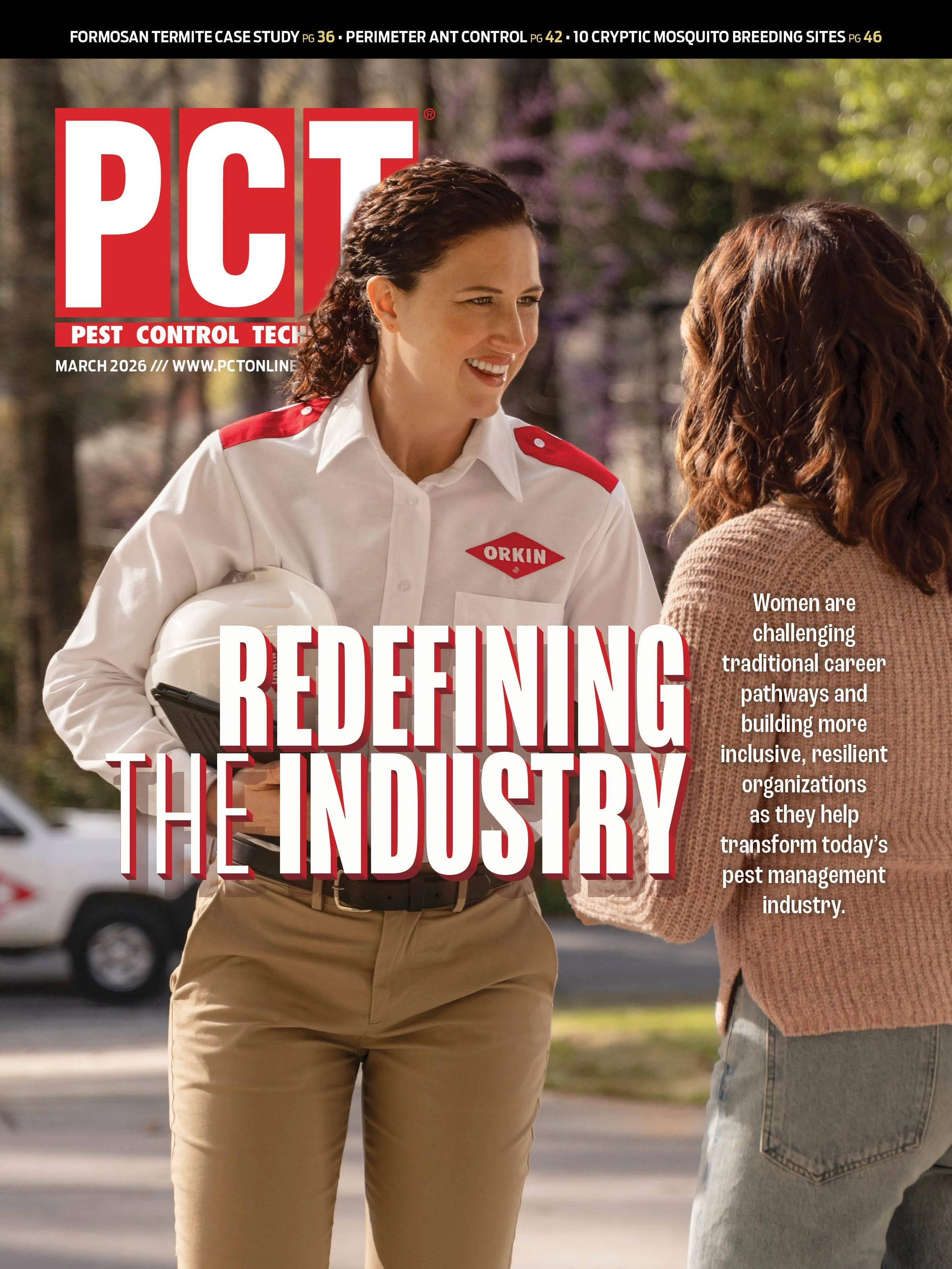
Explore the March 2026 Issue
Check out more from this issue and find your next story to read.
Latest from Pest Control Technology
- Certus Acquires Termio Pest Control in Arizona
- The Alliance Releases 2025 Annual Report, Showcasing Growth
- David Poplin Discusses Military Experience and How it Applies to Pest Control
- David Poplin Named PestVet of the Year
- Consulting Biologist Dan Collins Details Approaches to Effective Rodent Control
- Massey Announces the Promotions of Campbell, Graham
- BOM Hosts Dinner at NPMA Legislative Day
- Rear Admiral Scott Moore Shares Five Essential Leadership Principles