Most pest management professionals I’ve talked to said they didn’t seek out the pest control industry — it found them. Even though I’ve loved insects since I was a kid and studied entomology as an undergraduate, I never thought pest management would be in the cards for me. In academia, the pest control industry found me!
I was hired as a technical specialist by Rose Pest Solutions in June 2024, equipped with an entomology degree and lots of knowledge about pest biology, but almost none of what this industry truly entails. The real-world problems of the industry are vastly different and not as predictable as what I learned in class. Entomology is a very important aspect of pest control, but it doesn’t begin to scratch the surface of the industry as a whole. To put it plainly, this transition has been DIFFICULT. It’s overwhelming to feel like you’re being thrown into an industry you only know a small part about — I felt some imposter syndrome. Slowly but surely, and with the help of some of my colleagues at Rose, I’ve been able to adjust and build my confidence. Here are five key factors that helped ease my transition.1. Take a Walk In Someone Else’s Shoes.
Something I will ALWAYS be thankful to Rose for is my ride-along experiences. In late July, a month after I started, I participated in ride-alongs with service and sales professionals until the end of September. Being dropped in the middle of a PMP’s workday forced me to learn by experiencing pest control calls. I was interacting directly with customers and, in some cases, actually helping conduct a service. I walked through service calls and spent one-on-one time with colleagues while driving from one job to another. With every ride-along and car conversation, I was building an understanding of their very important role and respect for the person in that position.
2. Find Genuine Connections.
Due to all the amazing connections that my company has in the pest control industry, I had the opportunity to meet and talk to five influential, experienced women in this space. I entered these conversations with an open mind and tried to learn all I could. Some of these women came from backgrounds very similar to mine, but some didn’t. I learned a lot about the weird ins and outs of pest control by simply talking to these women and seeing where these conversations went. No pressure, just genuine interest and learning. I got a chance to meet with Faye Golden, former NPMA president and director of governmental affairs at Cook’s Pest Control. While listening to her detail her journey in the pest management industry, she gave me a piece of advice that really stuck with me. She urged me to be constantly advocating for a seat at the table. That was beneficial advice for me as a woman in the industry, as well as someone transitioning from academia. I really didn’t know about any of the opportunities that were sitting just under my nose until I inquired about them and advocated for myself.

Working as an entomology intern in 2023 at the Indiana Department of Health, where examining mosquito specimens found in surveys throughout the state of Indiana was one of her tasks. ©Allison Beach

3. Go To Events & PARTICIPATE!
I attended many events during my first year in the industry that definitely took me out of my comfort zone. These events helped me become more confident in this brand-new position, as well as challenged my narrow idea of what a pest control professional really does. I met local colleagues in the industry by attending state pest control association meetings in states we primarily operate in (Indiana and Illinois). I visited my alma mater and was able to experience the Purdue Pest Management Conference as an attendee instead of a student! I learned that these events can be very beneficial or unproductive; it depends on your mindset coming in. They are truly what you make of them! The first state association meeting I attended was exactly what I made it; I didn’t participate much or seek out many new connections. When I put more into these events, I got more value out of them. I’ve attended two conferences that exposed me to this industry on a national scale. The first was NPMA’s Women’s Forum in May, and I was able to meet some of the women I had been talking to in person. It was astonishing to see what a wonderful community of women I was being welcomed into so early in my time in pest control. Lots of women I met there came from very similar backgrounds as I did, and I received priceless advice on how to further my career as a woman in an industry that has been male-dominated from the beginning. Also, I attended NPMA Academy in July, which was unlike any professional event I’d experienced and pushed me out of my comfort zone A LOT. I was playing on a team with total strangers and participating in some very unexpected activities. Doing some non-serious things like a halftime cheer routine during flag football or competitive relay races immediately forced everyone to put their professional guards down and connect as humans — not as whatever position we held in the industry. I was able to make some very genuine connections with my fellow teammates and bring valuable information back to Rose.
4. Don’t Be Limited By Your Job Description.
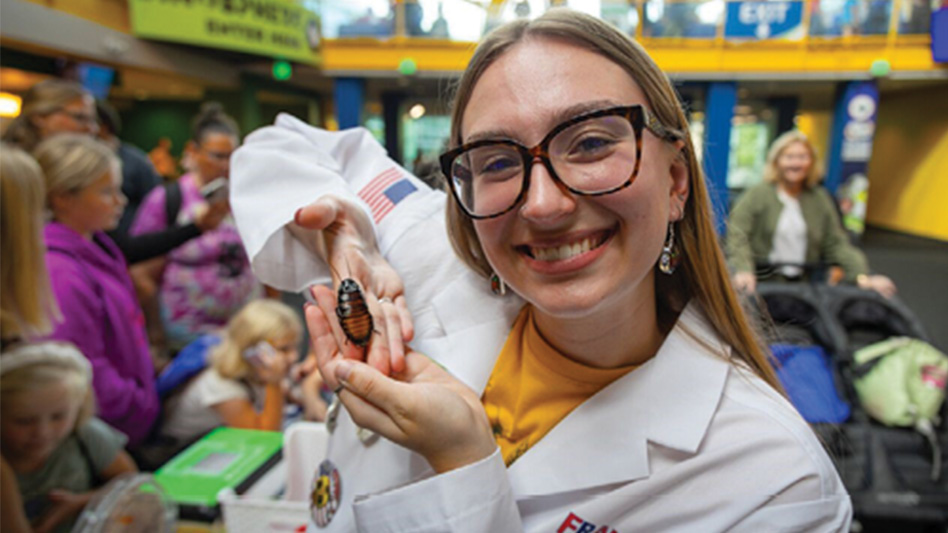
Saying yes to opportunities that didn’t always fit my job description has helped me become more well-rounded in my current role. Rose does a lot of work with local STEM (science, technology, engineering and math) groups as well as pollinator organizations to show potential customers that pest control CAN be sustainable and environmentally responsible. During these events, Rose also advocates for IPM (Integrated Pest Management), and educates about STEM jobs within our industry (primarily where I come in!). Some of my job’s favorite moments have been just chatting and getting to know potential customers and inspiring kids to interact with bugs and maybe appreciate them more. I wouldn’t have had these awesome interactions if I limited myself to just the internal duties my job description told me I SHOULD be doing.
5. Admit You Don’t Know.
I had my share of VERY humbling moments my first year in the industry. However, I am still and will ALWAYS be a believer that there truly are no stupid questions. It’s simple, but so effective to acknowledge peoples’ humanity in this way, while making space for any and all curiosities. One example of a humbling moment was when I discovered that people in the Chicago area called Oriental cockroaches “water bugs.” I spent an entire service thinking we were controlling actual water bugs, not a common indoor pest. I was a little embarrassed, and we shared a laugh, but it was okay because I asked and LEARNED. I think admitting I didn’t know things during ride-alongs brought me down to earth and helped me connect with service professionals better than if I just kept my curiosities to myself and let my pride get in the way.
Still Learning.
My full transition from academia to industry is far from over. Maybe it never will be. I still have multitudes to experience and learn, but the tools I shared allowed me to build confidence in my abilities and in my professional position during that first year.
Explore the November 2025 Issue
Check out more from this issue and find your next story to read.
Latest from Pest Control Technology
- Terminix Strikes a Chord With Preventative Push in New ‘Ahhh’ Campaign
- Company Compassionately Solves a Severe Rodent Infestation
- Earn CEUs from Your State at This Week’s Mosquito Control Virtual Conference
- Jody Green Talks Ticks at Purdue Conference
- Truly Nolen Pest Control Promotes Freize, Hackett
- Preserving Culture, Providing Opportunities Key in Hoffman’s Decision
- Winter Weather Could Decide How Bad Mosquito Season Gets
- Trent Frazer Discusses How Mosquitoes Survive Winter