Hundreds of pest management professionals traveled to the 2025 University of Kentucky Short Course, Nov. 3-6, in Lexington, Ky., to gather industry knowledge and learn about future trends in pest control to better serve their customers, business and employees.
Vendors also exhibited, sharing their latest pest control products, technologies and services.
The conference was hosted by UK’s College of Agriculture, Food and Environment and sponsored by UK’s Department of Entomology in cooperation with Kentucky Department of Agriculture and the Kentucky Pest Management Association (KPMA).
ONE HEALTH INITIATIVE. The event’s goal was to look ahead to the future of pest control and use Integrated Pest Management (IPM) on a global health scale under one framework: One Health.

Dr. Faith Oi, University of Florida Institute of Food and Agricultural Sciences (UF/IFAS) extension associate professor, said although the future of pest control is in technology and using artificial intelligence (AI), PMPs need to understand basic detection knowledge to understand how pests operate.
“We’re a very visual industry, but we forget to use the sense of smell sometimes in pest detection,” Oi said. “Rodent control is always going to be an important thing for us, but you have to understand the rat’s behavior. Technology will make a well-trained technician better and a poorly trained technician worse.”
Oi defined future-proofing as the design and change of programs to adapt to technological and situational changes. She said what’s going to impact future-proofing is how customers receive information and their eagerness to solve pest problems.
“Future-proofing isn’t about the quality of science, but how we deliver that message,” she said. “As educators, we need to be able to message differently, like having podcasts to share information.”
As protectors of public health, Oi reviewed the One Health framework and said it’s important for more PMPs to have a seat at the table in being a part of the solution for global health issues.
According to the U.S. Centers for Disease Control and Prevention 2025-2029 National One Health Framework report, One Health is a collaborative, multi- sectoral, and transdisciplinary approach — working at the local, regional, national and global levels — with the goal of achieving optimal health outcomes recognizing the interconnection between people, animals, plants and their shared environment.
Oi said PMPs are the implementation arm of the One Health initiative and need to be perceived as such moving forward. “We, as an industry, are viewed as a cost and not a part of a team. We need to be recognized as part of the solution for global health issues,” she said.

TECHNICAL SESSION HIGHLIGHTS. Highlighting this year’s event were speakers who presented on a variety of entomology and pest control topics, including:
Sydney Crawley, principal vector scientist, Rentokil Terminix, presented on the behavior and biology of different mosquito species and the implementation of Integrated Mosquito Management (IMM) programs. Crawley said mosquitoes are the world’s deadliest animal and the most important arthropod impacting human health. Since 2022, there have been an average of 16 more days in a calendar year where mosquitoes are active, most likely due to global warming, Crawley said, and PMPs play an important role in knocking that number down. Crawley reviewed the common “mosquito imposter” insects that are often misidentified, such as crane flies and dixie midges. IMM combines multiple tactics together to get the best outcome and multi-pronged management strategies cover interventions at every mosquito stage, Crawley said.

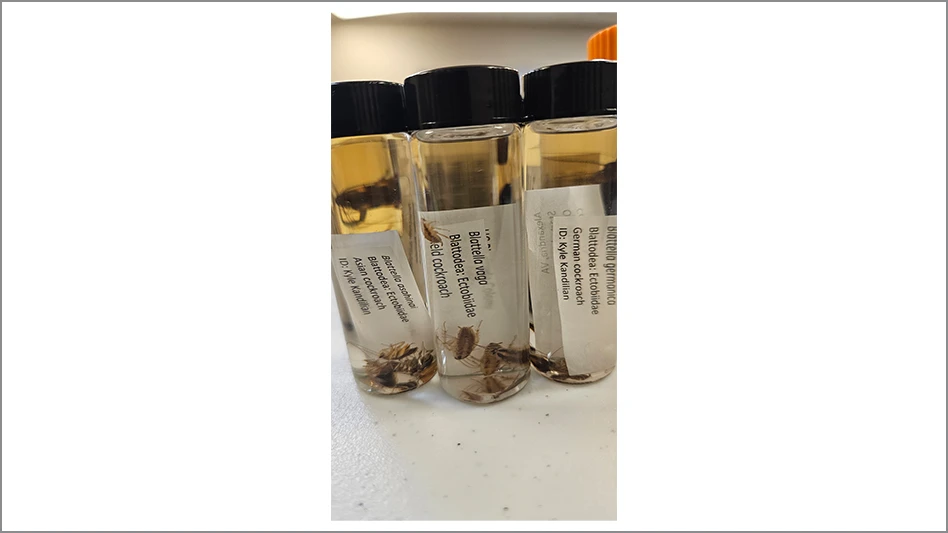
Ben Grady, graduate research assistant at the University of Kentucky, presented on various cockroach species and management practices. There are more than 40,000 cockroach species and only 30 of them are considered to be pest species, Grady said. Turkestan cockroaches came to the U.S. around 1975 and they have proliferated in parts of the country ever since. German cockroaches can reproduce quickly and can exacerbate allergic reactions and asthma. Grady said there’s negative perception around these pests, which can lead to homeowners dealing with problems themselves. He recommended PMPs use all of the tools in their toolbelt when treating for cockroaches and helping customers overcome these challenges.
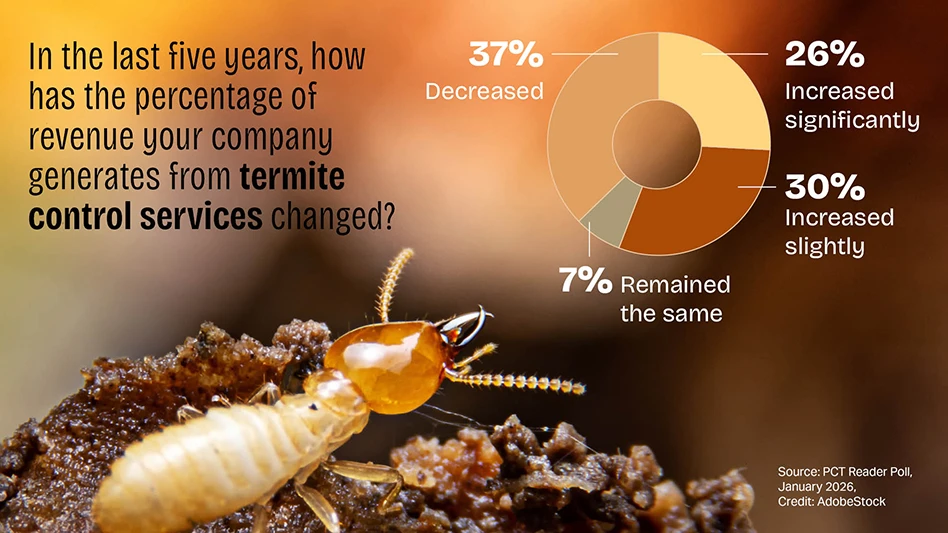
Donny Oswalt, consulting urban entomologist at Donny Oswalt Consulting Service and owner of The Bug Doctor, shared what makes termites a “tricky” pest and the importance of PMPs staying current on the latest construction trends and terminology. Oswalt said termites can be very hard to locate unless a thorough inspection is completed. To do this, understanding building and construction terminology helps in describing where termite evidence was found. “Train your technicians on those basic terms. Have a consistent plan, knowledge of building construction is power and use tools like flashlights or mirrors,” Oswalt said.

Timmy Madere, urban rodentologist, City of New Orleans Mosquito, Termite and Rodent Control Board (NOMTRCB), took a closer look at rodent IPM and where PMPs may be missing the mark in getting to the root of the issue. Madere said the No. 1 issue PMPs face with rodent control is not being observers of rodent behavior during inspections and trapping. Consider rodent stations and trap placement in alignment with a rodent’s behavior, he said.
“Don’t forget to look upwards when you’re doing rat work,” he added. “If you don’t have a ladder in your truck, you’re not doing rodent control correctly.” When inspecting for rodents, lines and shadows are key areas to observe and focus on. Burrows, droppings, gnaw marks and rub marks are visual indicators of rodent activity as well, he said.
Dr. Christopher Hayes, extension associate, North Carolina State University, shared a PCO’s guide to battling bed bugs, fundamentals of management and conducting research. Identification is one of the main reasons why bed bug control can fail, Hayes said. Cimex lectularius and C. hemipterus are the two most common bed bug species, but they can be easily confused and misidentified, especially if trying to be identified by a customer or non-expert. “It’s our job as experts in the room to make sure homeowners are educated,” Hayes said.
Regardless of species, basic biology of bed bugs is the same (a seven-stage life cycle and one blood meal), Hayes reminded. When doing surveillance and inspection, you want to ask yourself, “Is it a new [infestation], ongoing or reinfestation? Has another company already come in to treat it?” Hayes said. In conclusion, Hayes shared the cost for bed bug treatments are going up, and asked, “Are bed bugs spreading or [are their numbers leveling off]?” He said he believes there has been a small plateau, but there’s still money to be made in the service market.
FIND NEW SOLUTIONS. Dr. Zach DeVries, associate professor of urban entomology and The Bill Gatton Foundation Early Career Professor at the University of Kentucky, led this year’s UK Short Course. DeVries encouraged attendees to use the conference as a springboard for finding new pest control solutions and improving themselves and their teams.
“My job is to make sure you receive the best training possible so you can be better at your jobs and to bring people from around the country to give a unique perspective on pest control,” he said. “There’s a lot of good opportunities to meet new people and learn new techniques.”
Explore the February 2026 Issue
Check out more from this issue and find your next story to read.
Latest from Pest Control Technology
- TRUCE Software Secures Series B Funding
- Richard Spencer Reviews Safety Standards and Training for Technicians
- Kimberly Camera, Canine Team are Hot on Rodent Trails
- Inside the Latest Issue: PCT February 2026 Highlights
- WSPMA Launches First Legislative Day, Testifies Before House Agriculture Committee
- Envu to Host Free Mosquito Control Webinar
- Cetane Associates Adds Balque
- UK Short Course Provides Training on IPM Strategies, Research Updates