Spiderwebs: From Iconic to Obscure

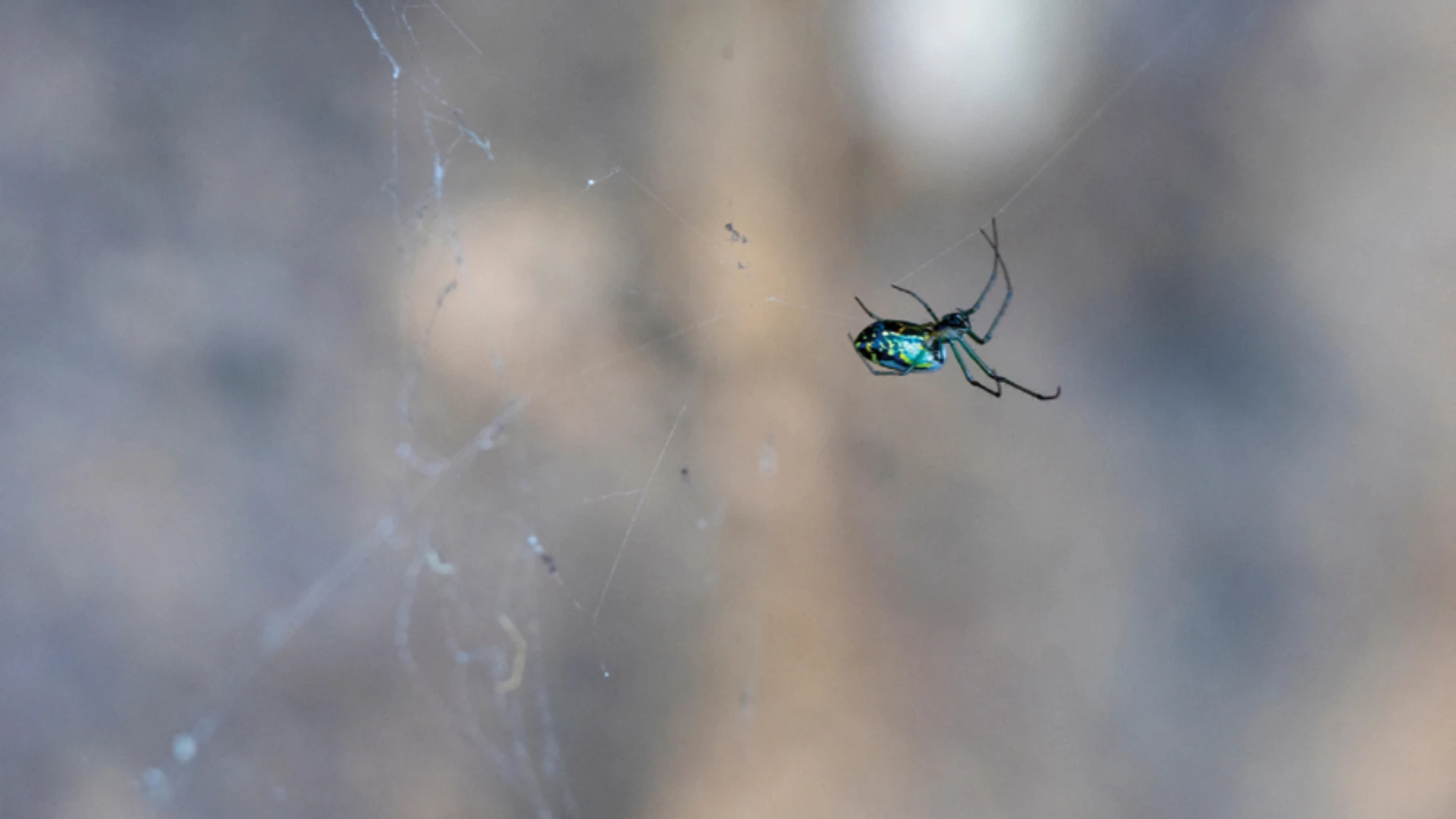
Orb webs are the most recognizable of the spiderweb types. Spiders use different types of silk to weave these webs and take careful steps to avoid the stickiest sections.
Michael Miller/Texas A&M AgriLife

Spiderwebs evoke a unique mix of fear and awe. Even for those who prefer that spiders stay far away, it’s hard not to appreciate the delicate, silky architecture and radiating patterns made by these tiny creatures.

Not all spiderwebs follow the iconic radial design we usually picture. There are at least five types of spiderwebs made with different silk types, according to Wizzie Brown, Texas A&M AgriLife Extension Service integrated pest management specialist in the Texas A&M Department of Entomology.

Spiral orb webs. Featuring a flat grid or spoke-pattern design, these are the most iconic spiderweb. They are commonly associated with Charlotte, the beloved barn spider from “Charlotte’s Web.” Spiders tend to set up their webs in strategic locations, like insect flight paths, to boost their chances of catching prey. Yellow garden spiders are a common type of orb weaver your customers may encounter around their homes. Spiders build these webs using multiple silk types, with the stickiest parts in the middle. Webs serve as the spider’s home and as a means of catching prey. Brown said orb weavers typically lie in wait for prey in a corner, where they can be easily missed if you don’t look closely. As with other web styles, the spiders sense the vibrations along the threads when insects wander into the web.

Tangle webs or cobwebs. Tangle webs lack the intricate design of orb webs and instead opt for a cottony mesh of spider silk. However, it’s easy to see why these webs are still effective for catching prey — especially if you’ve ever walked into one.

Brown said these often cause concern to homeowners because they’re the kind of web made by cobweb or comb-footed spiders, including the infamous black widow. However, the sight of a cobweb isn’t necessarily cause for concern. “Not all cobwebs house dangerous spiders,” she said. “You’re much more likely to see a common house spider in a cobweb than a black widow.”

Sheet webs. The tangled, hammock-shaped structures most likely to be seen strewn across grass are known as sheet webs. Commonly found on vegetation, the spiders responsible for these traps tend to wait underneath the webs for insects to fall onto them from above. Sometimes mistaken for wolf spiders, American grass spiders are one common type of sheet-web spinner.

Funnel webs. Funnel webs might conjure thoughts of the highly toxic Australian funnel-web spider, but Brown said the spiders in the U.S. that make these types of webs — like barn funnel weavers — are generally harmless. The webs are tunnel-shaped and often built close to the ground or around the base of trees. “The spiders usually stay in there, but they build the tunnel with two openings, so they have an escape route if needed,” Brown said. “And they dart out to catch prey that comes close enough.”

Net webs. Not content with the passive approach, net-casting weavers in the ogre-faced spider family — named so for their large eyes — prefer to take a more active approach to hunting. Brown said she thinks of these as the Spider-Man group. After weaving small, net-like webs, these spiders wait for prey to come near and then fling a silk net over them from above. They then devour the insect right away or wrap it up in silk to eat later.

Trapdoor spiders’ burrows and trip lines. While not considered a type of web, trapdoor spiders deserve recognition for the silk-walled underground burrows they call home and the trip lines and hinged doors they employ to catch prey. These spiders are often mistaken for tarantulas because of their large, stocky bodies and thick legs. Trapdoor spiders hide beneath a camouflaged door, waiting to ambush unsuspecting insects that pass by. Brown said these spiders pop out and snatch passing insects. Luckily, they pose little threat to humans — aside from inducing nightmares. —

Source: Texas A&M AgriLife

February 2025
Explore the February 2025 Issue

Check out more from this issue and find your next story to read.