For some PMPs, swarm season was just OK last year. For others, it was awesome.
John Etheridge, owner of Seashore Pest Control, Huntington Beach, Calif., saw “a lot of swarming” compared to 2024 for both drywood and subterranean termites. This helped boost his termite revenue 12 to 15%. “Our termite season has been incredible. Really good,” he said.

The weather in Southern California played a vital role in boosting swarms, and when subterranean termites swarm, people notice, he said.
“The colonies are way bigger, so when swarming occurs it’s ‘Hitchcockian,’” said Etheridge. He performs about 200 jobs a year for subterranean termites, which tend to swarm the first warm day after a rain. Drywood termites, which make up the bulk of his termite work, swarm during the Santa Ana winds when it’s dry and hot.
Termite accounts for about 65% of Seashore Pest Control’s overall revenue. “We do over a million dollars a year in termite and I’m not a big company.”
Seeing a termite swarm can send customers into a panic. John Burgess, Pied Piper Pest Control, tries to allay their fears. He explains how they’ve been present in the home for a while because it takes two to five years before they swarm.
“This problem’s been here for a hot minute, so waiting a week is not going to change the big picture,” explained Burgess.

According to the 2026 PCT State of the Termite Control Market survey, 12% of PMPs said the 2025 termite swarm season was above average while 50% said it was average.
“We didn’t have much of a swarm season at all,” said Derek Pumphrey, Brock Lawn & Pest Control. “In January, we had more snow in North Florida than most northern states.”
In spring the region was hit by drought. “March through May was the second warmest spring on record, but it was also one of the driest springs on record. You can’t drive a nail in the yard out here because it’s as hard as concrete,” said Pumphrey. Without moisture, swarms didn’t occur.
Too much rain in Indiana postponed termite work that normally would have been done in spring. “Our biggest problem was weather,” said Doug Foster, Burt’s Termite & Pest Control.

“We had swarms and we had work to get done, but we had so much darn rain that we just could not get to them until May and even June, and we were finishing up in July from some of the swarms that we had. The ground was saturated, and when it’s pouring rain, we just couldn’t get out and do the work.”
In Alabama, swarms aren’t what they used to be. “Swarms are typically nonexistent these days, but when they do swarm, it’s usually Formosan termites. It hasn’t been Eastern subs,” said Scott Ballard, Ballard Pest Management. He had maybe 10 swarm calls in 2025, which he admits was more than in 2024.
The termite species most problematic for PMPs was the eastern subterranean termite (72%).
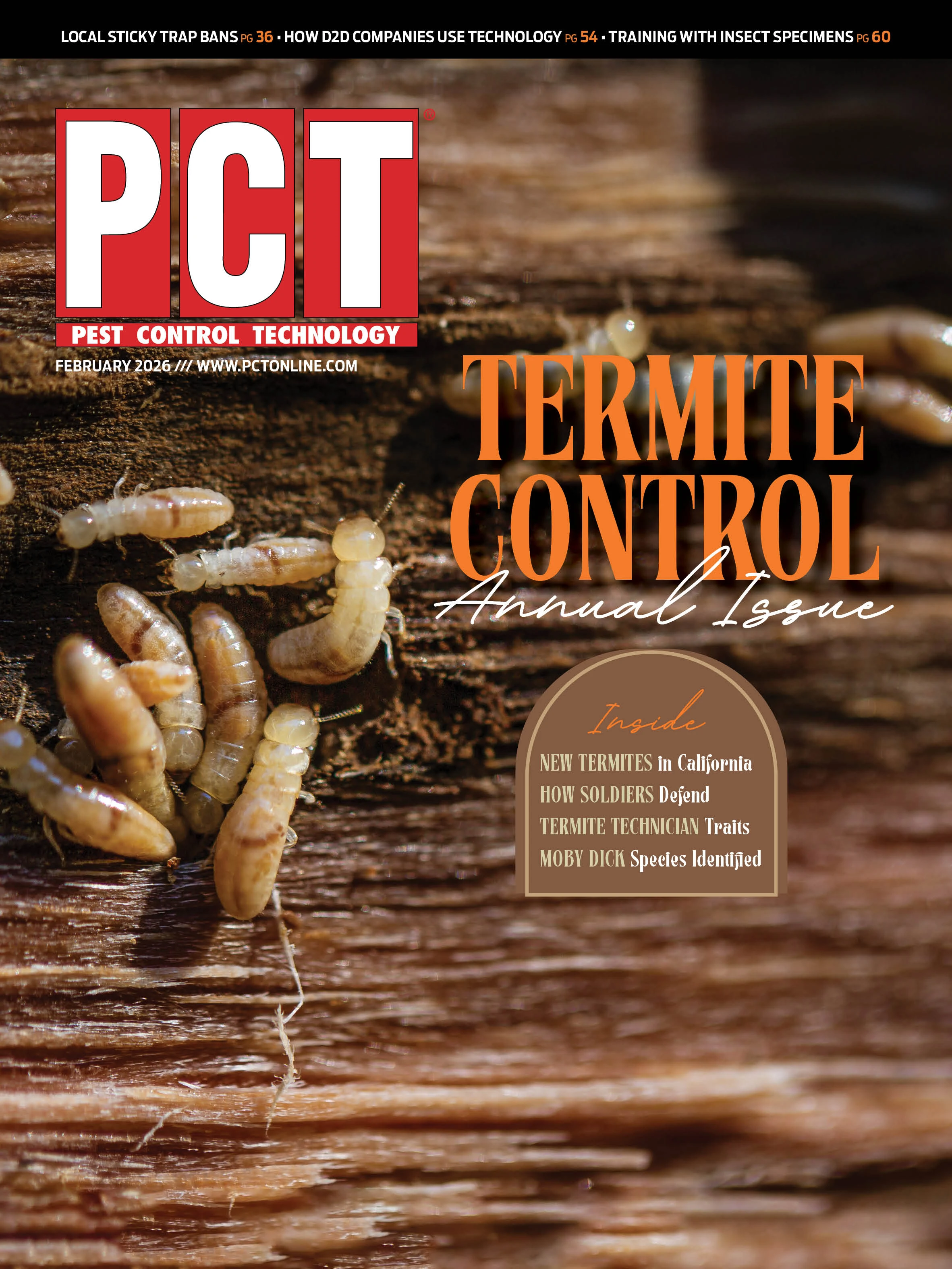
Explore the February 2026 Issue
Check out more from this issue and find your next story to read.
Latest from Pest Control Technology
- Arrow Exterminators Acquires Hoffman's Exterminating
- Earn CEUs at Next Week's Mosquito Control Virtual Conference
- NCPMA Graduates New Premier Technicians
- Pest Management Foundation Announces New Scholarships
- Coast Releases Report on Fuel Spend
- WPCA Hosts Midwest Pest Con
- Google Ads Mistakes That Cost PCOs Thousands
- Zach DeVries Details his Cockroach Research, Importance of UK Short Course