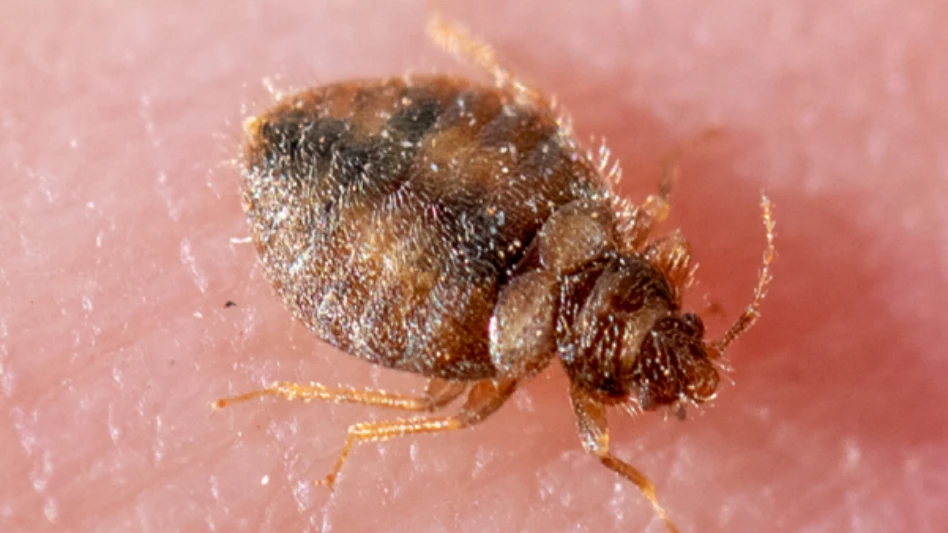
© drbrachydactyl | iNaturalist
I’ve worked for Rollins for six years and much of that time has been spent supporting our Orkin team members across the country. Pest issues vary widely, from regional problems like spotted lanternflies in Pennsylvania to little fire ants in Hawaii. At the same time, some species remain constant challenges no matter the state, including German cockroaches and bed bugs. Because of this diversity, I’m always learning, which remains one of my favorite parts of the job.
Every year brings a few unusual pest trends that stand out from the typical workload. Sometimes multiple states report the same uncommon issue, prompting deeper investigation or new resources for our teams. In 2023, for example, a sharp rise in bird and rodent mite inquiries led me to develop a mite ID guide now included in the NPMA Pest Management Guidelines for Healthcare Facilities.
As we start the new year, I’ve taken time to reflect on the unusual pest trends that surfaced in 2025. Three stood out: swallow bugs, deer and horse flies, and clover mites.

SWALLOW BUGS. While many of us are familiar with common bed bugs, there are other closely related species that focus on bats and birds that you may or may not have encountered yet.
Until this past year, I had never received a single inquiry about swallow bug management. Then in 2025, I was surprised to receive multiple questions from different states.
Swallow bugs parasitize swallows and their nests. These birds are protected under the Migratory Bird Treaty Act, and removing active nests can be even more complex than handling bats. Any removal or disturbance requires approval from the U.S. Fish and Wildlife Service, USDA and, often, state wildlife authorities. Once nests are inactive and outside the breeding season, management becomes far easier, but careful timing and documentation remain crucial.

DEER AND HORSE FLIES. Another set of blood-feeding pests drew more attention in 2025 than in previous years: deer flies and horse flies. While I’d handled occasional cases before, the number of inquiries last year far exceeded what I typically see.
These flies focus on large mammals and can cause significant veterinary concerns, but they also pose serious nuisance issues, especially near golf courses, hotels and residential properties. Their presence usually indicates nearby semi-aquatic breeding sites, which can include marshy areas, ditches or poorly draining landscapes.
Managing deer and horse flies is challenging. Treatment options are limited and often less effective than those used for mosquitoes. Mistblower applications offer minimal relief. Some specialized traps can help, and blocking flight paths with fencing or hedges may reduce activity, but in many locations fly pressure can still exceed what customers consider acceptable. When environmental factors favor them, control tends to be about mitigation rather than elimination.

CLOVER MITES. The final trend of note last year involved clover mites. Historically, many calls I received about “clover mites” were actually cases of bright red concrete mites (Balaustium), which often get mistaken for them. But 2025 was different. I saw a genuine increase in confirmed clover mite cases across multiple states.
Correct identification remains the first and most important step. Clover mites are not bright red and their front pair of legs is noticeably longer than the others. Both clover mites and concrete mites can gather on building exteriors and find their way indoors through gaps around windows, doors and utility penetrations. But their habits differ. Clover mites are associated with turf and ornamental plants, while concrete mites are predators that also feed on pollen.
Exclusion work helps reduce indoor issues with either species, but structural residual pesticide applications tend to be less effective on clover mites than on concrete mites. Some have speculated this may be due to pyrethroid resistance. We’ve found that targeting turf and ornamental plants often yields better results for clover mites, though these treatments may require lawn and ornamental certifications depending on state regulations.
READY FOR 2026? The pest trends of 2025 offered plenty of challenges and learning opportunities. Swallow bugs, deer and horse flies, and clover mites each require careful identification, regulatory awareness and tailored management strategies. As always, the unusual cases strengthen our knowledge and help us better support Orkin teams (and other PMPs) nationwide.
Explore the January 2026 Issue
Check out more from this issue and find your next story to read.
Latest from Pest Control Technology
- Certus Acquires Termio Pest Control in Arizona
- The Alliance Releases 2025 Annual Report, Showcasing Growth
- David Poplin Discusses Military Experience and How it Applies to Pest Control
- David Poplin Named PestVet of the Year
- Consulting Biologist Dan Collins Details Approaches to Effective Rodent Control
- Massey Announces the Promotions of Campbell, Graham
- BOM Hosts Dinner at NPMA Legislative Day
- Rear Admiral Scott Moore Shares Five Essential Leadership Principles