Stoy Hedges
Out West, Argentine and rover ants are challenging, but the “most efficient would probably be the Argentine,” said Jim Harmon, owner of California Pest Management in La Verne. He noted that, while colonies aren’t big, “active foraging is constant,” and the ants can easily locate small crumbs.
According to the Mallis Handbook of Pest Control, numerous queens (normally 10 percent of a colony) and the splintering off into new colonies can spur colony growth and expansion for Argentine ants. Multiple sites produce a challenge, and, noted Harmon, increased pressure to control the species has led to their “changing behaviors and becoming much more efficient.”
Harmon said rover ants also are tricky, with some PMPs confusing the two species and attempting to leverage similar control methods only to find that techniques used to control Argentine ants are ineffective for rover ants. “Technicians are used to one ant,” Harmon said, but repeat visits help them work through issues and gain confidence in identifying and controlling of both species.
In Florida and much of the Southeast, Daniel D. Dye II, Associate Certified Entomologist emeritus and retired training coordinator at Florida Pest Control in Gainesville, noted that conditions, including household environment, impact foraging. A rover ant is a “great forager once it finds itself inside,” he said, but the ghost ant, tawny Caribbean crazy ant, difficult ant and red imported fire ant also prove meddlesome for Floridians, with those building indoor nests being the hardest to control. Dye also finds Pharaoh ants to be constant foragers, though, thanks to effective control measures, they are not as common now. But he said a tempting food source “will always attract the ants inside.”
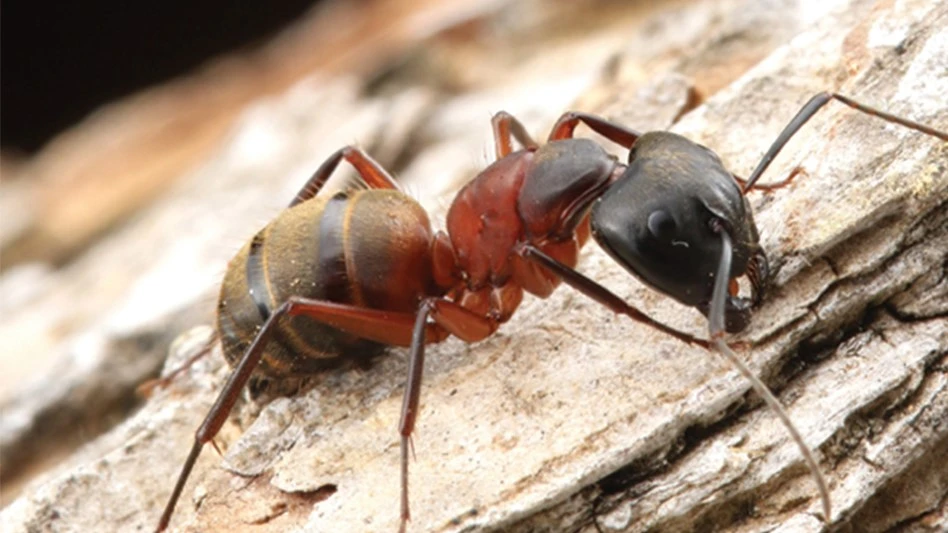
Other species distress the Midwest. “As far as distance, nothing really in my region of the country really beats the carpenter ant,” said Scott Robbins, A.C.E. and technical services manager of Action Pest Control in Evansville, Ind. Mallis notes that worker populations in a two-year- old colony can range in size from small minors to large majors. “Those large, major workers can … cover a lot more ground away from their nest than a lot of the smaller ant species we have,” said Robbins, noting that they can forage up to 300 feet from the nest.
Complicating control, customers may have a satellite nest, while “the queen and the central colony may be off … in someone else’s backyard,” Robbins said. “Now you’re trying to get the ant to transfer some type of toxicant back to wipe out that brood nest location.”
Odorous house ants are also a problem. While Mallis notes that carpenters are primarily nocturnal, Robbins said that odorous house ants feed 24 hours a day when food is available and “can actually forage in some pretty cool temperatures,” making control “really challenging,” said Robbins. He also said that the Pharaoh ant can be hard to control, especially since they quickly “seem to change their mind on what bait they’ll feed on,” making multiple bait choices a feasible option.
Mallis observes that the ecological benefits of pest ant activity typically outweigh their harm, but states that exotic species — including the red imported fire ant and Argentine ant — can pose serious threats when the species becomes established. Customers also will forget the ants’ benefits when ants infest their home.
Latest from Pest Control Technology
- Earn CEUs from Your State at Next Week’s Mosquito Control Virtual Conference
- Preserving Culture, Providing Opportunities Key in Hoffman’s Decision
- Winter Weather Could Decide How Bad Mosquito Season Gets
- Trent Frazer Discusses How Mosquitoes Survive Winter
- Barnes Exterminating Acquires Tennessee Pest Solutions
- Pest Index Up 9% YOY in January
- Arrow Exterminators Acquires Hoffman's Exterminating
- PMPs Plan Mera Peak Summit for Parkinson's