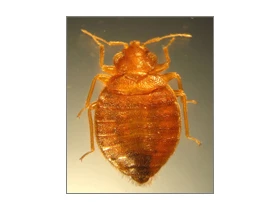
A New York Times article explores how a group of American scientists have been studying how to replicate properties of certain types of bean leaves that can capture, or at least slow down, bed bugs.
The article traces this remedy back to generations of Eastern European housewives who would “do battle against bed bugs spread bean leaves around the floor of an infested room at night. In the morning, the leaves would be covered with bedbugs that had somehow been trapped there. The leaves, and the pests, were collected and burned — by the pound, in extreme infestations.”
Now a group of American scientists is studying this bedbug-leaf interaction, with an eye to replicating nature’s Roach Motel.
A study published in the April 10 The Journal of the Royal Society Interface details the scientists’ quest, including their discovery of how the bugs get hooked on the leaves, how the scientists have tried to recreate these hooks synthetically and how their artificial hooks have proved to be less successful than the biological ones.
Click here to read the entire NY Times article.