Beekeepers across the United States lost 44 percent of their honey bee colonies during the year spanning April 2015 to April 2016, according to the latest preliminary results of an annual nationwide survey.
Rates of both winter loss and summer loss—and consequently, total annual losses—worsened compared with last year. This marks the second consecutive survey year that summer loss rates rivaled winter loss rates.
The survey, which asks both commercial and small-scale beekeepers to track the health and survival rates of their honey bee colonies, is conducted each year by the Bee Informed Partnership in collaboration with the Apiary Inspectors of America, with funding from the U.S. Department of Agriculture (USDA). Survey results for this year and all previous years are publicly available on the Bee Informed website.
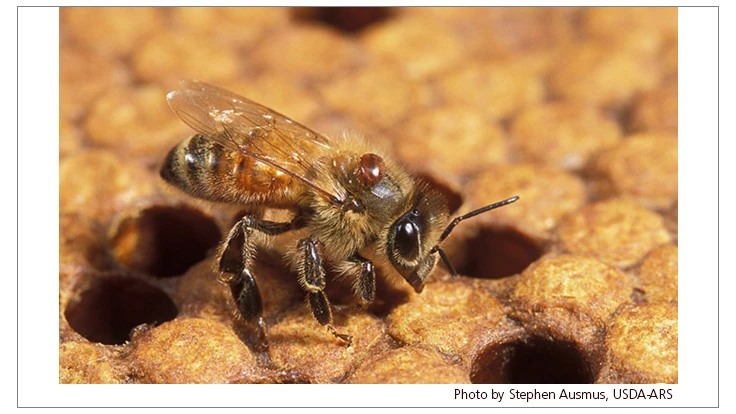
\As NPMA’s Public Policy team noted, many factors are thought to contribute to colony loss. In a multi-year study of honey bee colony health recently published in the journal of Apidologie, parasites and pathogens are more damaging to colonies than previously considered. Findings showed that varroa mite is far more abundant in commercial and private colonies, and the once rare Chronic Bee Paralysis Virus is more prevalent than when it was first detected in 2010. Promisingly, this survey revealed that an exotic species of varroa mite, the tropilaelaps mite, and the slow bee paralysis virus have not yet been introduced into the United States.
Latest from Pest Control Technology
- Earn CEUs from Your State at Next Week’s Mosquito Control Virtual Conference
- Preserving Culture, Providing Opportunities Key in Hoffman’s Decision
- Winter Weather Could Decide How Bad Mosquito Season Gets
- Trent Frazer Discusses How Mosquitoes Survive Winter
- Barnes Exterminating Acquires Tennessee Pest Solutions
- Pest Index Up 9% YOY in January
- Arrow Exterminators Acquires Hoffman's Exterminating
- PMPs Plan Mera Peak Summit for Parkinson's





