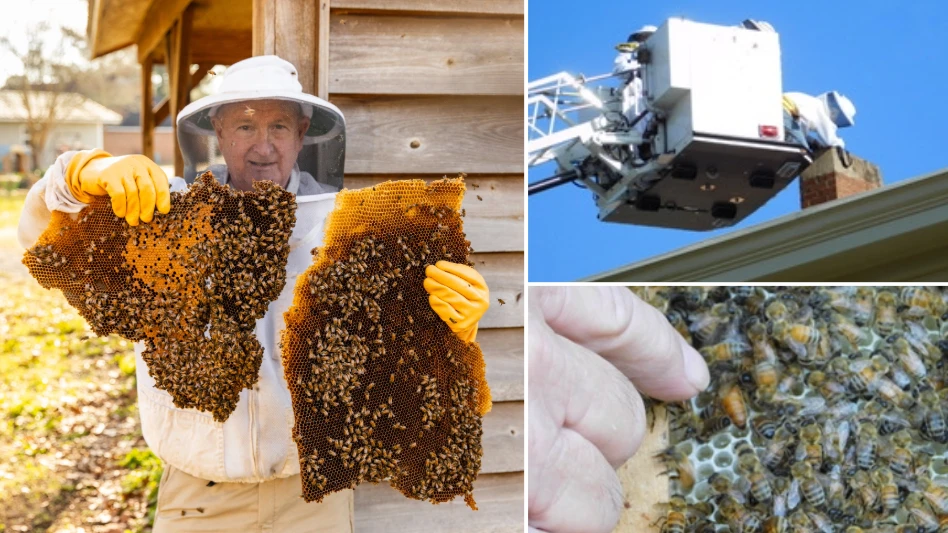
Photos courtesy of Dale Richter.
ALBANY, Ga. – Dale Richter started beekeeping with his grandfather, Ellis P. Posey, when he was five years old. By the time he was seven, Richter was teaching beekeeping to his classmates.
When he was a few years older, Richter met the late Dr. Al Dietz, who was a prominent leader in the entomology and beekeeping research fields, and a professor at the University of Georgia. Although Richter was given a scholarship to attend the Georgia Institute of Technology, he chose the University of Georgia, where he worked at the school’s honeybee lab under Dr. Dietz.
At his current age of 68, Richter hasn’t given up on the bees.
Born and raised in Albany, Ga., Richter and his family have always been involved in their community — whether through the family roofing business, athletics, coaching or beekeeping. Instead of fully focusing on beekeeping, Richter was loyal to his family business.
The One to Call. In October 2010, a man in Dougherty County died after being stung over 100 times by Africanized honeybees. The case confirmed the presence of the invasive species in Georgia. Because of his experience in emergency management and bee control, Richter was called in to help and became the first beekeeper to encounter Africanized honeybees in the state, he said.
Georgia’s Department of Agriculture recognized Richter’s efforts, and he continues to work with local, state and federal officials on matters involving bee control. At the request of the department, Richter wrote a law requiring companies and individuals in the state to be certified and licensed to do honeybee control and removal.
Richter’s company, The Buzz Fuzz, has been operating for about the past 20 years. It’s the company that people in the area, and the state, know to call for honeybee removal, he said.
A Special Customer. Richter has had a wide range of experiences as a master beekeeper, a title he earned in 2007 after completing the University of Georgia’s certification requirements. He’s also built relationships with some important people, including the late former President Jimmy Carter.
Richter met Carter when he was governor of Georgia and had begun his presidential bid. Today, Richter is the official beekeeper for the honeybee colonies at the Jimmy Carter Boyhood Farm — Carter’s former home and farm that is now part of the National Park Service.
Like Carter, Richter has also been involved in conservation efforts. Richter used to work with Operation Migration, a former nonprofit that used ultralight aircraft to help endangered whooping cranes migrate south. “Rosalynn Carter supported us tremendously when we were doing the program with the birds,” said Richter.
Taking Care of Business. The Buzz Fuzz handles all types of bee removal situations — “from the backyard playhouse to the Presidential Museum,” according to the company’s website. Richter said if he was to get 20 service requests in a week, there would be 20 unique situations.
“But normally I get a call from somebody that has been working in their yard, they’ve had a house remodel, [and] some event has led them to see that they have bees,” said Richter.
When running through an inspection in a house, Richter uses a thermal camera to locate bees, a process that usually takes less than 15 seconds, he said.
In Southern Georgia, where the weather typically stays warm throughout the year, bee swarming starts in February, which is when they’re most likely to invade homes, said Richter. At the end of October, which is during Georgia’s yellowjacket season, Richter said he was still getting calls about honeybees.
Advice on Getting into Bee Removal. For PCOs that have considered adding bee removal services to their offerings, Richter said having construction knowledge is just as important as having bee knowledge.
“You very rarely just cut into a wall, and when I say cut into a wall I mean literally open up a wall and there’s nothing there but bees,” said Richter. “There’s usually some kind of wiring, which you should recognize by seeing a socket close to you or a light fixture.”
But, Richter said, having bee knowledge is what gets someone started in the work, even though the learning may never end. “I’ve been in it for 63 years and I learn something new every day.”
Latest from Pest Control Technology
- Coast Releases Report on Fuel Spend
- WPCA Hosts Midwest Pest Con
- Google Ads Mistakes That Cost PCOs Thousands
- Zach DeVries Details his Cockroach Research, Importance of UK Short Course
- Sprague Strengthens California Leadership Through New Appointments
- PestInsight Empowering Youth in Africa and Beyond Through Education
- Guest Editorial: Making Safety the Standard on Every Service Call
- Truly Nolen Pest Control Promotes Tuck, Stewart