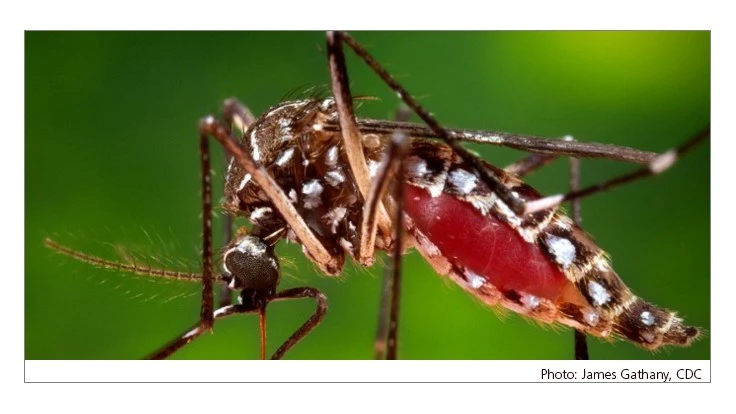
As reported by ESA, a citywide integrated vector management effort led by the U.S. Centers for Disease Control and Prevention in 2016 and 2017 in Caguas City, Puerto Rico, found that placing mosquito traps known as autocidal gravid ovitraps at a density of three traps per home in the yards of most houses in a community could reduce the number of female adult Aedes aegypti mosquitoes caught per trap to two to three per week — a number that was then associated with lower incidence of Zika and chikungunya in field-collected mosquitoes.
In a city of more than 140,000 people, it was one of the largest coordinated IVM programs ever undertaken, according to a retrospective examination of the results published in February in the Journal of Medical Entomology.