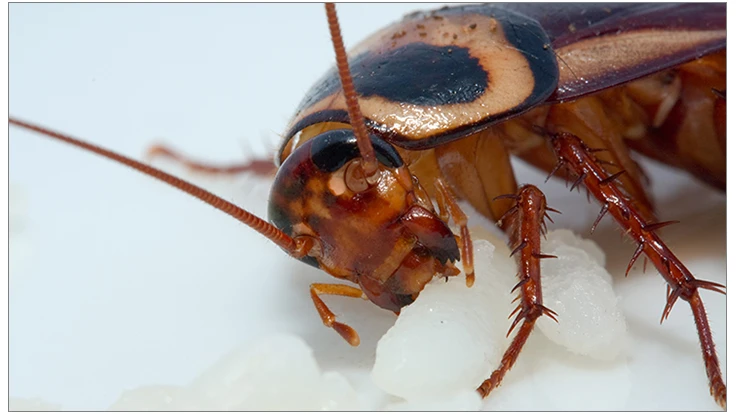
A University of California at Berkeley research team developing robots for search and rescue missions has found inspiration from the cockroach.
Kaushik Jayaram and Robert Full have constructed a robot that can also compress itself by more than half to fit through narrow spaces, aided by a low-friction shell. Its development has been published in the Proceedings of the National Academy of Sciences.
By constructing a special obstacle course, the researchers found that an American cockroach could slip through a space smaller than a quarter of its standing body height in less than a second and withstand forces of around 900 times its own weight without sustaining injury. A cockroach is able to compress its exoskeleton to around half its original size in order to achieve these feats.
The cockroach could also move at 20 body lengths a second and also use a little understood form of locomotion called “body-friction-legged crawling” when moving in confined spaces.
Click here to read more.
Latest from Pest Control Technology
- Earn CEUs from Your State at Next Week’s Mosquito Control Virtual Conference
- Preserving Culture, Providing Opportunities Key in Hoffman’s Decision
- Winter Weather Could Decide How Bad Mosquito Season Gets
- Trent Frazer Discusses How Mosquitoes Survive Winter
- Barnes Exterminating Acquires Tennessee Pest Solutions
- Pest Index Up 9% YOY in January
- Arrow Exterminators Acquires Hoffman's Exterminating
- PMPs Plan Mera Peak Summit for Parkinson's





