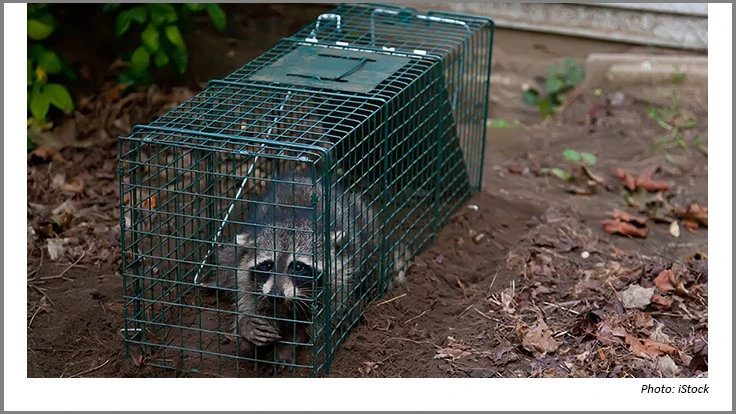
Expanding into the add-on services market, including services like mosquito control, wildlife control or fumigation, is not a one-size-fits-all type of business transaction. Careful consideration and evaluation of the pest control company’s future roadmap is needed in determining whether to expand or to add new services. Gauging external factors like market size, location, competition and customer needs, while also taking into account internal aspects such as company comfort level, workforce expertise, training requirements, and equipment and hiring needs are crucial in the appraisal.

As a result, a non-traditional service that works well for one pest control company (due to certain pests in certain areas) might not work for another. And some companies might be able to offer multiple add-on pest control services such as mosquito, wildlife, lawn and tree, while other PCOs will choose to focus on and master one particular service, like fumigation only. “No business is the same,” explains Ron Dedeke, specialty business manager of Environmental Sciences for Univar, a distribution company that also provides consulting services for customers considering expanding service offerings. “We look at each one of our customers and help them understand how [adding secondary pest control services] might work for them, or it might not work for them,” he says.
THE WHYS. When evaluating the benefits of offering a new add-on service to your pest control business, increased company revenue is of course one of the top reasons. Add-ons offer the potential for upsell in one-time services (with some types of exclusion work, wildlife, fumigation or certain mosquito treatments); new regular maintenance schedules (with some mosquito, lawn, shrub, and tree treatments); or even additional seasonal revenue (with attic remediation work, and some lawn work). Bryan Cooksey, president/chief executive officer of McCall Service, says the best add-on services “have a recurring nature” and “create density: geographical, where your customers are close together, and customer density, where one person is buying more services from you.” Cooksey’s firm provides fumigation services in Georgia and Florida.
Expanding pest control service offerings also helps a company’s ability to treat multiple issues for customers. “When you are more well-rounded in your pest management approaches and services, then that means everybody is coming to your one-stop-shop for their pest management program,” says Dena Berg, technical director, whose company Northwest Exterminating offers fumigation, mosquito control, weed control and wildlife work in Arizona. This “global thinking” helps to build confidence and loyalty in customers, explains Berg.
Andrew Sievers, owner and entomologist of Northeast Pro-Con Solutions (which offers mosquito, tick, and wildlife services in Massachusetts), adds that offering additional services keeps his company more entrenched with and “in tune with our customers instead of subbing things out.”

Additionally, by bringing a service in-house, the pest management company now has control over the quality of the work, the scheduling, and the response time. By offering fumigation services at his own company, Jason Sahara, owner and general manager of Menehune Pest Management in Hawaii, says, “Now I have the flexibility to work the schedule,” rather than depending on the subcontractors’ availability.
GETTING STARTED. After you’ve decided to expand into a new service line, what’s the next step? Perform research and seek help by reaching out to trusted sources. Sahara says, “There is so much to know in this industry,” so “find the right people [like vendors, key employees, or subject matter experts] that are going to help you maintain the guidelines, the restrictions, and the certifications.” Plus, learn from the mistakes of others and “let them educate you” before taking on major projects, through peer associations, industry networks, NMPA and state associations, shares Cooksey.
Speaking to pest control vendors is also essential to the process. “You need to speak to people who are speaking to the people in your shoes” to learn what to avoid, the trends, and new products, Sievers says. Vendors and distributors offer training, consulting, and advice in addition to selling products of varying pesticide classifications and modes of actions. “Learn from your distributors and manufacturing reps. They are here to help you and they want to see you succeed,” Cooksey says.
Dedeke confirms that Univar, for instance, looks at customers independently to see how they are operating. “We customize what would work for [each pest control company]. What might work best for one company might not work for another company,” he adds.