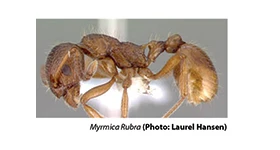
According to a study published Tuesday in the journal Biology Letters, common red ants (Myrmica rubra) that were prevented from removing their nestmates' corpses died more frequently than those allowed to bring out their dead, National Geographic reports.
The tiny ants—each roughly the size of a medium-grain rice kernel—live under rocks and logs in densely packed colonies. More than a thousand worker ants can be found in a single nest.
These insects reap many benefits from group living, as they work together to gather food, care for their queen, and defend their nest.
But the situation also puts them at risk of being hit by disease epidemics: If one individual in the colony comes down with an illness, the blight can spread rapidly. This places a premium on good hygiene.
Click here to read more.
Source: National Geographic