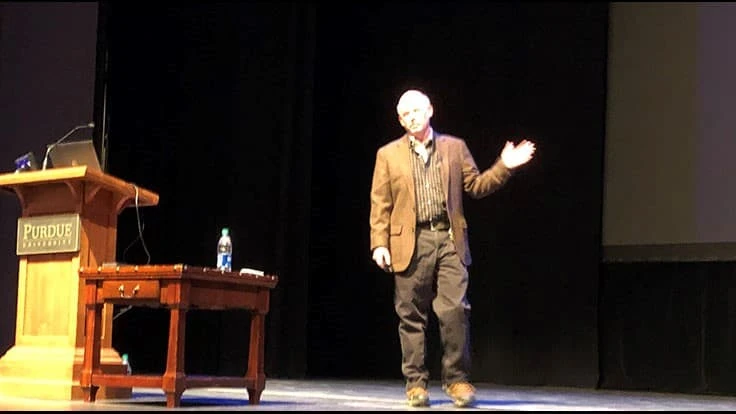
One of the highlights of the 2020 Purdue Pest Management Conference, held earlier this month, was a presentation by rodentologist Dr. Bobby Corrigan, who discussed new technologies and “The Sherlock Holmes Approach to Rodent IPM.”
Corrigan said it is exciting time to be performing rodent control because of high-tech equipment such as sensors and trail cameras. However, for PMPs they must first have a clear understanding of what causes drives and sustains pest invasions. “Sensors are our future, trail cameras are our future,” Corrigan said, but what good is it to place a trail camera in a location that rodents won’t visit, he asked.
And whether using new technology or more traditional techniques, like the famed fictional detective Sherlock Holmes, pest management professionals have been “trained to see what others overlook” Corrigan said.
One of the things Corrigan said he loves about rodent control is the detective work to find where rodents enter a structure and how best to keep them out. “Just this past Friday I had to pretend I was Sherlock Holmes in order to figure out how mice were getting into a famous Washington, D.C. hotel.”
Corrigan reminded Purdue attendees that clients aren’t paying you for the mechanical aspects of rodent control (e.g., placing traps), but rather for your expertise. This includes your knowledge of rodent biology and behavior, rodent pathways, the proper selection and use of rodent control products, etc.
“Whether you realize it of not, when you are on the job, by default, you are an observational biologist. Your customers are paying you to be observational biologists,” he said.
Corrigan provided a few examples of observational biology that PMPs make on a structure’s exterior and interior.
For example, he showed a photo of a rat-infested park in New York City where he was able to quickly find the infestation. The location was in proximity to an overflowing trash can; was shaded; and would allow for excellent airflow stimulation in rats. Corrigan showed other photos in New York City of pathways and urine markings left by rodents.
Indoors, Corrigan said, “Rats and mice seek highly protected spaces away from home sapiens.” PMPs are observational biologists indoors when they inspect items like escutcheon plates and when they use rulers when examining entry points to determine if they are large enough for a mouse (6 millimeters) or rat (12 millimeters).
Latest from Pest Control Technology
- Terminix Strikes a Chord With Preventative Push in New ‘Ahhh’ Campaign
- Company Compassionately Solves a Severe Rodent Infestation
- Jody Green Talks Ticks at Purdue Conference
- Truly Nolen Pest Control Promotes Freize, Hackett
- Preserving Culture, Providing Opportunities Key in Hoffman’s Decision
- Winter Weather Could Decide How Bad Mosquito Season Gets
- Trent Frazer Discusses How Mosquitoes Survive Winter
- Barnes Exterminating Acquires Tennessee Pest Solutions