iStock | Sinhyu
Editor’s Note: The following article was adapted from Techletter, with permission from Pinto & Associates.
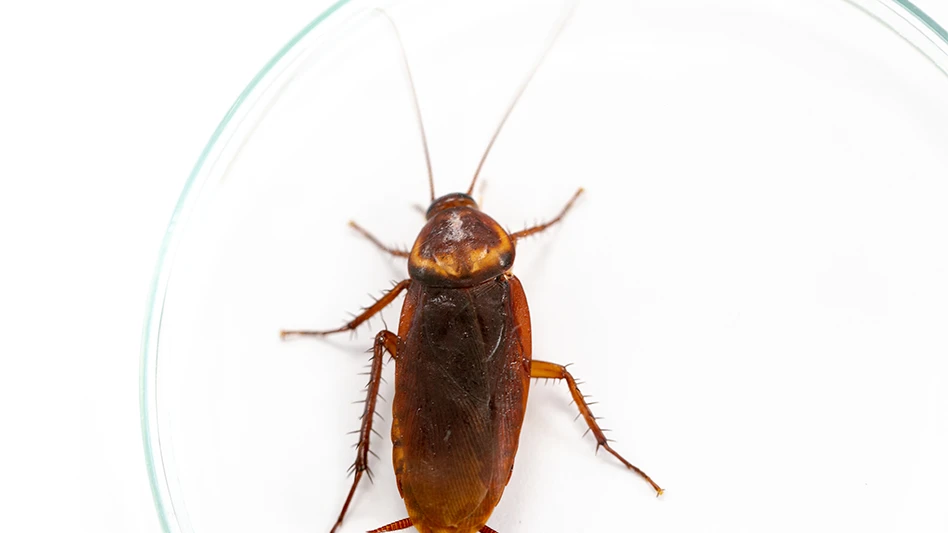
In the pest control business, we refer to cockroaches that live their entire lives inside homes or buildings as domestic cockroaches. The German cockroach is an example. Those that live both inside and outside or that move in only occasionally are called peridomestic cockroaches. Our main peridomestic cockroaches are the American cockroach, the oriental cockroach, the smoky brown cockroach, the Australian cockroach, the brown cockroach, the Asian cockroach, and various wood cockroaches. Peridomestic cockroaches often move indoors when the weather outside becomes too hot, wet, dry or cold, or when the population gets so large that the outside harborage can no longer contain them.
Check the building exterior - Inspect cracks and crevices on outside walls. Look under siding and check weep holes in brick. Check openings around pipes, wires, and cables where they enter the building. Inspect around outside garbage cans and dumpster areas.
Check landscaping - Peridomestic cockroaches like moist and shady areas under trees and shrubs that have lots of leaf litter or mulch. Also check rotting stumps or logs on the ground, wood piles and tree holes. Look at compost or debris piles. Check planters and pots near the foundation of the building. In indoor malls and building lobbies, check the planter beds. Some species live in palm trees, palmettos, or under the loose bark of other trees. Stone fences are another common harborage site for peridomestic cockroaches.
Check sewers - The American cockroach, in particular, often lives and breeds in sewers and can invade buildings directly from the sewer system. Check sewer vaults (with the help of the local sewer authority) and unused floor drains. Make sure that there is water in floor drains.
Check beneath the building - Crawlspaces, subbasements, and storage voids can be harborage sites for peridomestic cockroaches. Look under decks, too.
Check above, too - These cockroaches can also be found under roof overhangs and in roof gutters where they live and feed on collected leaves and debris. Check damaged soffits.
Latest from Pest Control Technology
- Earn CEUs from Your State at Next Week’s Mosquito Control Virtual Conference
- Preserving Culture, Providing Opportunities Key in Hoffman’s Decision
- Winter Weather Could Decide How Bad Mosquito Season Gets
- Trent Frazer Discusses How Mosquitoes Survive Winter
- Barnes Exterminating Acquires Tennessee Pest Solutions
- Pest Index Up 9% YOY in January
- Arrow Exterminators Acquires Hoffman's Exterminating
- PMPs Plan Mera Peak Summit for Parkinson's





