Photo: Andrew Greess
Editor's note: Andrew Greess, a pest control equipment expert and president of equipment website Qspray.com, shared ways pest control company owners and managers can standardize their companies equipment.
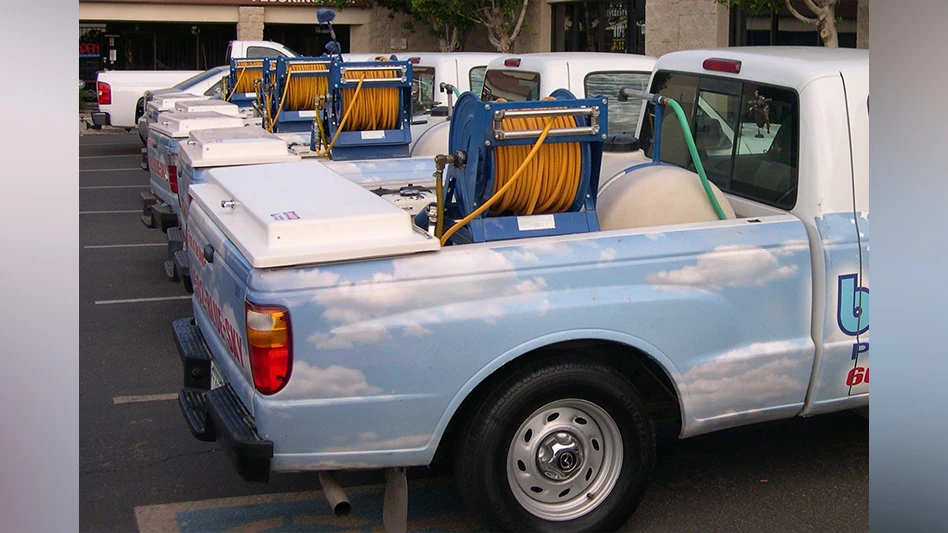
Standardizing your pest control equipment creates huge efficiencies. Conversely, non-standardization eventually results in a pile of mismatched unusable junk.
There are three primary areas where standardization can have the largest impact to your organization:
Training – All staff only needs to be trained on, for example, one backpack sprayer or one power sprayer pump.
Scheduling – All staff can work with any vehicle. For example, if a tech is out sick, any other tech can stand in and do the job without additional training or instruction. This reduces the odds of having to cancel service when the appropriate staff is not available.
Maintenance – Mechanics only need to be trained to service one backpack or power sprayer pump. The cash tied up in parts inventories is much lower because there are so many fewer required parts. This also significantly improves the odds that a needed part will be available to solve a problem. This in turn reduces the downtime waiting for equipment repairs.
Here are some thoughts to get you started.
- If your equipment is already standardized, congratulations. You are clearly in the minority. Take the next step and standardize storage locations on the vehicles. We service companies with large fleets and even when the equipment is standardized, there are significant variations among trucks as techs keep their tools and materials in different places.
- Develop Equipment Standards. Make sure you have clear standards for hand sprayers, backpack sprayers, tool boxes, power sprayers, etc. so that over time, as you replace obsolete equipment, your fleet becomes standardized.
- Common Sense Required. You may not be able to standardize everything. If you have special purpose vehicles, standardize where you can. For example, if you have a larger vehicle for commercial work, while most of your fleet does residential work, you can still work with your equipment vendor to standardize filtration (location, access, design), maintenance (engine positioned so that oil changes are easy), etc.
- It obviously doesn’t make sense to replace all your existing equipment with new, standardized equipment. Start small with key components that can have a big impact.
Here are some examples for power spray equipment:
- Line Strainer/Filter. Filters are the source of many problems. Start here. Standardize filters so that all techs know how to check and change them and so it is easy and cheap to inventory the screens and gaskets that cause so many problems.
- Quick Disconnects. Standardize quick disconnects and spray tools across trucks so that spray guns are interchangeable and a leaking gun does not disrupt schedules.
Start today by examining your equipment to find opportunities. Even a little standardization can go a long way toward improved service and profitability.
Andrew Greess is a pest control equipment expert and author, and president of Qspray.com, the pest control equipment website.
More from our latest newsletter
- UK Rodent Activity Up 10% Since 2024, Rentokil Reports
- Beyond the Pest | Ep. 9 — Dr. Stan Cope
- Suburban Pest Delivers 117 Books Through Its Book Drive