Humane Iguana Control
MIAMI, Fla. – In the winter when northern states often deal with falling snow, states like Florida deal with a much different cold weather hazard — falling iguanas.
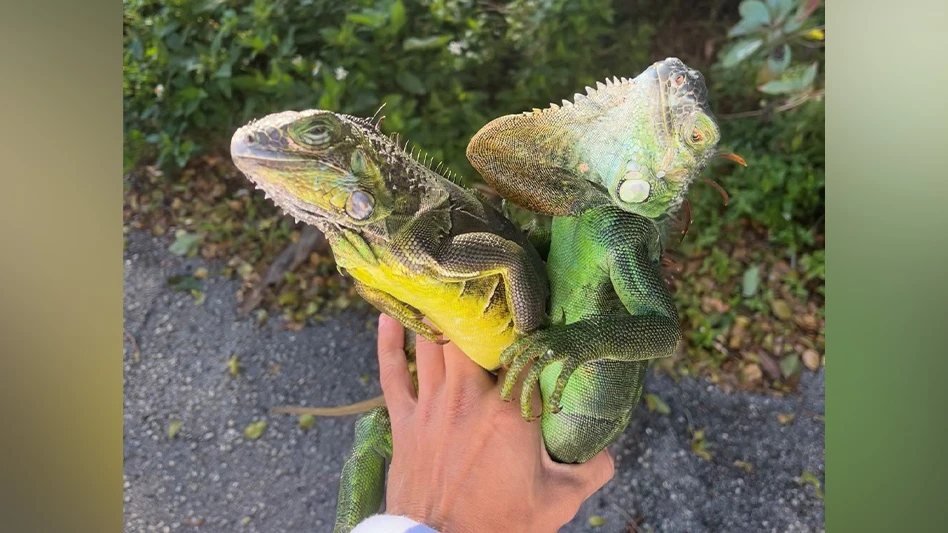
Towards the end of January, southern Florida experienced a cold snap with temperatures around 45 degrees Fahrenheit and lower that caused thousands of iguanas to become cold-stunned, a hibernation-like state, said Humane Iguana Control President Michael Ronquillo.
“Once [the iguanas] get to that temperature, they pretty much just freeze up and they can’t move,” he said.
Through his experience servicing South Florida, Ronquillo said he and his crew have noticed that while some iguanas burrow underground to sleep, many more actually climb into trees.
“That's when you have this falling phenomenon,” he said.
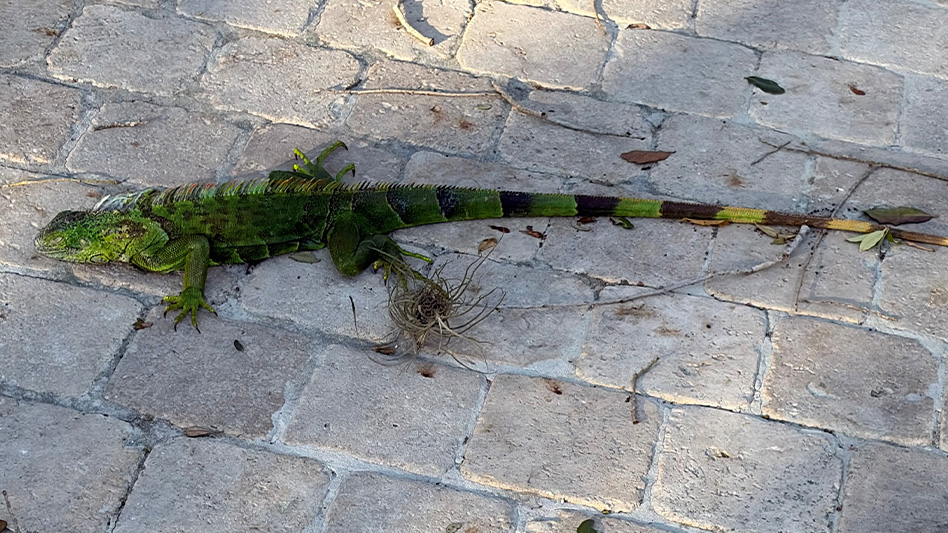
Due in part to iguanas' large size, some six-feet long with weights upwards of 25 pounds, the falling iguanas create a dangerous situation for cars, people, pets and homes. Ronquillo said depending on the height and what the iguana falls on affect the survivability of their fall. If an iguana falls from a tall tree and lands on concrete it will most likely not survive the fall, but if it lands in a bush or on soft grass there’s a chance it could be alive, though still frozen. He said iguanas may also drown if they fall into bodies of water like ponds, canals or pools.
Iguanas that survive a fall can eventually warm up and become mobile again, though Ronquillo said the company is studying their behaviors to see how long they are frozen.
“We saw that when it gets back to about 50 to 55 degrees, they start getting mobilized again, very slowly,” he said. “But we're also noticing that as the temperatures get cooler throughout the years, a lot of the ones are adapting to it.”
During the most recent cold snap, the Florida Fish and Wildlife Conservation Commission allowed residents without permits to remove live, cold-stunned green iguanas from the wild and drop them off at five of their offices in South Florida.
“A lot of our residents and property owners from South Florida were actually picking up these iguanas around their neighborhoods and parks and just dropping them off at these locations,” Ronquillo said. “In our opinion, thousands of iguanas were eliminated from this event.”
Ronquillo believes the population did get reduced drastically, but the level of impact is uncertain due to the surviving iguanas continuing to mate and lay eggs. He said a female iguana can lay up to 70 eggs a year, which could bring the population back to what it was prior to the cold snap depending on how many iguanas survived.
While Humane Iguana Control did not see an increase in the work at the properties it currently provides service to, Ronquillo said there have been new people calling for service with many new properties receiving an iguana cleanup, though summer remains the company’s busier season.
“The summer is always a little bit busier because as [the iguanas] heat up, they’re more active,” he said. “In my opinion, from my personal history of doing the service for seven years now, they are adapting. They’re typically supposed to lay eggs at a certain time of year, and we’re finding baby iguanas all year round. It’s not common, but they are laying eggs now at different times of the year.”
There is a love-hate relationship with the iguanas, but Ronquillo said a key issue is that a lot of people are not really educated on iguanas and the problems they create.
“Iguanas are not from South Florida,” he said. “They’re from Central and South America, and they are actually wreaking a lot of havoc here.”
Iguana damage can range from consuming native plants to destroying people’s homes. Some iguanas, like the spiny-tailed iguana, will consume native mammals, which further impacts the local ecosystem. Ronquillo said everyone can help, whether that be through the collection of fallen iguanas or implementing some kind of service to retrieve them for humane euthanasia.
“It’s a huge help just to try and keep the population under control,” he said. “It helps all the way around.”
Humane Iguana Control provides additional information and tips here.
Latest from Pest Control Technology
- Terminix Strikes a Chord With Preventative Push in New ‘Ahhh’ Campaign
- Company Compassionately Solves a Severe Rodent Infestation
- Earn CEUs from Your State at This Week’s Mosquito Control Virtual Conference
- Jody Green Talks Ticks at Purdue Conference
- Truly Nolen Pest Control Promotes Freize, Hackett
- Preserving Culture, Providing Opportunities Key in Hoffman’s Decision
- Winter Weather Could Decide How Bad Mosquito Season Gets
- Trent Frazer Discusses How Mosquitoes Survive Winter