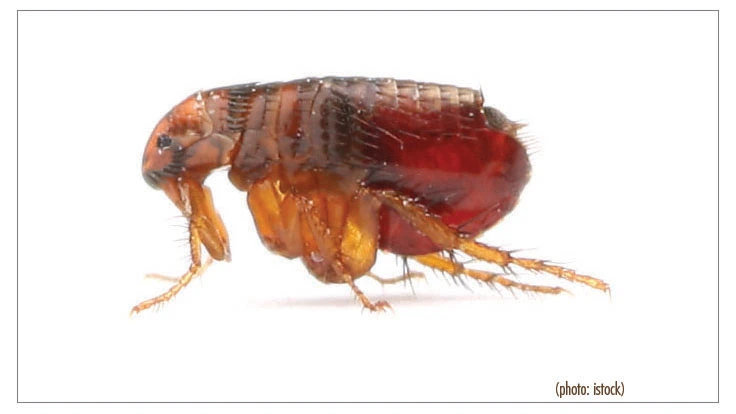
In a new paper published in the Journal of Medical Entomology, scientists from the California Department of Public Health suggest R. felis is not the culprit behind human illness, but rather R. typhi.
As the abstract noted: “Over 90% of human flea-borne rickettsioses cases in California are reported from suburban communities of Los Angeles and Orange counties and are presumed to be associated with either Rickettsia typhi or Rickettsia felis infection. Ctenocephalides felis (Bouché) is considered the principal vector for both rickettsiae, and R. felis has largely replaced R. typhi as the presumptive etiologic agent based on the widespread incidence of R. felis in cat flea populations. However, with no evidence to confirm R. felis as the cause of human illness in southern California, coupled with recent findings that showed R. felis to be widespread in cat fleas statewide, we propose that this hypothesis should be reconsidered. Evidence of only limited numbers of R. typhi-infected cat fleas in the environment may indicate a very rare infection and explain why so few cases of flea-borne rickettsioses are reported each year in southern California relative to the population.”
Click here to access the journal article.
Latest from Pest Control Technology
- Earn CEUs from Your State at Next Week’s Mosquito Control Virtual Conference
- Preserving Culture, Providing Opportunities Key in Hoffman’s Decision
- Winter Weather Could Decide How Bad Mosquito Season Gets
- Trent Frazer Discusses How Mosquitoes Survive Winter
- Barnes Exterminating Acquires Tennessee Pest Solutions
- Pest Index Up 9% YOY in January
- Arrow Exterminators Acquires Hoffman's Exterminating
- PMPs Plan Mera Peak Summit for Parkinson's





