Courtesy of Bill Olesen
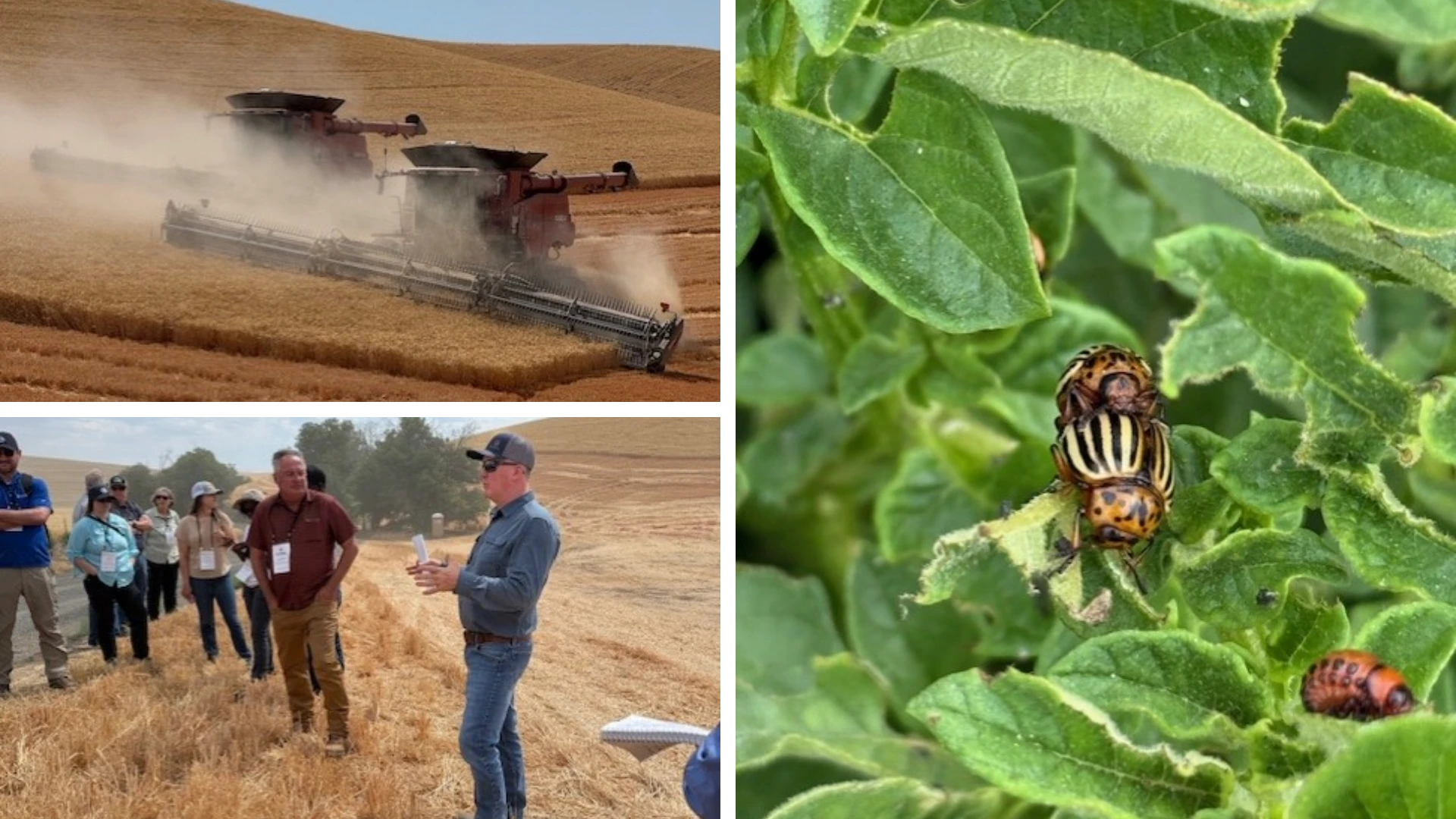
Editor's note: The following article was submitted by Billy Olesen, who joined the Washington State Commission on Integrated Pest Management (WCIPM) for its annual tour through Eastern Washington and spent a few days walking farm fields with applicators, researchers and regulators to learn about the latest integrated pest management (IPM) trends and takeaways.
Ask most pest control professionals what IPM looks like, and they’ll probably describe sticky traps, exclusion work and detailed service logs. But spend a few days walking farm fields with applicators, researchers, and regulators, and you’ll quickly realize we’re all dealing with the same issues — just on different terrain.
This summer, I had the chance to join the Washington State Commission on Integrated Pest Management (WCIPM) for its annual tour through Eastern Washington. The agenda was focused on agriculture, but the takeaways apply just as much to those of us working in homes, schools, restaurants, and commercial facilities.
The WCIPM was originally created in 1995 by the state legislature as the Washington State Commission on Pesticide Registration. Its job was to help secure pesticide registrations for minor uses, particularly in specialty crops. In 1999, its scope was expanded to support all forms of pest management—chemical, biological, and cultural. In 2023, the commission was renamed to better reflect that broader mission.
Today, WCIPM funds research and demonstration projects across agriculture, forestry, structural pest control, mosquito control, aquaculture, right-of-way, greenhouse and nursery management, and more. The goal is to address the pest management needs that aren’t being met through conventional channels.
Over three days, we visited potato packing plants, vineyards, mint distilleries, organic vegetable operations, alfalfa seed farms, and more. We talked about invasive pests, resistance management, beneficial insects, pollinator protection, application technology, and compliance challenges that sounded a lot like what we face in structural work. We saw laser weeders in action. We listened to discussions about planting pollinator habitats between rows of alfalfa. We heard from growers using crop rotation, biological controls, and careful product selection to stay ahead of pest pressure. What became clear very quickly was that Integrated Pest Management isn’t just an ag concept—it’s a universal strategy grounded in decision-making, not just product use.
What struck me most was the overlap between agricultural and structural pest management. Both sectors are under growing pressure to reduce pesticide use, navigate shifting regulations, and deal with public narratives that don’t always align with science. Both rely on professionals in the field making judgment calls that balance safety, effectiveness, and sustainability. The specifics may differ, but the framework—monitoring, identifying thresholds, using the least disruptive method first—is the same.
One of the most valuable aspects of the tour wasn’t just what we saw, but who we met. Participants included a Washington State Senate’s Democratic Agriculture Policy Advisor, a USDA Policy Advisor, staff from WSDA, L&I, and the Department of Health, as well as manufacturers, researchers, and label specialists from all over the US and Mexico. I even got the opportunity to connect with a reporter from NPR who covers agriculture in the Columbia Basin—she was curious, informed, and interested in digging deeper into how our industry works. These are the people influencing how we work, what we can apply, and how we’re viewed by the public. Being part of that conversation matters.
Looking ahead, next year’s IPM tour will take place in Western Washington and will feature a direct focus on structural pest management—alongside cannabis, golf course turf and high-value specialty crops. For the first time, our industry will be on display. It’s a chance to show policymakers and regulators what IPM looks like in real-world structural settings: exclusion programs, sanitation strategies, monitoring tools, and smart, targeted applications. It’s also a moment to advocate for practical, science-based policies that reflect the environments we actually work in.
For those in structural pest management, the message is simple: we’re not alone. Our work is part of a larger pest management ecosystem. What happens in agriculture doesn’t stay in agriculture. Label changes, resistance management strategies, and regulatory trends often start on farms—but they end up affecting how we treat homes, schools, and businesses. Being involved in these broader conversations is one of the best things we can do to protect our industry, our customers, and our future.
IPM isn’t a checklist. It’s a mindset. And the more we understand what’s happening beyond our own service routes, the better equipped we are to lead with professionalism, adaptability, and purpose.
Olesen is the president of Pest Stop Services, serves as the Washington State Policy Affairs Representative for WSPMA, and is a commissioner on the Washington State Commission on Integrated Pest Management.