istock | animatedfunk
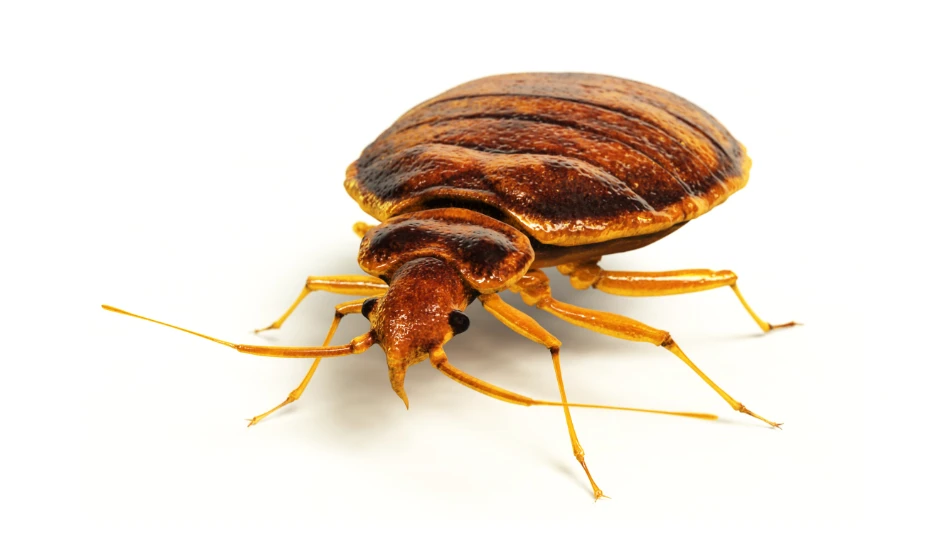
Bed bugs are crafty critters. They hide in cracks and crevices, which makes them difficult to find and treat. Even worse: Using the wrong product too often to control them might result in a stronger strain of the pests.
Consider the three ways bed bugs develop insecticide resistance:
- Reduced cuticular penetration — Bed bugs develop thicker exoskeletons, which means insecticides cannot easily penetrate the cuticle layer like they do in thinner-skinned bed bugs.
- Stronger mixed-function oxidase system — The bug’s enzymes are able to attach to the insecticide entering its body and render it useless.
- Changed nervous system — The alpha subunit on the nerve — the place where a pyrethroid molecule would lock in — no longer fits the pyrethroid key, rendering the insecticide ineffective.
It only takes a few bed bugs with these mutations to survive treatment and breed to develop a new generation of resistant pests.
According to the 2025 PCT State of the Bed Bug Control Market survey, 59% of PMPs said they have encountered bed bug resistance in their market areas. Sponsored by Envu, the survey was conducted in July 2025 by Readex Research, an independent market research company.
Even among the 38% who have not experienced bed bug resistance firsthand, PMPs were taking steps to prevent it.
“We have not seen a resistant strain to my knowledge, but we also try to really rotate the chemicals, so they do not get comfortable with what we are using,” said Scott Monds, general manager, National Exterminating Co., Newport News, Va.
The PCT survey found 46% of service locations have implemented treatment protocols to combat bed bug resistance. Product rotation (84%) was a key element of these programs.
Monds thinks resistance was a bigger issue when the industry was still learning how to control bed bugs and few active ingredients were labeled to treat them.
“I feel like back then, there was probably some chemical resistance built up,” whereas today “we have much better specific chemicals to go directly after these guys.”
Still, it’s important to understand the mode of action and chemical grouping for the active ingredients you’re using, said Lucas Carnohan, who leads technical and corporate development at Greensboro, N.C.-based Pest Management Systems, Inc. You don’t want to switch out products, only to find you’re using something with the same mode of action, he explained.
"The best chance of successful elimination is to use a cocktail of different products. The products should all be labeled for bed bug management, and they should all have active ingredients with different modes of action," said Carnohan.
Even better: Incorporate new active ingredients into your treatment mix for bed bugs.
“If you're fortunate enough to come across a product that's labeled for use on them, that has a new active, a new mode of action that hasn't been around for decades and therefore they haven't had a chance to develop resistance to it, then you have the closest thing to a silver bullet you can get,” he said.
When Cowleys Pest Services, Farmingdale, N.J., has difficulty achieving control, it gets more aggressive. “We get more aggressive with thoroughness,” said co-owner Bill Cowley.
That includes doing more thorough inspections, vacuuming, and heat treatment if needed.
“Our guys are trained very well for bed bugs, so they just get in there and they dig and dig until they find them. And if you can see them, then you can kill them,” said Cowley.
PMPs advised peers to attend training and try the latest approaches to control bed bugs.
“If you're not learning new information about the bed bugs and the techniques, then you really fall behind quickly,” said Andrew Reynolds, vice president of operations, Apple’s Environmental Pest Management Solutions, Lebanon, Tenn. “The more tools you can have in your bag, the better off you are.”
Latest from Pest Control Technology
- Earn CEUs from Your State at This Week’s Mosquito Control Virtual Conference
- Jody Green Talks Ticks at Purdue Conference
- Truly Nolen Pest Control Promotes Freize, Hackett
- Preserving Culture, Providing Opportunities Key in Hoffman’s Decision
- Winter Weather Could Decide How Bad Mosquito Season Gets
- Trent Frazer Discusses How Mosquitoes Survive Winter
- Barnes Exterminating Acquires Tennessee Pest Solutions
- Pest Index Up 9% YOY in January