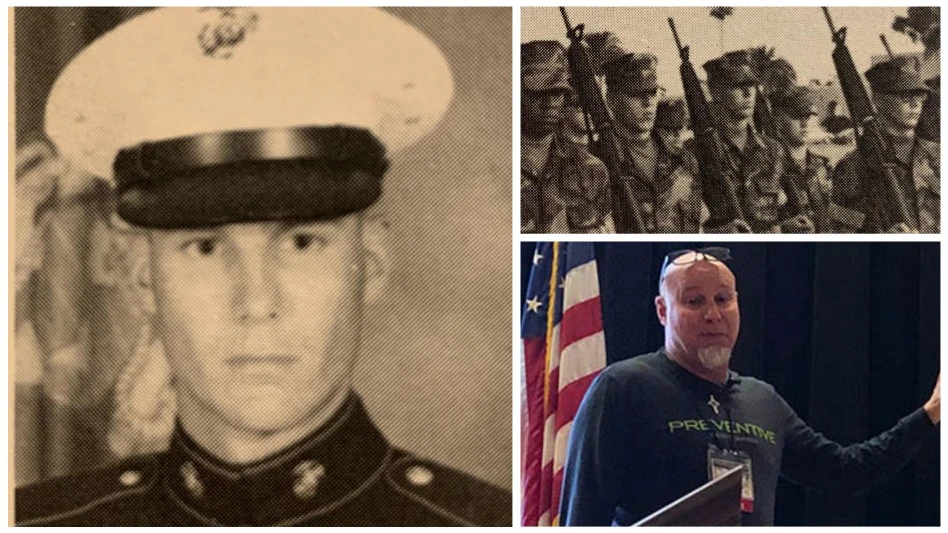
Editor’s note: Alan Feuer, technical director, Preventive Pest Control, Albuquerque, N.M., is also a U.S. Marine Corps veteran. Feuer is writing a series of leadership articles for PCT based on his years of his military and pest control experience. In part two, Feuer discusses leadership fundamentals (read the first article in his series here). Feuer, along with Pete Schopen, Schopen Pest Solutions, McHenry, Ill., and Maria Sorrentino, president of Pest Pros of Michigan, Portage, Mich., will be presenting on how to grow as a leader in a series of in-person events: the “Lead People, Manage Stuff” series. The first session, “Fundamentals of Leadership and Company Culture,” takes place April 29-30, in Denver, Colo.; May 20-21 in Chicago, and June 17-18 in Dallas. For more information contact Sorrentino at 269/503-9860 or maria@pestprosmi.com.
Welcome back!
FUNDAMENTALS are primary rules or principles that are steady, timeless and that should not be changed due to preference and culture.
To look back on just one thought from last month. Let us remind ourselves of ACCOUNTABILITY as we move through today’s lesson.
Leaders must make themselves and their teams ACCOUNTABLE to achieve the FOUR INDICATORS OF LEADERSHIP.
- PROFICIENCY
- DISCIPLINE
- ESPRIT DE CORPS
- MORALE
What do these INDICATORS mean, and how do we recognize each?
These INDICATORS must work together, or the UNIT/TEAM COHESION will falter, leading to MISSION FAILURE.
PROFICIENCY
“The ability of a TEAM to accomplish a task or mission. This may include technical knowledge as well as manual, physical, emotional ability, and competency.” - USMC Doctrine
How do we recognize proficiency? Simply stated, the job gets done as assigned.
In pest management parlance, the pests have been eliminated or managed and we didn’t “burn down” the client’s home, alienate the public or wreck the environment.
Effective leaders have proficient personnel who know how to “3T” their missions. They use their TOOLS and TRAINING to get the job done in a TIMELY manner. (we shall return to the 3T in a later article)
Leaders achieve proficiency by ensuring that they have developed their team (TRAINING), have provided the equipment (TOOLS) they need and finally have afforded them (TIME) to learn and grow and to complete the mission given to them.
DISCIPLINE
“The individual and team attitude that ensures prompt and attentive obedience to directions and the appropriate reaction in situations where direction has not been given.” - USMC Doctrine
Please note, this is SELF DISCIPLINE and not punitive discipline.
We can state that discipline is recognized by the job not only being completed, but also being completed in good order with attention to detail. Leaders ensure discipline by CLARIFYING THE EXPECTATIONS AND DETAILS of the mission as well as the expected BEHAVIOR of the team.
In our line of work, it means, crawling all the way through that crawl space to inspect and/or treat, even though no one is looking and may never find out whether you did the task or not. It means turning over all the fallen logs within 30 feet of the house in search for that carpenter ant nest.
Additionally, good discipline is exemplified by the DELIBERATE and POSITIVE inter-personal relationships that our team members have with our clients, each other and the company leadership. Disciplined individuals and teams are a joy to be around. They passively dominate any environment by their character and bearing.
Disciplined teams are quick to hold each other accountable without the intervention of their leader. This idea will reconnect later in this article.

MORALE
“The attitude of a person within a unit, based upon confidence in himself, his comrades and his leadership.” - USMC Doctrine
As we consider morale, we must understand that we are leaving the realm of action and activity and we enter the realm of feelings, emotion and good-will. Morale stems from the individual feeling that says, “I count, and someone cares about me and is paying attention!”
Teams with high morale know that they will be recognized for excellent performance (PROFICEINCY) and coached, not punished, when they make mistakes. They know that leadership will ensure that everyone is carrying their share of the load and that their teammates are not only qualified for the mission, but also have their back when the going gets rough. They enjoy learning and development that has purpose so that they may believe in themselves when they meet the “battle.”
Make no mistake however, morale is directly affected by and directly effects both proficiency and discipline. Teams that win regularly due to strong proficiency and discipline will display high morale.
High morale will keep a team going during the heat and cold and when the days run long due to client demand or when a brother has been injured or is sick and he needs to be “carried” by the team.
ESPRIT DE CORPS
“Loyalty, Pride and Enthusiasm for the Organization to which one belongs.”- USMC Doctrine
Most people want to be part of something bigger than themselves. This can be a family, team, social or faith organization, or business. Additionally, most people want to have pride in that “unit." They want to know on the worst day that they are part of a good thing, and on the best day, they are part of a great thing.
In cases where a mission and a team are involved, the three prior indicators all feed into Esprit de Corps. Without positive PROFICIENCY, DISCIPLINE and MORALE, any hope of achieving ESPRIT DE CORPS is lost.
You will know that Esprit de Corps is achieved when you experience the following. The team wants to be together; they talk about their wins, they hold their heads up, they look out for each other, hold each other accountable and they fiercely defend the honor of their team and their teammates.
They are proud to be part of THEIR COMPANY and THEIR TEAM and that is how they address it. They use possessive terms such as my team, our company, our service, our mission.
CALL TO ACTION AND NEXT ARTICLE
You may have noticed that I provided ZERO NEGATIVE comparisons in this article. Take my word for it, there are many pitfalls along this journey when “leaders” destroy many if not all of these indicators.
Take some time to reflect on these indicators as they have impacted your life in the past. Then think of how they are impacting you today. Think of how they affect your team and how to improve. Think of how a balance must be achieved in these four areas and how they positively or negatively affect you and your team.
In the next article, we will begin to explore the first of the 11 LEADERSHIP PRINCIPLES that give the best leaders some actionable items to live by.
Here are the first few that apply to SELF-LEADERSHIP.
- Know yourself and seek self-improvement.
- Be technically and tactically proficient.
- Seek and Take Responsibility.
- Set the Example.
If you want to really dive into leadership, be sure to join us LIVE this spring in Denver, Chicago or Dallas.
Latest from Pest Control Technology
- Earn CEUs from Your State at Next Week’s Mosquito Control Virtual Conference
- Preserving Culture, Providing Opportunities Key in Hoffman’s Decision
- Winter Weather Could Decide How Bad Mosquito Season Gets
- Trent Frazer Discusses How Mosquitoes Survive Winter
- Barnes Exterminating Acquires Tennessee Pest Solutions
- Pest Index Up 9% YOY in January
- Arrow Exterminators Acquires Hoffman's Exterminating
- PMPs Plan Mera Peak Summit for Parkinson's





