ST. LOUIS — Linxup surveyed 225 of its customers to examine how fleet roles and operational strategies align with high-performing teams, using a football analogy to frame responses about responsibility, performance and decision-making.
When asked, “Who’s your fleet MVP?” respondents most often identified dispatchers, followed by fleet managers and drivers or technicians:
-Dispatchers (48%) were most frequently cited. Respondents described dispatchers as central to coordinating daily operations and responding to challenges as they arise.
-Fleet managers (25%) were identified as responsible for setting strategy and overseeing performance.
-Drivers and technicians (16%) were cited for executing daily work that directly affects operations.
“Fleets perform at their best when every role is aligned, trusted and recognized,” said Joe Marcotte, senior director of product management at Linxup. “In our view, fleets that prioritize safety and efficiency tend to see stronger overall performance.”
The survey also asked respondents to identify the most important performance metric for their fleet. Safety ranked highest, followed by efficiency and consistent operational output:
-Safety (44%) was cited as the top priority, reflecting a focus on reducing accidents and incidents.
-Efficiency (29%) was identified as a key measure of productivity, including route planning, fuel use and maintenance practices.
-Consistent operational performance (22%) included metrics such as miles driven and completed stops, which respondents associated with predictable daily operations.
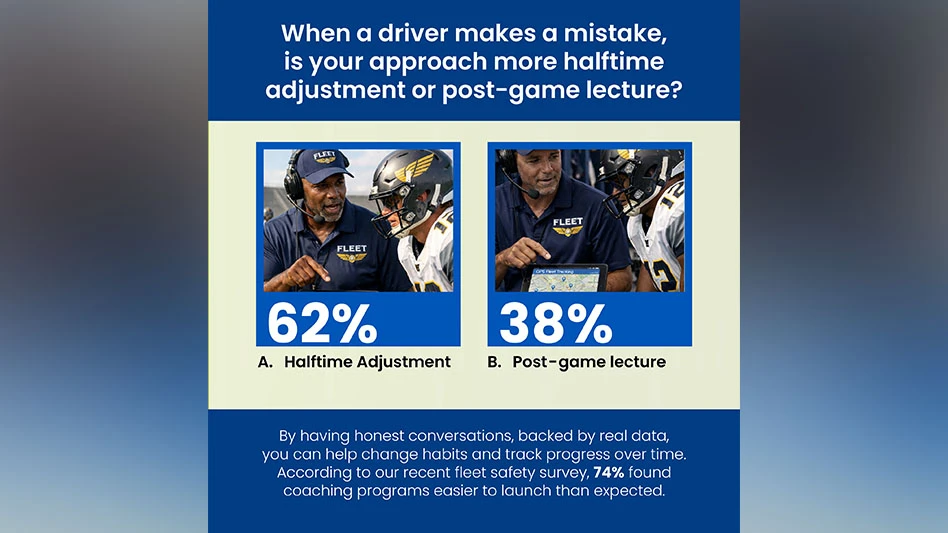
Linxup also examined driver coaching preferences. Overall, 62% of respondents said they prefer addressing issues in real time through alerts, while 38% said they rely on coaching after incidents or performance reviews.
Preferences varied by industry. HVAC and plumbing fleets were most likely to favor real-time alerts, with 78% indicating that approach. Construction fleets differed, with 56% reporting a preference for post-incident coaching and performance review. Pest control respondents echoed the broader group on two key questions, selecting dispatchers as their fleet MVPs and safety as the most important stat.
According to Linxup, the findings suggest that fleets adopt different coaching strategies depending on operational needs, but timely feedback remains a common factor in managing performance.
For complete survey results, click here. For more information about Linux visit www.linxup.com.
When asked, “Who’s your fleet MVP?” respondents most often identified dispatchers, followed by fleet managers and drivers or technicians:
-Dispatchers (48%) were most frequently cited. Respondents described dispatchers as central to coordinating daily operations and responding to challenges as they arise.
-Fleet managers (25%) were identified as responsible for setting strategy and overseeing performance.
-Drivers and technicians (16%) were cited for executing daily work that directly affects operations.
“Fleets perform at their best when every role is aligned, trusted and recognized,” said Joe Marcotte, senior director of product management at Linxup. “In our view, fleets that prioritize safety and efficiency tend to see stronger overall performance.”
The survey also asked respondents to identify the most important performance metric for their fleet. Safety ranked highest, followed by efficiency and consistent operational output:
-Safety (44%) was cited as the top priority, reflecting a focus on reducing accidents and incidents.
-Efficiency (29%) was identified as a key measure of productivity, including route planning, fuel use and maintenance practices.
-Consistent operational performance (22%) included metrics such as miles driven and completed stops, which respondents associated with predictable daily operations.
Linxup also examined driver coaching preferences. Overall, 62% of respondents said they prefer addressing issues in real time through alerts, while 38% said they rely on coaching after incidents or performance reviews.
Preferences varied by industry. HVAC and plumbing fleets were most likely to favor real-time alerts, with 78% indicating that approach. Construction fleets differed, with 56% reporting a preference for post-incident coaching and performance review. Pest control respondents echoed the broader group on two key questions, selecting dispatchers as their fleet MVPs and safety as the most important stat.
According to Linxup, the findings suggest that fleets adopt different coaching strategies depending on operational needs, but timely feedback remains a common factor in managing performance.
For complete survey results, click here. For more information about Linux visit www.linxup.com.
Latest from Pest Control Technology
- Terminix Strikes a Chord With Preventative Push in New ‘Ahhh’ Campaign
- Company Compassionately Solves a Severe Rodent Infestation
- Jody Green Talks Ticks at Purdue Conference
- Truly Nolen Pest Control Promotes Freize, Hackett
- Preserving Culture, Providing Opportunities Key in Hoffman’s Decision
- Winter Weather Could Decide How Bad Mosquito Season Gets
- Trent Frazer Discusses How Mosquitoes Survive Winter
- Barnes Exterminating Acquires Tennessee Pest Solutions