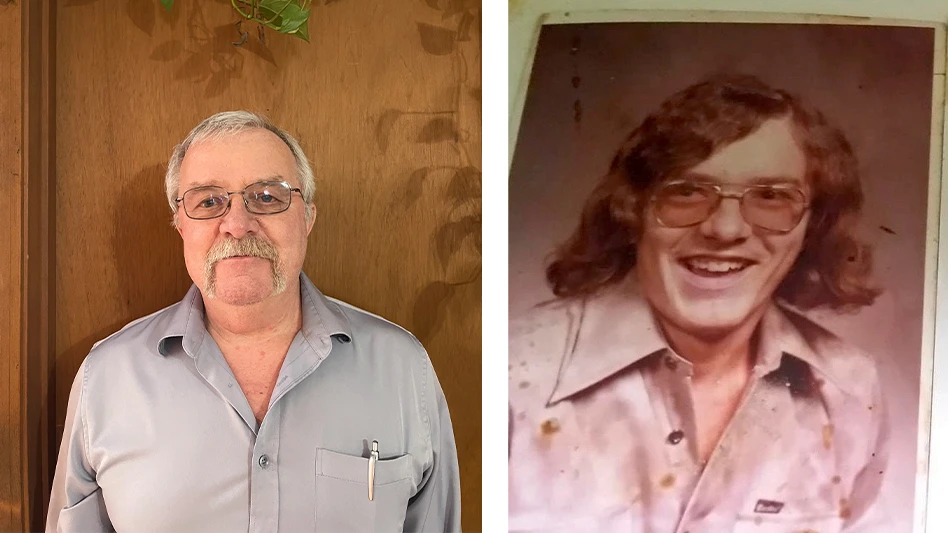
Courtesy of Mike Peaslee
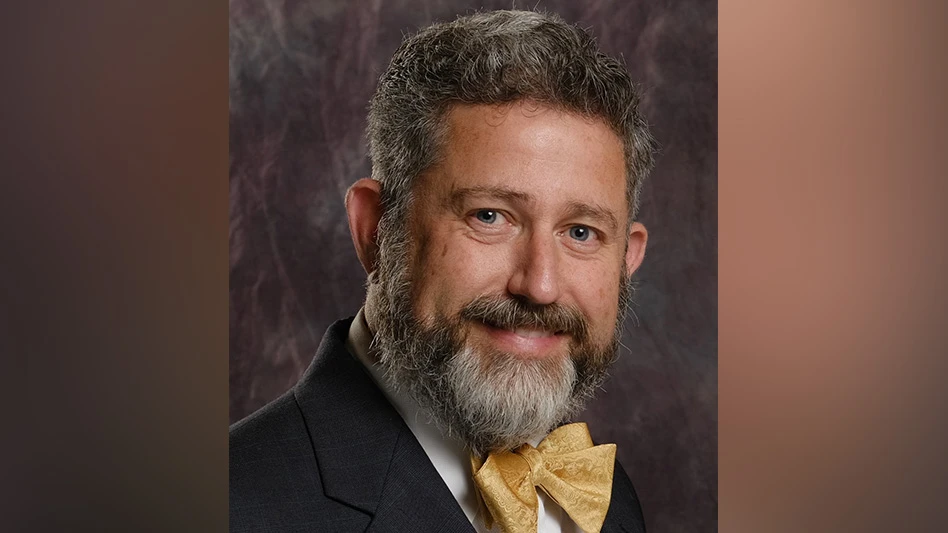
BRUNSWICK, Maine - Many training/technical directors of large pest control companies target these positions while working on undergraduate and postgraduate degrees. This was not the case for Mike Peaslee, the recently retired technical director of Modern Pest Services, an Anticimex company based in Brunswick, Maine.
In 1978, Peaslee had just gotten laid off from a job working at a cotton mill. “My neighbor at the time was Gene Hanscom (longtime Modern employee), who spoke to (then Modern Owner) Dick Stevenson — and after some convincing — they gave me a shot. I was only 19 years old, had no experience in the industry, but it sounded interesting and — over time — it became my career.”
Both Hanscom and Stevenson recognized that Peaslee possessed a strong work ethic and was mechanically inclined. With the exception of a couple breaks when Peaslee briefly left Modern, he has been a constant at the Maine company, which during his tenure experienced significant growth and underwent a leadership transition from Dick Stevenson to his sons (Scott, Doug and Richard Stevenson, Jr.) to now being a part of Anticimex. “Dick and I didn’t always agree, but he respected my opinion and gave me the freedom to work without being micromanaged. It was a mutual respect that made the job enjoyable,” Peaslee said.
In 47 years, both Modern Pest Services and the pest control changed dramatically. In 1978, Modern only had about five or six employees and the treatment strategy at the time relied heavily on spray pesticide applications, Peaslee recalled. “My first job was in a paper mill in northern Maine — killing cockroaches — and we covered every crack and crevice. Over time, though, the industry shifted toward more targeted applications and Integrated Pest Management (IPM). We became more focused on identifying conducive conditions and working with clients on long-term solutions.”
One of Peaslee’s most notable contributions came from an unexpected pest: the European fire ant (aka, European red ant). Found in coastal pockets of Maine, these ants had baffled researchers and pest professionals alike. “I started researching and decided to try a fire ant bait,” said Peaslee, who then reached out to a rep from DuPont (at the time manufacturer Advion Fire Ant Bait). His and Modern’s efforts led to the first registered product for fire ants in the state of Maine. And their management protocols were shared by University of Maine researcher Dr. Ellie Groden at PestWorld 2012 in Boston. “To see our work recognized at that level was a real moment of pride,” he said.
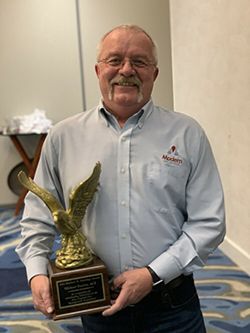
Operating in one of the pest control industry’s most tightly regulated states – Maine – Peaslee has been an important industry voice, serving on the board of directors of the New England Pest Management Association (NEPMA) and remaining deeply involved with its public policy committee. He also serves as Maine’s NPMA State Policy Affairs Representative (SPAR). In retirement, Peaslee continues to attend hearings, advocating for practical regulations and mentoring younger professionals. “Many proposed bills are well-intentioned but lack understanding of real-world impacts,” he said.
Peaslee said it is an exciting time for the pest control industry, with more emphasis on IPM and new, more targeted chemistries. “Education will be key — helping the public understand we’re not ‘poison pushers,’” he said. “We’ll also see more technology: remote monitoring, smart sensors, maybe even AI. These tools will enable faster detection and less reliance on pesticides. But we’ll always need people — this is a people-driven industry.”
Although the industry struggles when it comes to attracting and retaining talent, these are areas where Peaslee sees potential. “Success starts with good people who view this as a career. We should do a better job promoting pest control as a viable, rewarding career —especially since it doesn’t require a college degree. I started as a technician spraying cockroaches and ended up as technical director for one of the world’s largest pest management companies.”
Latest from Pest Control Technology
- Earn CEUs from Your State at Next Week’s Mosquito Control Virtual Conference
- Preserving Culture, Providing Opportunities Key in Hoffman’s Decision
- Winter Weather Could Decide How Bad Mosquito Season Gets
- Trent Frazer Discusses How Mosquitoes Survive Winter
- Barnes Exterminating Acquires Tennessee Pest Solutions
- Pest Index Up 9% YOY in January
- Arrow Exterminators Acquires Hoffman's Exterminating
- PMPs Plan Mera Peak Summit for Parkinson's