By: Brad Harbison
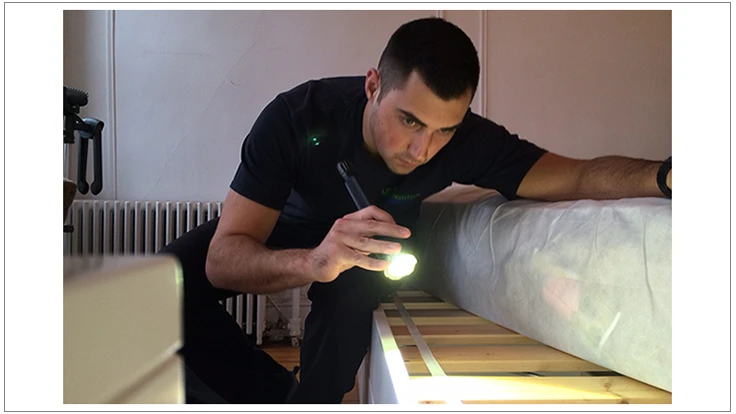
Editor’s note: PCT caught up with James Molluso, a second-generation pest management professional from Brooklyn, N.Y.-based Northeastern Exterminating. Northeastern Exterminating was founded in 1994 by Joseph Molluso; his son, James Molluso (age 28), joined the company 10 years ago. Are bed bugs still as big a problem in New York City as they were in the early to mid-2000s when they were capturing headlines? What are New York City pest management professionals seeing in the field? How have bed bugs impacted their business? We posed these and other questions to James Molluso in the following Q&A.
PCT: Can you give me an idea of how the bed bug resurgence has impacted your business? When did Northeastern Exterminating really notice an increase in service requests?
James Molluso: Contrary to belief, bed bugs are still an issue in NYC. Our offices receive many bed bug-related calls a day. The calls range from homeowners who want DIY advice about bed bugs and if they can even handle it themselves. We also get price quotes, calls from local authorities for advice, and we get asked every question under the sun about bed bugs. We have even gotten calls from people in other countries who don't have a pest control company near them and need to be walked through a self-treatment. We sometimes joke that we have turned into a bed bug hotline. Surveys performed by pest control associations and publications would have you believe that the bed bug issue has quieted down a bit here in NYC. I would disagree. We think at this point in the game people are hiring more reputable firms to eliminate bed bug infestations. Back in the mid-2000s people thought any PCO would do the job. Now, the general public is beginning to understand that having hiring a firm that has a reputation for performing successful bed bug treatments is what they are looking for in a company. They understand that hiring someone with little experience can make the problem worse and turn out to be more expensive for them. Also, if the elimination protocol you offer your customers matches what professionals and government agencies recommend the customers are more likely to use you. I would say we've noticed a big increase around 2010 and it has increased every year ever since.
PCT: Looking at your business in 1994, the early 2000s, and now, can you give us an idea of how much bed bug work you did during each of those periods, in terms of # of service requests and proportion of your company's revenues that come from bed bug work?
JM: When the business opened its doors in 1994 it was focused mainly on general pest control for residential and commercial accounts. Rodents, termites and roach services were our gravy back in '94 and there weren’t any calls for bed bugs. In 1994, we received zero calls related to bed bugs. Our first call for bed bugs was in 2004; 2010 is when our service calls for bed bugs shot up and increased greatly. We wish we had a rhyme or reason but we think all PCOs received many bed bug service calls during that year. This was the same year where the bed bug "epidemic" began. It was all over the news and it’s all people spoke about — how bed bugs are taking over the city. From 2010 to present day, we have noticed a steady increase of 10%-plus per year of bed bug service calls to our office. In comparison, in 1994, 0% of our revenue was related to bed bugs, in 2010 it was 30% and last year (2015) 76% of our revenue was bed bug-related work (inspections and treatments). It’s not easy work by any means but we do our very best.
PCT: How has NE Exterminating adapted its business model to in response to both the opportunities and challenges that come with bed bug work? Has it hired more technicians? Set up a separate bed bug division? Changed its sales/marketing strategies. How have you been able to develop a good reputation?
JM: Once we noticed an increase of bed bug services in 2010 we immediately understood we needed to adapt to this change. This was a new service for us. You have to remember we were primarily dealing with termites, rats, roaches, ants and fleas. We knew that part of the game, but bed bugs were truly a different pest. The first thing we did in response to this increase of bed bug service calls was to educate ourselves on the topic. When eliminating any pest you have to learn how the insect feeds, its sleeping pattern, where they harbor, what repels them, what attracts them and the best methods of elimination. If you're not always thinking like the pest, you will not succeed in this business. We wanted to learn every stitch of information about this new beast we were hearing so much about. We also went to seminars hosted by NPMA, read books related to bed bugs, researched studies and did a lot of hands of work ourselves. Learning from people like Michael Potter and Lou Sorkin helped us understand everything about bed bugs. We had to create new bed bug protocols, treatment plans, inspection protocols and learn how to price these services. We had to understand that the products that we used that had more of a 'call back' rate and which worked better. Then in 2012 there was talk of resistant strains so we had to change up our products. We always try to stay up to date on all articles and studies so we understand what is working and what isn't working anymore. Pests are always adapting and if you don't adapt with them you'll be left in the dust. Staying at the forefront of all new studies and research is key. When we opened our doors in 1994 all of our advertising was print, which was very static. If you wanted to add a service you couldn't add that to your yellow page add, you would have to wait till the next year. Now that we have our website, a Twitter account, a Facebook page as well constantly reaching out to chemical companies and other PCOs to blog with and speak on podcasts. It has changed the marketing aspect 10-fold. You can now be recognized nationwide just based off Internet marketing. When you’re blogging, tweeting, and spreading the good word on the correct protocol your reputation becomes known. The number one secret to a good reputation is customer service and a quality treatment. It sounds crazy, but all of my customers have my personal cell phone number and if they text or call me during normal business hours they will get a response. If their problem persists we will be with them till the end. When a customer feels like you truly care and you make them feel like a part of your family they will recommend you forever. I will ALWAYS reach out to old customers to see how things have been going and to make sure they were satisfied. This business is all customer service and communication.
PCT: You had mentioned that you are as busy as ever with bed bugs. In what situations and/or in what type of accounts are you seeing bed bugs where you hadn't previously? Why are you not seeing a decline? What are some challenges working with landlords?
JM:We are still very busy with bed bug treatments and inspections. We think word of mouth and online reputation is what is driving our bed bug work in. We are hired by landlords, private homeowners and tenants. The big issue we are noticing now is in apartment buildings. The recent gentrification that has swarmed to Brooklyn and the outer boroughs of NYC is causing a higher rate of people moving, homelessness and an increase in high rise residential condos being built, all of which contributes to the bed bug infestations. There are also many problems in NYCHA affordable housing and communities of lower socio-economic status. Since those lower income individuals do not have the proper funds to immediately deal with a bed bug infestation it can allow for time for the bed bugs to spread. Due to these tenants not being able to pay for an expensive treatment they may spray OTC store bought repellant pesticides which will cause a bed bug issue to spread uncontrollably throughout a building. Additionally, many tenants who have been living in a building since the 1950s or ‘60s may be too elderly to realize they have a bed bug issue. For example we recently got called to by a tenant who has been dealing with their bed bug issue for months and are at wit’s end. When we arrived on site we informed the tenant that due to our protocol we must contact management and gain access to adjoining apartments. In this case, it was an eight-family residential unit. Seven out eight tenants were very cooperative and allowed us to create our treatment plan for this building. The eight tenant was very competitive and would not allow us into her apartment. We later learned she had a severe bed bug infestation, was mentally ill and wouldn't let us in to assess the bed bug infestation. Due to this denial of access we couldn't move forward with treatment and all other seven tenants have since moved out of the apartment building. That very building is on the Brooklyn real estate market as we speak being offered up to sale for $1.2 million with an uncooperative tenant who has bed bugs. The other problem are slum lords who do not respond to tenants who have bed bug infestations. These slumlord landlords purposely do not answer the tenants and this also sometimes causes misapplication of pesticides by the tenants, the tenants also drag infested mattresses throughout building hallways to discard in trash, possibly spreading bugs throughout the buildings. Most landlords in NYC are great but the ones who are bad are really causing this problem to get worse. Since NYC is littered with multi-unit buildings who live in close quarters we believe the bed bug issue is here to stay.
PCT: Have you experienced situations where customers are experiencing bed bug fatigue and simply are not able to pay for your services? Do you believe requests for bed bug work will slow do in the future?
JM: Yes, almost every day. No matter the income level of the caller the first thing we do is inform the customer that the law in NYC states that the landlord is responsible for treating any pest control issue in their apartment. This will usually take care of any potential customer who may not be able to afford a pest control company. If the landlord doesn't respond to their concerns they are instructed to dial 311 (NYC’s complaint line). If the landlord is not responsive within 30 days the tenants can pay for the services themselves and deduct it out of rent (with all proper detailed proof of issue). We are in business to make money, but we also have big hearts and try our best to work out payment plans and lower our prices a bit for potential customers who have no other choice but to pay. Our hopes are that bed bugs are eliminated for good. We feel that until the general public is informed on proper steps to take when a bed bug issue is expected that things will stay the same. Big city, close quarters and smart bugs are the main issue.
PCT: Can you tell us a bit more about your business? How many employees do you have? What is your service area? In addition to bed bug work, what other types of services do you offer?
JM: Our service area is all five boroughs of NYC and at this point much of our focus has turned to bed bug work. It is a family business and I jumped aboard about 10 years ago and have been loving it since. My father, Joseph Molluso is the owner so ever since he has opened the doors I have been by his side. Day one of the business I was age seven, so you could say I was born an exterminator. I am now part owner and look to pass this company on down to my child one day. I put all of my energy in this industry and love every second of it. This business and industry is more than the bottom line to us. It’s a love for the trade and the respect for the customers and other technicians. We wake up every day with the goal of making sure we do everything possible to make our customers feel comfortable. It’s for the love of pest control!
Latest from Pest Control Technology
- Earn CEUs from Your State at Next Week’s Mosquito Control Virtual Conference
- Preserving Culture, Providing Opportunities Key in Hoffman’s Decision
- Winter Weather Could Decide How Bad Mosquito Season Gets
- Trent Frazer Discusses How Mosquitoes Survive Winter
- Barnes Exterminating Acquires Tennessee Pest Solutions
- Pest Index Up 9% YOY in January
- Arrow Exterminators Acquires Hoffman's Exterminating
- PMPs Plan Mera Peak Summit for Parkinson's





