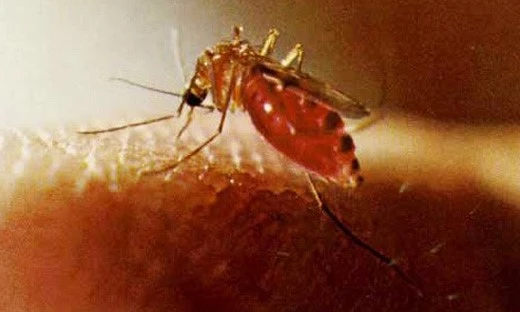
“Florida mosquitoes that can carry Zika virus and other diseases are showing resistance to pyrethroids — a common group of insecticides used to treat them — according to a new study by U.S. Department of Agriculture (USDA) scientists and their collaborators.” — Source: USDA Agricultural Research Service (https://www.ars.usda.gov/news-events/news/research-news/2019/mosquitoes-show-high-resistance-to-common-insecticide/)
Resistance in mosquitoes is “definitely a huge threat,” says Craig A. Stoops, Ph.D., B.C.E., and chief science officer of Mosquito Authority in Jacksonville, Fla. Although Stoops has not encountered many confirmed populations of resistant mosquitoes in the United States yet, he says, “We need to be very cognizant of [resistance], especially since we have our hands tied with the limited modes of action that we have approved for use.”
John Bell, B.C.E., regional technical manager/staff entomologist for TruGreen in Orlando, Fla., agrees. “In the grand scheme of things, down the road we could be facing some resistance issues if we don’t manage our products properly,” he said.
Causes and Concerns
“The WHO Global report on insecticide resistance in malaria vectors: 2010-2016 showed that resistance to the 4 commonly used insecticide classes — pyrethroids, organochlorines, carbamates and organophosphates — is widespread in all major malaria vectors across the WHO regions of Africa, the Americas, South-East Asia, the Eastern Mediterranean and the Western Pacific.” — Source: World Health Organization (https://www.who.int/malaria/areas/vector_control/insecticide_resistance/en/)
Resistance is the ability of mosquitoes to build a tolerance to an insecticide as a result of gradual, genetic changes. In the United States in particular, “The big problem is that we have very limited modes of action [options],” as the primary insecticides approved for barrier spays are pyrethroids, says Stoops. PCOs who are finding resistance will need higher rates of the insecticide to kill the same population, without exceeding the label requirements, Bell added. Alternating to a different brand name is not the solution because the product’s chemistry will still be the same. “Even though you change to a different product, if it is still a pyrethroid, [mosquitoes] will develop resistance to that insecticide as well,” explains Bell.
“In true resistance management, you’re going to want to use a completely different class of chemical,” Stoops added.
“One of the concerns I have is that the way you build resistance is more and more exposure to lower dosages [of insecticide],” says Bell. With the mosquito control segment growing tremendously, especially in the last five years, “We have more people spraying products, which means more exposure, and if labels are not followed correctly and we accidentally spray lower rates, the chances of mosquitos adapting to those lower rates is going to grow,” Bell said.
Claudio Salem, west market technical director of Rentokil North America, was responsible for controlling mosquitoes during the 2016 Olympic games in Rio de Janeiro, Brazil. He adds that the mosquito population, in general, is also growing. The more mosquitoes we have, the more resistance we will have, he says.
Since a mosquito has a two- to four-week life cycle, in the course of a 16-week summer, at least four life cycles of mosquitoes “can build up immunities pretty quickly if [a PCO] is doing the same thing over and over again,” explains Clark Young, owner of Bite Back Mosquito Hunters in Maple Grove, Minn. The need exists to break the cycle and introduce a different chemical, he says.
Analyzing Resistance and Finding Solutions
Before solving a resistance problem, though, the first step is to ensure that a resistance problem actually exists. When a pest control company finds a treatment failure in a local area, resistance as a cause is “probably the least likely of the possibilities,” says Stoops. Although continual callbacks might prompt the initial conclusion to be a resistance problem, Stoops explains that his company rules out any possible mistakes first to exclude the possibility of resistance. Perhaps an applicator error occurred where the proper application was not applied or a proper source reduction was not performed, he explains. Additionally, mosquito sources in a neighboring location that have not been addressed could be a cause.
Once resistance is established in one area, the assumption cannot be made that resistance will necessarily occur in a neighboring area, explains Salem. In Brazil, “We found resistant mosquitoes in one cluster, and the cluster in the neighboring county did not see resistance. So, you have to test each one of these areas,” he says, and tackle one area at a time, as a blanket solution might not be the answer. “Do not assume that because [one resistance solution] worked here, that it’s going to work there,” says Salem. As a result, observation and study of the results are key.
Regarding solutions to mosquito resistance, in addition to educating customers about eliminating accessible water sources within their yards, “We’re beginning to look at alternate products or alternate ways of controlling, [such as] the use of insect growth regulators,” says Bell.
Although rotation in products is important, explains Salem, “it is a mitigation action, not a solution, and we need to think about larvicides.” Larvae are much less able to resist pesticides than adult mosquitoes, he says.
Latest from Pest Control Technology
- Earn CEUs from Your State at Next Week’s Mosquito Control Virtual Conference
- Preserving Culture, Providing Opportunities Key in Hoffman’s Decision
- Winter Weather Could Decide How Bad Mosquito Season Gets
- Trent Frazer Discusses How Mosquitoes Survive Winter
- Barnes Exterminating Acquires Tennessee Pest Solutions
- Pest Index Up 9% YOY in January
- Arrow Exterminators Acquires Hoffman's Exterminating
- PMPs Plan Mera Peak Summit for Parkinson's





