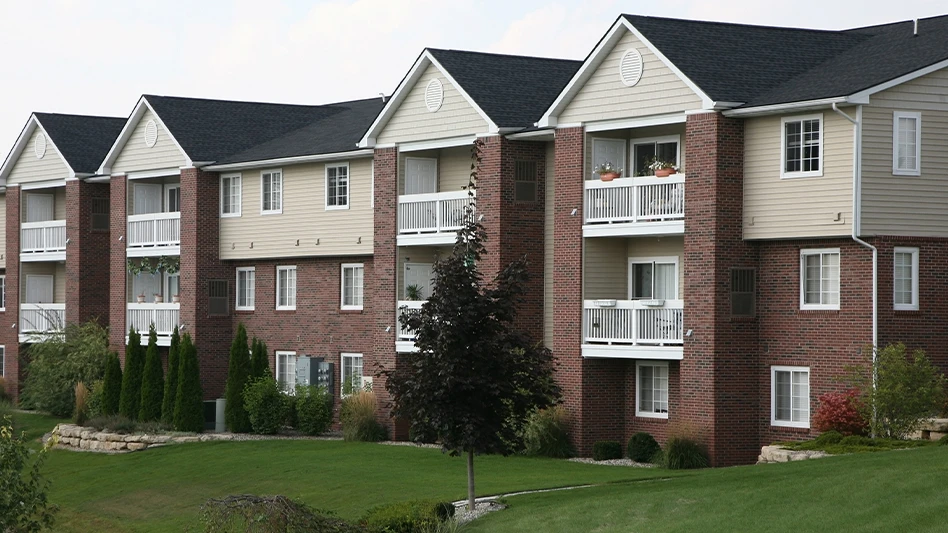
Buildings or entrances that are connected to each other or share a common wall constitute a block. The last article introduced the concept and explained how to set up the program. Here, we discuss how to implement the block-by-block program.
Implementing a Comprehensive Mouse Elimination Program
The program has to be thorough and intensive. We've seen the best results when technicians emphasize trapping first, tracking powder second, and baiting last (or just outdoors, or not at all). Here are some suggestions:
1. In each apartment, first make a careful inspection of all rooms and closets. Either property staff or the contractor should pull the stove and refrigerator away from the wall, and sweep up or vacuum mouse droppings and debris so that future mouse activity can be identified.
2. Look for evidence of mice and, in particular, for holes that could be used by mice (or for tracking powder application, if you use it) and for other sites where controls can be used. Check any utility rooms, including any voids for the vent runs (a mechanic's mirror can be useful here).
3. Utility closets are often major entry points for mice. The utility closet must be accessed, inspected, and serviced as needed at every service visit. Snap traps are more effective for older and experienced mice and should be favored over glue traps where practical, and particularly in utility closets.
4. Any basements or accessible crawlspaces should be inspected at each service date and treated and pest-proofed as needed.
5. In our experience, technicians do not place enough snap traps or glue traps. A minimum of three should be placed inside utility closets. Three should be set behind the stove and another two next to, under, or behind (preferably) the refrigerator. Also place traps behind any access panels installed in plenum spaces in drop ceilings, and wherever mouse droppings indicate activity in a site suitable for trapping.
6. Selectively apply a rodenticide tracking powder (labeled for use against mice indoors) into wall voids through the holes identified in the initial inspection. Do not deviate from label directions. Do not over apply. In heavily infested units and where infested wall voids cannot be accessed through existing holes, apply tracking powder into infested wall voids through inconspicuous holes drilled for that purpose. The floor level void (behind the kickplate under the floor level kitchen cabinets should be treated as well.
7. If rodenticide baits are used, always place them in sites NOT accessible to children or pets (this can be difficult), or inside tamper-resistant bait boxes.
Post-treatment Follow-up Measure
Tell the residents to let the office know if they see a trapped mouse or if they dispose of the mouse. Whenever staff, the contractor, or a resident removes a mouse or a trap, the trap must be replaced or reset.
Maintenance staff should be given glue traps whenever they are called upon to dispose of trapped, dead mice, so that they may replace the traps with fresh, new ones. Decide whether you want to supply the property's office with glue traps that can given to residents when they report mouse problems.
Scheduling must include reinspection, and reservicing as necessary, in every unit the building block, every 1-2 weeks, until there is no further evidence of mouse activity in the entire block of buildings. Not until then do you move on to the next building or block of buildings.
The authors are well-known industry consultants and owners of Pinto & Associates.