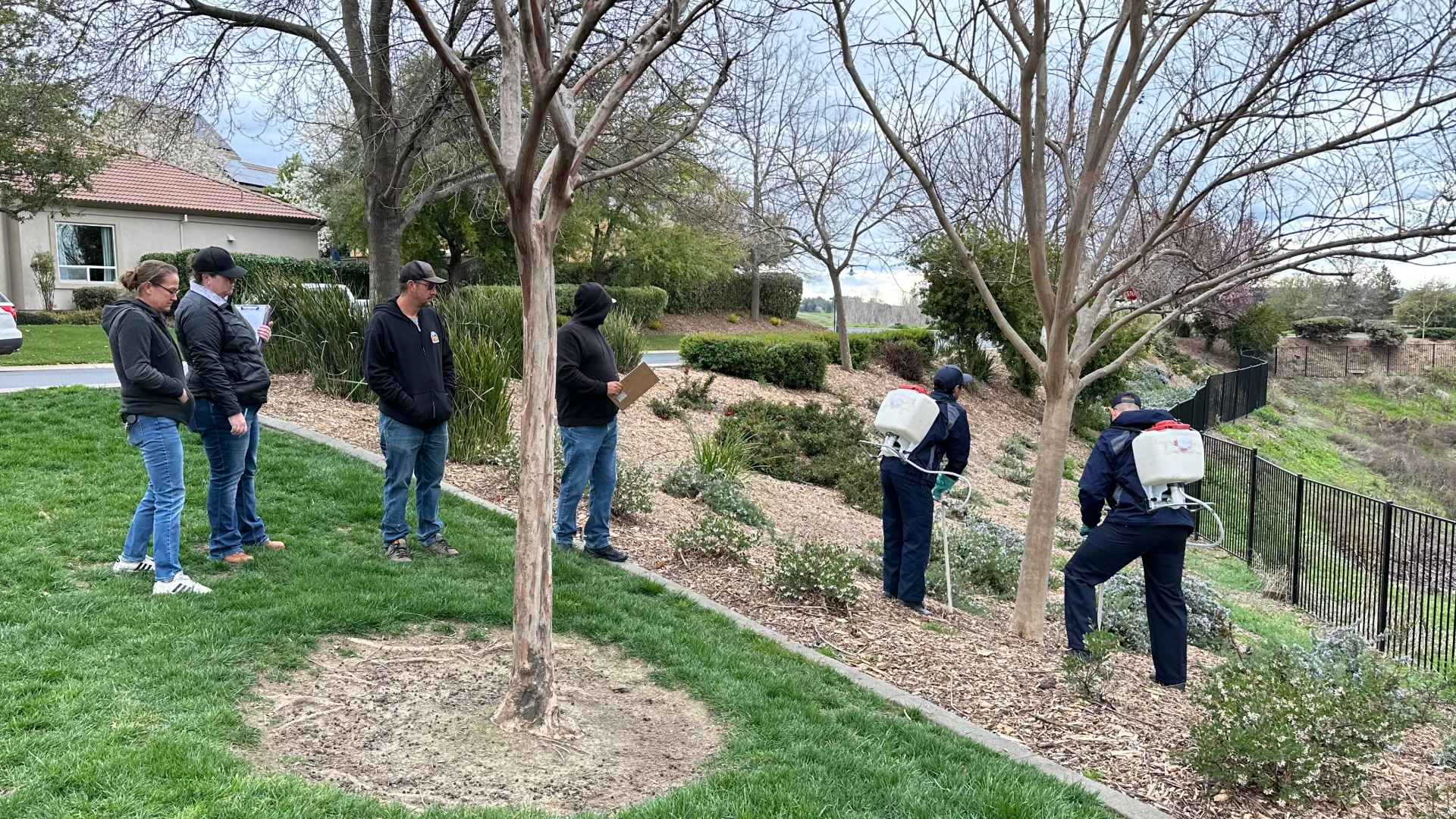
Credit: Jim Steed
SACRAMENTO, Calif. – For more than 20 years, Neighborly Pest Management in Sacramento, Calif., has stepped up to work with various counties in North Central California to eradicate glassy-winged sharpshooters, an invasive leafhopper pest that vectors the bacterium that causes Pierce’s disease – a disease that kills grapevines.
When PCT first reported on this issue in 2021, Neighborly Pest Management was working with the Solano County Department of Agriculture to eradicate the pests from vineyards and wineries in North Central California.
At the time, there were no reports of sharpshooters invading Northern California properties, with the goal to prevent the pests from spreading up north.
Four years later, Neighborly president Jim Steed said the invasive pests have now moved north of Sacramento, specifically El Dorado County, with confirmed reports in neighborhoods from nursey plant material brought up from Southern California nurseries.
Sharpshooters are about a half an inch long and can move quickly, Steed said.
“Once it gets established, it’s pretty effective at reproducing and moving large distances, so we just started the eradication process in Northern California,” he said. “Each county has these extensive surveys that they do and when inspectors find activity, if it’s a large treatment area, they need a contractor to do treatments on host materials.”
The glassy-winged sharpshooter thrives on most landscaping plants and vegetation (e.g., citrus, jasmine and crape myrtle trees).
Steed said the program in Solano County is very close to eradication, but sharpshooters have been popping up in adjoining counties.
“We’re the only contractor working on it, and our customer is the county agriculture department, so you really have to know your [treatment],” he said. “We’ve gotten to know our regulators pretty well, and we worked with one county to produce a mock inspection video for training purposes.”
Although sharpshooters have moved to Northern California and more treatment needs to be done, Steed said these treatments are working with various counties have given Neighborly a chance to make a name for themselves in a large pest control market.
“Neighborly has been pretty successful in the treatment, and it makes other counites feel more comfortable working with us,” he said.Latest from Pest Control Technology
- Earn CEUs from Your State at Next Week’s Mosquito Control Virtual Conference
- Preserving Culture, Providing Opportunities Key in Hoffman’s Decision
- Winter Weather Could Decide How Bad Mosquito Season Gets
- Trent Frazer Discusses How Mosquitoes Survive Winter
- Barnes Exterminating Acquires Tennessee Pest Solutions
- Pest Index Up 9% YOY in January
- Arrow Exterminators Acquires Hoffman's Exterminating
- PMPs Plan Mera Peak Summit for Parkinson's





