National Wildlife Research Center
A significant new study reveals environmental DNA (eDNA) technology can detect a single mouse within just one hour of its arrival in a controlled environment, potentially offering a powerful new tool for protecting vulnerable island ecosystems from destructive invasive species.
The research titled "Evaluation of Environmental DNA as a Surveillance Tool for Invasive House Mice (Mus musculus)," published in the journal Environmental DNA, demonstrates that repeated, strategic deployment of eDNA monitoring in high-risk areas could provide early detection capabilities. These findings represent a critical advancement for island conservation, potentially allowing managers to identify and eliminate invasive threats before they establish populations and cause irreversible damage to sensitive habitats and endangered species.
Animals and plants are shedding bits of DNA all the time – through skin cells, hair, saliva, waste, etc. eDNA testing allows you to collect a sample from an environment and analyze it to see what DNA of animals and plants are present.
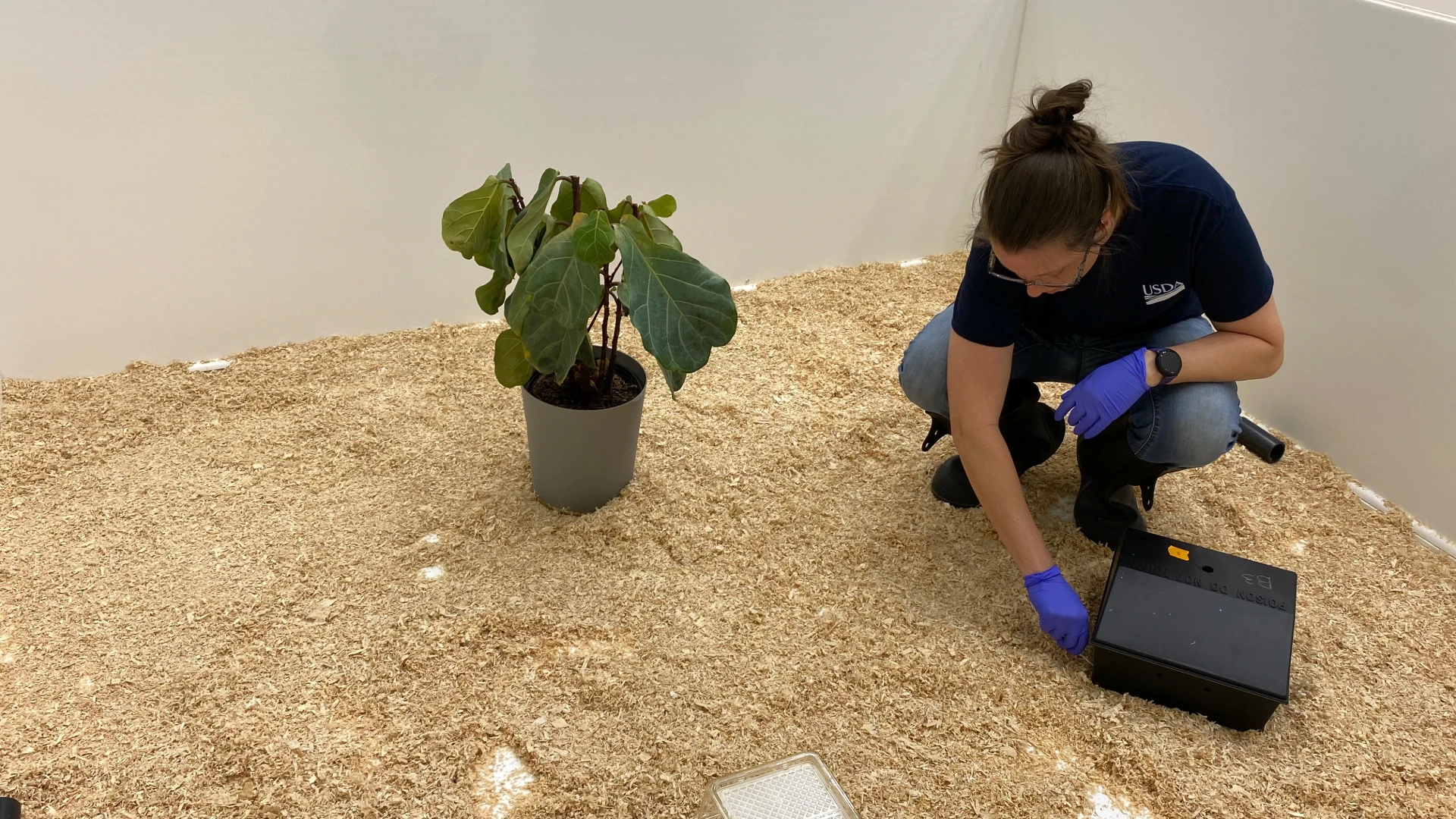
For this study, scientists from the USA and New Zealand tested a new eDNA technique that can find traces of mice in different environmental samples when mice are abundant. Amazingly, the DNA traces from just one mouse could be found within an hour of the mouse entering an area. Further, sampling location mattered. Even within a small, contained space with high densities of mice, swabbing areas the mice did not use versus those that they visited often yielded dramatically different numbers of positive detections. When tested outside under more natural conditions, these DNA traces disappeared after four days. This discovery helps conservation teams better understand when and where to look for signs of mice and how to assess recent visitation. It also shows why it’s important to use layers of detection methods to discover invading mice early, before they can cause damage to islands and their native wildlife.
“This research lays the foundation for how to apply eDNA to inform management decisions about invasive mice and shows that sampling location and timing matter. On one hand, it is sensitive enough to detect a mouse within mere hours of it first arriving into a contained area. On the other hand, well-designed monitoring strategies are critical for success. This method adds to our biosecurity toolbox,” said Dr. Antoinette Piaggio from the U.S. Department of Agriculture Wildlife Service’s National Wildlife Research Center and lead author on the study.
The implications of this study are significant, as house mice pose a threat to agriculture, native biodiversity, and human food security worldwide. By utilizing a new eDNA technique for detecting house mouse DNA, stakeholders can better protect sensitive ecosystems and mitigate the impacts on agriculture, food production, and biodiversity. This research not only demonstrates the technique's sensitivity but also its readiness for field trials, providing valuable insights for biosecurity efforts and future developments in managing other invasive species.
"Prevention is always better than the cure when it comes to invasives on islands, and we can always improve our toolbox. Environmental DNA offers a powerful way to detect harmful invasive species like rodents, and this research is an excellent proof of concept for conservationists seeking to build practical, cost-effective tools to protect islands," said Dr. Nick Holmes, co-author and lead for The Nature Conservancy’s Island Resilience Strategy.
With the new eDNA technique validated in indoor and outdoor controlled environments describing its sensitivity and limitations, it is shovel-ready for field testing in real-world settings, and the team has been quick to connect with leading conservation practitioners, including Island Conservation, and the New Zealand based Zero Invasive Predators and Predator Free 2050
“The logical next step is to take this technique to the field on real islands to solve real problems. By testing multiple sampling approaches, we can develop the standard operating procedures necessary to drive this tool into everyday use and provide new insights not previously possible,” said David Will, co-author and Director of Impact and Innovation for Island Conservation. “This DNA technology will advance island conservation—turning pools of water, beach sand, and even spider webs into new detection methods, dramatically accelerating our ability to protect these island ecosystems for biodiversity, oceans, and communities.”
This research was a core component of the New Zealand Ministry of Business Innovation and Employment Smart Idea Grant, UOOX2103, and completed with support from Predator Free 2050, The Nature Conservancy, The David and Lucile Packard Foundation, and the National Wildlife Research Center. Staff collected samples while performing fieldwork funded by the National Fish and Wildlife Foundation.
The research titled "Evaluation of Environmental DNA as a Surveillance Tool for Invasive House Mice (Mus musculus)," published in the journal Environmental DNA, demonstrates that repeated, strategic deployment of eDNA monitoring in high-risk areas could provide early detection capabilities. These findings represent a critical advancement for island conservation, potentially allowing managers to identify and eliminate invasive threats before they establish populations and cause irreversible damage to sensitive habitats and endangered species.
Animals and plants are shedding bits of DNA all the time – through skin cells, hair, saliva, waste, etc. eDNA testing allows you to collect a sample from an environment and analyze it to see what DNA of animals and plants are present.
For this study, scientists from the USA and New Zealand tested a new eDNA technique that can find traces of mice in different environmental samples when mice are abundant. Amazingly, the DNA traces from just one mouse could be found within an hour of the mouse entering an area. Further, sampling location mattered. Even within a small, contained space with high densities of mice, swabbing areas the mice did not use versus those that they visited often yielded dramatically different numbers of positive detections. When tested outside under more natural conditions, these DNA traces disappeared after four days. This discovery helps conservation teams better understand when and where to look for signs of mice and how to assess recent visitation. It also shows why it’s important to use layers of detection methods to discover invading mice early, before they can cause damage to islands and their native wildlife.
“This research lays the foundation for how to apply eDNA to inform management decisions about invasive mice and shows that sampling location and timing matter. On one hand, it is sensitive enough to detect a mouse within mere hours of it first arriving into a contained area. On the other hand, well-designed monitoring strategies are critical for success. This method adds to our biosecurity toolbox,” said Dr. Antoinette Piaggio from the U.S. Department of Agriculture Wildlife Service’s National Wildlife Research Center and lead author on the study.
The implications of this study are significant, as house mice pose a threat to agriculture, native biodiversity, and human food security worldwide. By utilizing a new eDNA technique for detecting house mouse DNA, stakeholders can better protect sensitive ecosystems and mitigate the impacts on agriculture, food production, and biodiversity. This research not only demonstrates the technique's sensitivity but also its readiness for field trials, providing valuable insights for biosecurity efforts and future developments in managing other invasive species.
"Prevention is always better than the cure when it comes to invasives on islands, and we can always improve our toolbox. Environmental DNA offers a powerful way to detect harmful invasive species like rodents, and this research is an excellent proof of concept for conservationists seeking to build practical, cost-effective tools to protect islands," said Dr. Nick Holmes, co-author and lead for The Nature Conservancy’s Island Resilience Strategy.
With the new eDNA technique validated in indoor and outdoor controlled environments describing its sensitivity and limitations, it is shovel-ready for field testing in real-world settings, and the team has been quick to connect with leading conservation practitioners, including Island Conservation, and the New Zealand based Zero Invasive Predators and Predator Free 2050
“The logical next step is to take this technique to the field on real islands to solve real problems. By testing multiple sampling approaches, we can develop the standard operating procedures necessary to drive this tool into everyday use and provide new insights not previously possible,” said David Will, co-author and Director of Impact and Innovation for Island Conservation. “This DNA technology will advance island conservation—turning pools of water, beach sand, and even spider webs into new detection methods, dramatically accelerating our ability to protect these island ecosystems for biodiversity, oceans, and communities.”
This research was a core component of the New Zealand Ministry of Business Innovation and Employment Smart Idea Grant, UOOX2103, and completed with support from Predator Free 2050, The Nature Conservancy, The David and Lucile Packard Foundation, and the National Wildlife Research Center. Staff collected samples while performing fieldwork funded by the National Fish and Wildlife Foundation.
Latest from Pest Control Technology
- BOM Hosts Dinner at NPMA Legislative Day
- Rear Admiral Scott Moore Shares Five Essential Leadership Principles
- 2026 NPMA Legislative Day Photo Gallery
- Fleetio Launches AI Service Advisor
- Shannon Sked Discusses Preemption and Legislative Day Importance
- Routes to Riches with Kemp Anderson: Ep. 1 — 2026 Outlook
- NPMA Honors Industry Leaders At 2026 Legislative Day
- NPMA Legislative Day Highlights Farm Bill Momentum and Push for Pesticide Preemption