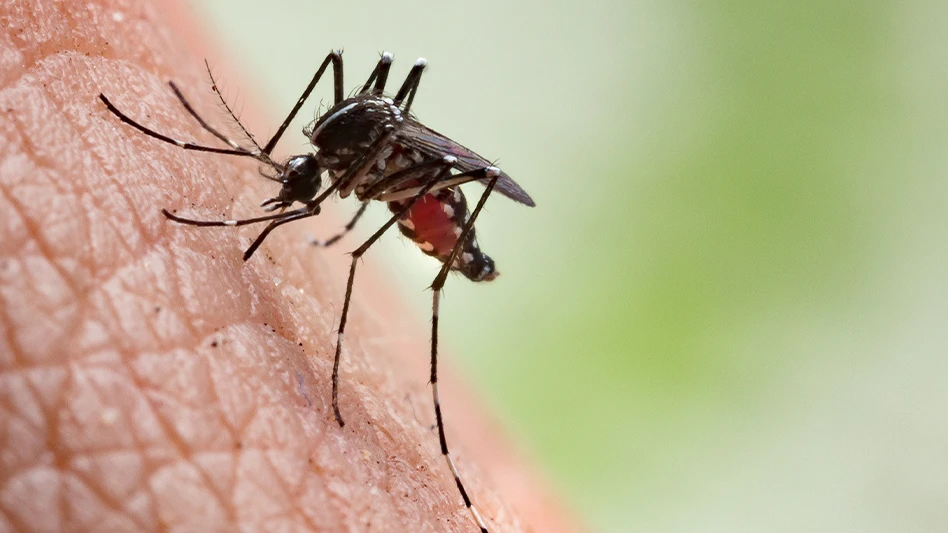
An adult from Hempstead tested positive for eastern equine encephalitis virus. The patient was hospitalized due to severe central nervous system disease and died of their illness, according to an update from the state's Department of Health & Human Services (DHHS).
CONCORD, N.H. – The New Hampshire Department of Health and Human Services (DHHS), Division of Public Health Services (DPHS) has identified an adult from Hampstead, N.H. who tested positive for eastern equine encephalitis virus (EEEV) infection, was hospitalized due to severe central nervous system disease, and has passed away due to their illness. DHHS offers our sympathies to the individual’s family and friends.
EEEV is a rare but serious disease transmitted to people by infected mosquitos. The last reported human EEEV infection in New Hampshire was in 2014, when DHHS identified three human infections, including two fatalities. In addition to the person with EEEV infection announced today, EEEV has been detected in one horse and seven mosquito batches .pdf Icon in New Hampshire so far this summer. EEEV has also been detected in neighboring states, including in Massachusetts (one person, one horse, and 69 mosquito samples) and Vermont (one person and 47 mosquito samples).
“In New Hampshire, mosquitos transmit infections including Eastern Equine Encephalitis Virus, West Nile Virus, and Jamestown Canyon Virus,” said State Epidemiologist Dr. Benjamin Chan. “We believe there is an elevated risk for EEEV infections this year in New England given the positive mosquito samples identified. The risk will continue into the fall until there is a hard frost that kills the mosquitos. Everybody should take steps to prevent mosquito bites when they are outdoors.”
EEEV can cause flu-like symptoms such as fever, chills, muscle aches, and joint pain. EEEV can also cause severe neurological disease, such as inflammation of the brain and membranes around the spinal cord (i.e. encephalitis and meningitis). Approximately one-third of all people who develop encephalitis from EEEV die from their infection, and many others experience life-long physical or mental impacts. There is no vaccine or antiviral treatment for EEEV.