Daniel Dye
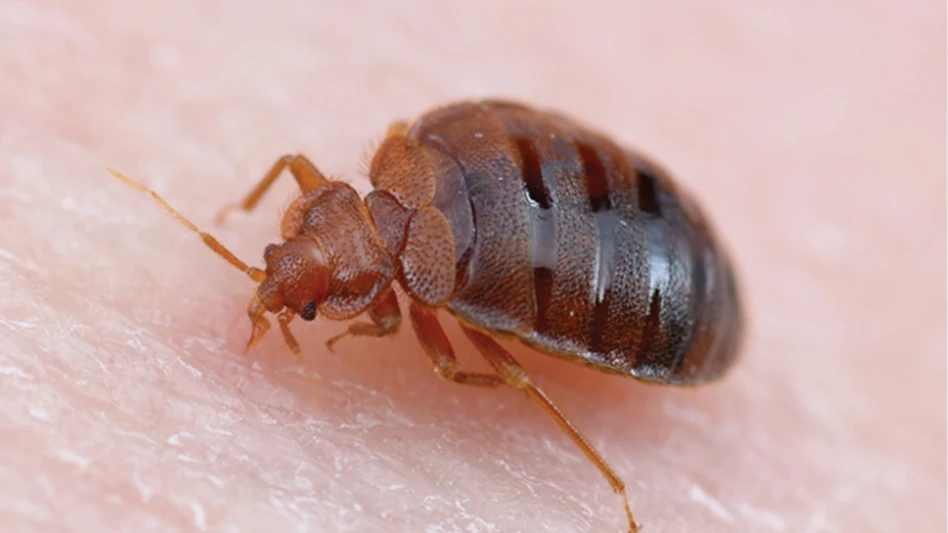
As reported by Entomology Today, research from New Mexico State University shows that bed bugs (Cimex lectularius) are capable of hosting the pathogen that causes Chagas disease for up to 97 days, and the pathogen can persist even through the bed bug’s molting process between one nymphal stage and the next.
New Mexico State University researchers have investigated the ability of bed bugs to carry Trypanosoma cruzi, the protozoan that causes Chagas disease, and report their findings in an article published in the Journal of Medical Entomology. In a lab experiment, the researchers found that nearly all bed bugs they fed with T. cruzi-infected blood later showed live forms of the pathogen in their guts and that T. cruzi frequently survived through its hosts’ molting.
That latter finding, known as transstadial persistence, is notable because bed bug nymphs typically molt after each blood meal, which they do five times before reaching their adult stage, says Alvaro Romero, Ph.D., assistant professor of urban entomology at NMSU and senior researcher on the study. “If T. cruzi could not persist throughout the molting process, nymphs would be less effective as vectors since they would have to feed on an infected host to reacquire the parasite in their guts after each molting," says Romero.
Click here to read the entire article.
Source: Entomology Today
Latest from Pest Control Technology
- BOM Hosts Dinner at NPMA Legislative Day
- Rear Admiral Scott Moore Shares Five Essential Leadership Principles
- 2026 NPMA Legislative Day Photo Gallery
- Fleetio Launches AI Service Advisor
- Shannon Sked Discusses Preemption and Legislative Day Importance
- Routes to Riches with Kemp Anderson: Ep. 1 — 2026 Outlook
- NPMA Honors Industry Leaders At 2026 Legislative Day
- NPMA Legislative Day Highlights Farm Bill Momentum and Push for Pesticide Preemption