A new report from the National Wildlife Federation titled “Ticked Off: America’s Outdoor Experience and Climate Change” reviews how climate change is bringing about stressful new changes to our outdoor world, including an increase in certain insects.
The report cited the following insect examples:
Tiger Mosquitoes. While mosquitoes and their bites are irritants, of even greater concern is their potential for disease transmission. Asian tiger mosquitoes are known to transmit more than 30 different viruses, including West Nile, eastern equine encephalitis, dengue, and chikungunya, all of which pose serious human health risks. And in some places, the Asian tiger mosquito is the principal source of heartworm infections in dogs. Climate change is projected to bring about an earlier emergence of tiger mosquitoes in the spring, leading to more generations per year.
Deer Ticks. are many different species of ticks and many different diseases they can transmit. The most well-known is the blacklegged tick (Ixodes scapularis), commonly known as a “deer tick,” which transmits Lyme disease. The bacterium that causes Lyme disease is picked up by deer tick larvae and nymphs when they feed on infected mice. Most of the ticks that bite and infect humans with the disease are nymphs, which are most active in the summer months when people and pets are also most active. With climate change, these ticks are projected to be more widespread than ever before.
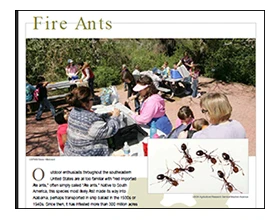
Fire Ants. Fire ants bite and sting en masse, injecting venom that causes extremely unpleasant burning sensations and blistering. These ants can be deadly to wildlife, especially young that are relatively immobile and unable to escape their attack. Ground nesting birds, as well as lizards, snakes, mice and other native wildlife are at risk of attack and declines in abundance. The red imported fire ant is projected to benefit from warmer temperatures due to climate change. By the end of this century its range could advance northward by about 80 miles, spreading further across Texas, Oklahoma, Missouri, Tennessee and Virginia.
Click here to download the entire report.
Latest from Pest Control Technology
- Earn CEUs from Your State at Next Week’s Mosquito Control Virtual Conference
- Preserving Culture, Providing Opportunities Key in Hoffman’s Decision
- Winter Weather Could Decide How Bad Mosquito Season Gets
- Trent Frazer Discusses How Mosquitoes Survive Winter
- Barnes Exterminating Acquires Tennessee Pest Solutions
- Pest Index Up 9% YOY in January
- Arrow Exterminators Acquires Hoffman's Exterminating
- PMPs Plan Mera Peak Summit for Parkinson's