Credit: istock | claffra
COLUMBUS, Ohio – Mosquitoes have been transmitting the West Nile virus to humans in the United States for over 25 years, but we still don’t know precisely how the virus cycles through these pests and the other animals they bite.
A federally funded project aims to help pin down the process by using mathematical models to analyze how factors like temperature, light pollution, and bird and mosquito abundance affect West Nile virus transmission. The ultimate goal is to advise health departments of the best time of year to kill the bugs.
“I’m hopeful that what we will uncover in this grant will help us to better understand what’s driving West Nile virus transmission, and seasonal cycles of transmission, so we can determine when and where to direct control interventions to limit transmission and keep people healthy,” said Megan Meuti, principal investigator (PI) on the grant and associate professor of entomology at The Ohio State University.
The project, based on Ohio data but structured to develop models adaptable to other U.S. regions, is funded by a $3 million grant from the Ecology and Evolution of Infectious Disease program through the National Institute of Allergy and Infectious Diseases.
West Nile virus (WNV) is the most common insect-borne virus in the U.S. Most infected people have minimal or mild flu-like symptoms, but about 1% can become seriously ill – especially those over 60 or people with chronic health problems – if the virus enters the brain.
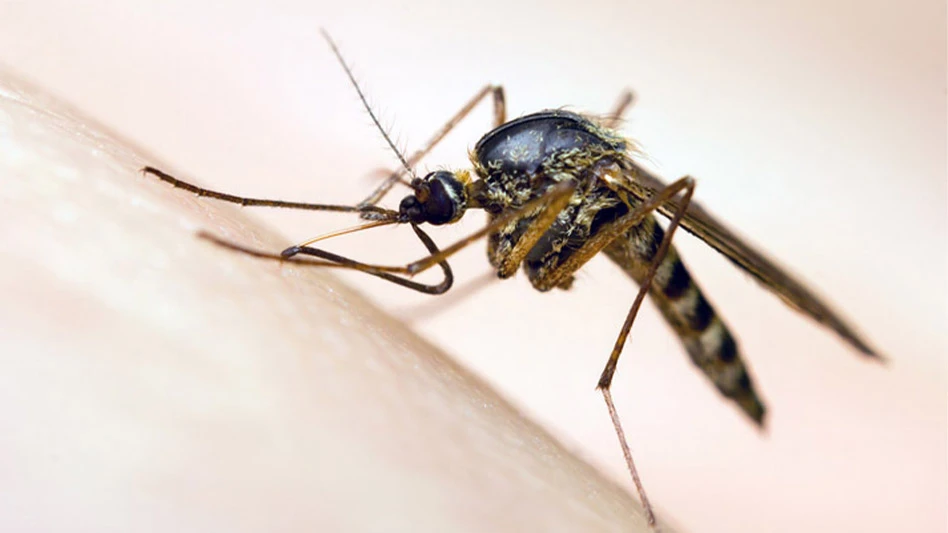
Previous research gives us a general idea of how and when viral transmission occurs: As days get shorter, female mosquitoes from the Culex genus, known carriers of WNV, prepare for the winter dormancy period called diapause by fattening up on nectar from flowers – though they may take a viral infection they caught from birds with them into their winter downtime. After mosquitoes emerge from diapause in warmer months, more of them may become infected by taking blood meals from infected birds, and then transmit the virus when they feed on people, horses and other mammals.
Among the questions asked by Meuti’s team: How does viral transmission re-initiate each spring, and how does the virus’s presence persist in the environment during fall and winter?
Click here to read more.
Source: The Ohio State University
A federally funded project aims to help pin down the process by using mathematical models to analyze how factors like temperature, light pollution, and bird and mosquito abundance affect West Nile virus transmission. The ultimate goal is to advise health departments of the best time of year to kill the bugs.
“I’m hopeful that what we will uncover in this grant will help us to better understand what’s driving West Nile virus transmission, and seasonal cycles of transmission, so we can determine when and where to direct control interventions to limit transmission and keep people healthy,” said Megan Meuti, principal investigator (PI) on the grant and associate professor of entomology at The Ohio State University.
The project, based on Ohio data but structured to develop models adaptable to other U.S. regions, is funded by a $3 million grant from the Ecology and Evolution of Infectious Disease program through the National Institute of Allergy and Infectious Diseases.
West Nile virus (WNV) is the most common insect-borne virus in the U.S. Most infected people have minimal or mild flu-like symptoms, but about 1% can become seriously ill – especially those over 60 or people with chronic health problems – if the virus enters the brain.
Previous research gives us a general idea of how and when viral transmission occurs: As days get shorter, female mosquitoes from the Culex genus, known carriers of WNV, prepare for the winter dormancy period called diapause by fattening up on nectar from flowers – though they may take a viral infection they caught from birds with them into their winter downtime. After mosquitoes emerge from diapause in warmer months, more of them may become infected by taking blood meals from infected birds, and then transmit the virus when they feed on people, horses and other mammals.
Among the questions asked by Meuti’s team: How does viral transmission re-initiate each spring, and how does the virus’s presence persist in the environment during fall and winter?
Click here to read more.
Source: The Ohio State University
Latest from Pest Control Technology
- Earn CEUs from Your State at Next Week’s Mosquito Control Virtual Conference
- Preserving Culture, Providing Opportunities Key in Hoffman’s Decision
- Winter Weather Could Decide How Bad Mosquito Season Gets
- Trent Frazer Discusses How Mosquitoes Survive Winter
- Barnes Exterminating Acquires Tennessee Pest Solutions
- Pest Index Up 9% YOY in January
- Arrow Exterminators Acquires Hoffman's Exterminating
- PMPs Plan Mera Peak Summit for Parkinson's





