iStock | JHVEPhoto
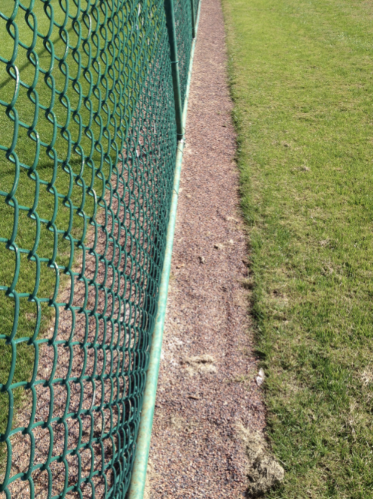
ORLANDO, Fla. – This photo (left) shows the fence between fields at the ESPN Wide World of Sports Complex (Disney World). I was recently there for my high school daughter’s team dance competition. ESPN built a beautiful facility: home of Atlanta Braves Grapefruit League baseball and lots of sports fields, courts, venues, etc.
Disney is smart. When building the fields they put a foot of gravel under the fence line. This makes it faster and easier to maintain the fields.
Disney considered maintenance issues, costs and procedures BEFORE building the fields!
Think about the economics of Disney’s decision. They spent more money up front, once, to put the rock down. They save time, money and all the problems of grass along a fence line, every time they mow, which is probably once or twice a week.
If Disney had done it the fast way, with a fence put down over grass, there would be lots of extra work. After mowing, an employee would have to go back with a weed eater on both sides of the fence, and there would still be unsightly grass growing in the fence, creating an eyesore and habitat for all sorts of undesirable creatures.
Pest control professionals should follow Disney’s lead. Understand maintenance issues before buying. Too many times pest pros don’t think about maintenance until it is needed. By then the maintenance may take longer, cost more, result in more cancelled appointments, etc.
Here are some questions to ask yourself before purchasing equipment:
- Which parts or components are likely to require maintenance?
- Are those components easily accessible for maintenance?
- Where do I get parts?
- Who does the maintenance?
- How long is it likely to take?
- What is the likely cost?
- What is maintenance frequency?
- Are there any special considerations (e.g., must empty tank to do maintenance)?
Considering maintenance issues up front doesn’t have to slow down the process or cost lots of money. You may decide a piece of equipment is so beneficial that it is worth a few maintenance hassles. At least you will know this up front and can plan accordingly. For example, you schedule maintenance well in advance or budget for the maintenance expense.
When companies fail to plan for maintenance all sorts of problems can occur. Here are some or the most memorable maintenance nightmares we’ve seen:
- Hose reel above Gas Engine. Had to unroll 300’ of hose to put gas in engine.
- Filter inside backpack tank. If filter got clogged, had to reach into tank full of chemical to check and clean the filter.
- Equipment installed too tightly together. Service required removing sprayer skid from vehicle. Service took an hour, rather than the normal five minutes.
- Can’t check power sprayer filter or service the sprayer pump when tank has chemical in it without dumping a tank full of chemical.
- Gas engine mounted too low/too close to truck bed. Can’t change oil without dumping oil in truck bed or unbolting sprayer and removing it from vehicle.
- Maintenance parts were not available locally, increasing equipment downtime waiting for parts.
Don’t rush into equipment purchases blindly. Think about and plan for maintenance issues when adding a piece of equipment to the fleet. Ask questions up front. Design for maintenance may or may not cost more upfront, but it will pay you back every day.
Andrew Greess is a pest control equipment expert and the author of Stop Spraying Money Down the Drain, the industry’s only pest control equipment strategy book. Contact Greess at Andrew@qspray.com.