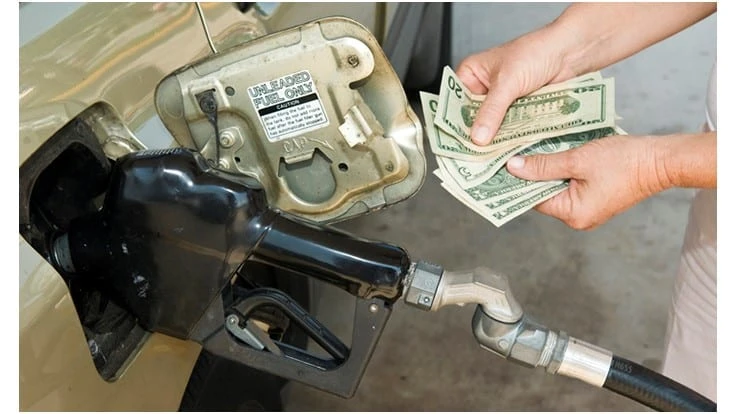
CLEVELAND - According to the American Automobile Association (AAA), on March 3 the national average for a gallon of gasoline was $4.17, a record high that broke the previous record of $4.11 a gallon, which had stood since July 2008.
The culprit has been the surge in global crude prices, a result of Russia's invasion of Ukraine.
Pain at the pump is even more acute for owners of route-based businesses like pest control companies. PCT caught up with several PCOs from various parts of the country to find out how they have been impacted and how they are adapting.
TO SURCHARGE OR NOT? Anytime gas prices dramatically spike the great debate among PCOs ignites about whether or not to add a fuel surcharge to their customers’ bills.
Bill Cowley, co-owner of Cowley’s Pest Control, Farmingdale, N.J., said his company has have never added a fuel charge in 31 years in business, “but all options are on the table at this time."
Similarly, Doug Longfellow, president of NaturZone, Tampa, Fla., said, “We have considered it but are not moving forward at this time. But we have just implemented our largest price increase ever. Keep in mind we are mostly a commercial [pest control business].”
On March 7, PCT asked it’s LinkedIn followers “In light of rising gas prices, are you considering adding a fuel surcharge to your customers' bills?” and 64% answered “no” while 36% said “yes.”
In California, which traditionally has some of the nation’s highest gas prices, Jim Harmon, owner of California Pest Management, La Verne, Calif., said, “We have been prepared for the increase in fuel costs with a small surcharge during these times when gas is up around $7 a gallon.”
Adding a surcharge increases your profit and recovers some of the cost of fuel; however, by doing so you risk upsetting your customers.
“Customers get irate when they see that line item,” said Carrie Campbell, owner of Hatfield Pest Control, LaPorte, Ind. “We did it in the past done it and it just did not work for us. It especially upset our [elderly customers].”
One of the problems with surcharges, PCOs cited, is that customers don’t understand that a surcharge will be removed or reduced when gas prices go down. If you do add a surcharge it’s important to send out a letter or e-mail to customers explaining the charge, PCOs said.
Most of the PCOs contacted by PCT answered like Glenn Matthews III, owner of Modern Exterminating, Columbia, S.C., when asked about what action he takes in lieu of a surcharge, “Raise prices across the board,” he said.
And, as Macedonia, Ohio-based TNT Exterminating President Mike Grace, noted, "Other issues are driving costs as well. Let's just raise them."
RE-EXAMINE OPERATIONS. In addition to adding (or contemplating adding) a fuel surcharge, the spike in gas prices has caused PCOs to re-examine their operations in several key areas.
Campbell says her company immediately saw the cost-savings benefits of using routing software and “we’re looking at it closer again. We’re not sending our guys from one community to the next. Let's get all our work done in one community and then move on so that we are not backtracking and wasting fuel.”
Similarly, Matthews said of using his company’s software’s routing optimization tool, “We may just try to route a little tighter.”
Cowley said his company learned the lesson about smart routing years ago and “we have been routing as if there is gas shortage for over 20 years. We have a full-time routing manager that reviews all of our routes daily/hourly focused on eliminating windshield time.”
For companies that are rapidly growing and adding positions, the gas price hike may factor into personnel decisions. “We are in the process of hiring or promoting a routing manager,” said NaturZone’s Longfellow.
DRIVER BEHAVIOR. One thing all of the PCOs we spoke with agreed on was the need to reinforce safe, smart driving habits.
“Each month our managers have a KPI meeting with each tech. Driving safety and behavior are part of the KPIs,” said Longfellow.
Cowley said his company stresses safe driving through technician safety training. “We also use driver behavior monitoring. We run a report every week and share the results with all our techs. Speeding, accelerating too fast, and idling are all driving behaviors that are gas guzzlers and safety alarms. The feedback helps us identify our aggressive drivers and retrain them accordingly. The end result is defensive driving that yields savings on gas, vehicle maintenance, and insurance premiums.”
Harmon said his technicians “watch air pressures and have changed their driving habits for maximum fuel economy.”
Several PCOs said they stress to their technicians not to make unnecessary trips. “Eat lunch on the way to your next stop. Be smart and conserve fuel as best you can,” said Matthews.
Here’s what some of PCT’s Facebook followers had to say about adding a fuel surcharge.

Latest from Pest Control Technology
- Earn CEUs from Your State at Next Week’s Mosquito Control Virtual Conference
- Preserving Culture, Providing Opportunities Key in Hoffman’s Decision
- Winter Weather Could Decide How Bad Mosquito Season Gets
- Trent Frazer Discusses How Mosquitoes Survive Winter
- Barnes Exterminating Acquires Tennessee Pest Solutions
- Pest Index Up 9% YOY in January
- Arrow Exterminators Acquires Hoffman's Exterminating
- PMPs Plan Mera Peak Summit for Parkinson's