Photos courtesy of the companies
It’s no surprise that when peak hot weather months come around, pest management professionals are subject to facing extreme heat conditions, and can be at risk to physical illnesses, such as fatigue and nausea, on the job.
According to a recent PCT reader poll, 56 percent of respondents said supplying hydration options is most important when working in the heat, followed by providing cooling breaks (25 percent).
For Brett Lieberman, founder of My Pest Pros which services Virginia, Maryland and Washington, D.C., illness from heat exhaustion is an unfortunate, relatable encounter for him.
“Years ago, I experienced heat stroke while installing more than 100 Sentricon stations around a condo complex,” Lieberman said. “I did not plan well, did not have enough to drink and did not take enough breaks. It was a good experience to be able to share with technicians.”
Now as an owner of his own company, he’s able to empathize with his technicians who are working outside during peak hot weather months.
“I just had to calm down a technician who was very stressed out about the heat. He is a newer technician with us and is mostly doing exterior services,” Lieberman said. “He has a limited ability to take breaks inside. I just told him to do what you can, and we understand the conditions; take breaks, hydrate and keep in communication with our office.”
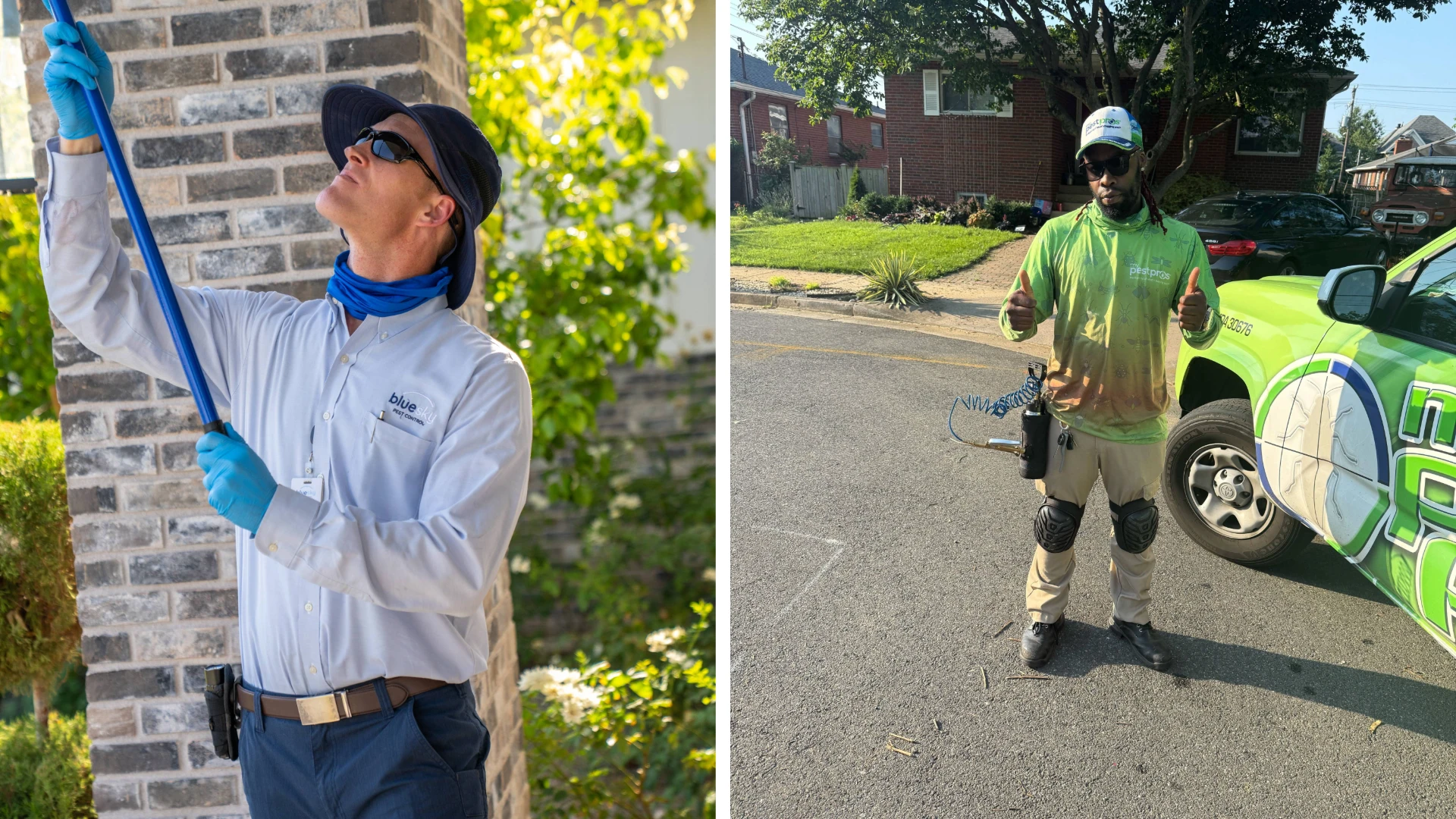
One way Lieberman has been able to help keep his technician cool is by ordering fisherman-style shirts that are moisture-wicking. He had a few technicians try them out and with great reviews, so he ordered 200 more.
“The technicians like the style, the fit and they say it helps keep them cooler,” Lieberman said. “We even had a client ask where they could buy one!”
Bob Gilbert, board certified entomologist at Blue Sky Pest Control in Arizona, said over the past few years, the company has observed an increase in extreme heat and reduced rainfall, which has amplified the importance of heat safety protocols.
“Fortunately, our proactive approach has helped us avoid any serious heat-related illnesses among our team members,” he said. “On rare occasions in the past, we've had technicians who ran low on water toward the end of their service routes. In these instances, some pushed themselves to finish their remaining tasks, which led to mild discomfort or fatigue the following day.”
Every Blue Sky technician receives heat safety training as part of their onboarding process, which is reinforced annually through refresher sessions each spring, Gilbert said.
“New technicians operate on a reduced service schedule during their first four weeks, allowing their bodies to acclimate gradually to extreme temperatures,” he said. “Tasks involving roof and attic inspections are specifically scheduled before noon to avoid peak heat exposure in these enclosed areas.”
The company also provides personal protective equipment, including wide-brimmed sun hats, high-quality dark safety glasses rated to block 99.9% of UV rays and cooling towels that can be activated with water and worn around the neck to help regulate body temperature throughout the day, Gilbert said.
The extreme heat in the Sonoran Desert has a significant effect on pest behavior, Gilbert said, often driving them closer to homes and increasing customer demand.
“We see a surge in calls, particularly related to ants and Arizona bark scorpions, which thrive in hot, dry conditions,” he said. “Other common pests like crickets, cockroaches and spiders also become more active during this time.”
Some species, like the southern fire ant, are particularly aggressive in seeking out moisture sources and may enter homes in search of water during dry conditions, making leak repairs an important preventative measure, Gilbert added.
Working in extreme heat during peak summer months, like in Phoenix Valley, Ariz., with temperatures often exceeding 115 degrees Fahrenheit, isn’t for everyone, Gilbert said.
“We’re transparent about the demands of the job and focus heavily on preparing new hires through training, mentorship and gradual acclimatization,” he said. “We’re always looking to grow our team, but we prioritize finding individuals who are not only capable, but are also committed to the safety practices and high standards we uphold.”
Latest from Pest Control Technology
- Earn CEUs from Your State at Next Week’s Mosquito Control Virtual Conference
- Preserving Culture, Providing Opportunities Key in Hoffman’s Decision
- Winter Weather Could Decide How Bad Mosquito Season Gets
- Trent Frazer Discusses How Mosquitoes Survive Winter
- Barnes Exterminating Acquires Tennessee Pest Solutions
- Pest Index Up 9% YOY in January
- Arrow Exterminators Acquires Hoffman's Exterminating
- PMPs Plan Mera Peak Summit for Parkinson's





