iStock | VILevi
Editor’s Note: The following article was adapted from Techletter, with permission from Pinto & Associates.
A large hospital is a miniature community, with food service, lodging, customer services, waste disposal, and constant traffic in and out. Hospitals, as well as health clinics, nursing homes, and rehab centers, have some unique features that have to be considered when designing and implementing a pest management program:
Supply Flow - Become familiar with the flow of food, laundry, and other supplies into and through the facility. When and where are goods received? Are they inspected? How are the goods routed? Where are they stored? Some large facilities have a system of underground utility tunnels that allow movement of goods and pests, especially rodents, between buildings.
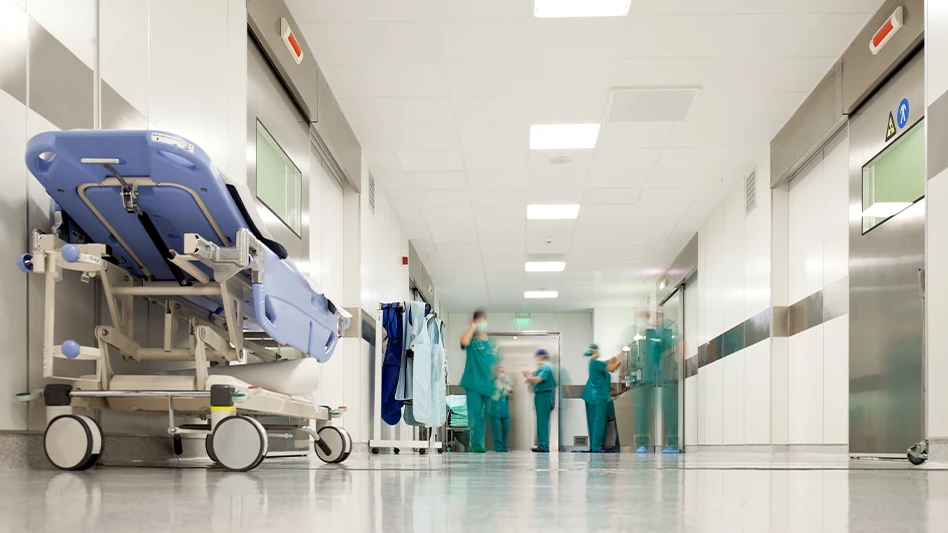
Is mobile medical equipment and furniture inspected and treated before being transferred to new locations? Wheelchairs, incubators, IV stands, beds and rented TVs can move pests throughout the building. Flowers and gifts brought in by visitors can introduce ants, flies, cockroaches, and bed bugs.
Electronic and Medical Equipment - Medical facilities depend on electronic equipment such as heart monitors, dialysis machines, and ultrasound scanners. Avoid using airborne or volatile chemicals around these expensive and sensitive devices.
Ventilation System - Ventilation conduits act as runways for pests. They also carry pesticide vapors into nontarget areas such as patient-occupied rooms. Use baits and nonvolatile pesticides whenever possible. In some cases, ventilation systems may have to be turned off during treatment.
Extensive Plumbing System - Medical facilities use a lot of water to flush away human and medical waste. Hospitals may have hundreds of patient rooms, each with a bathroom. Scrub rooms, sinks, floor drains, drinking fountains, and special waste disposal systems also attract pests--especially filth flies, phorid flies, and drain flies.
Food Areas - Most cafeterias, vending rooms, and kitchens can be treated as you would any food handling area. Food carts need special attention. They carry trays, and sometimes pests, from the main kitchen up to patient floors, and vice versa.
Food stored in patient rooms presents a unique problem. Candy, cookies, nuts, chips, and gifts of fruit are often hidden away in bedside tables...and are often forgotten.
Laundry - The institution's laundry may be done inhouse or held for pickup by an outside contractor. In either case, the laundry area will have excessive moisture and will contain laundry stained with blood, urine, feces, vomit and other substances attractive to pests (and possibly dangerous; laundry carts can transfer pests, especially bed bugs, from one area of the building to another.)
Housekeeping - A good sanitation program eliminates germs and removes the food and water that attract pests, but it also removes surface deposits of insecticides. An abundance of stainless steel and other nonporous surfaces means a shorter residual for insecticides. These factors must be taken into consideration when choosing insecticides in a medical facility.
To pinpoint pest problems, obtain a detailed diagram of each floor showing the plumbing system, storage areas, utility tunnels, food service areas, etc. Obtain a time schedule for each area of the facility regarding meal service, doctors' rounds,
Latest from Pest Control Technology
- Earn CEUs from Your State at Next Week’s Mosquito Control Virtual Conference
- Preserving Culture, Providing Opportunities Key in Hoffman’s Decision
- Winter Weather Could Decide How Bad Mosquito Season Gets
- Trent Frazer Discusses How Mosquitoes Survive Winter
- Barnes Exterminating Acquires Tennessee Pest Solutions
- Pest Index Up 9% YOY in January
- Arrow Exterminators Acquires Hoffman's Exterminating
- PMPs Plan Mera Peak Summit for Parkinson's





