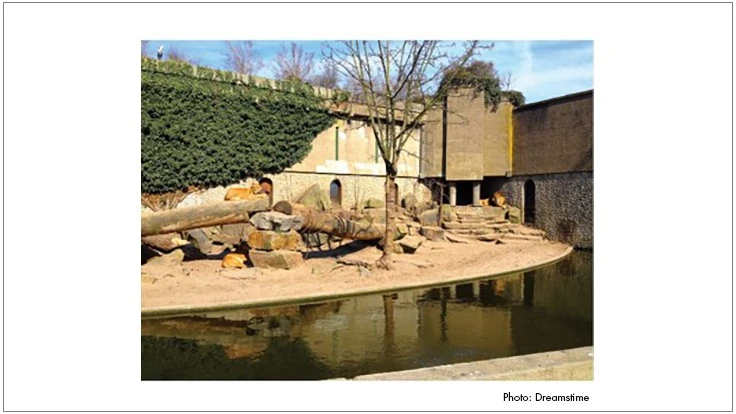
ORLANDO - Servicing sensitive accounts can be challenging simply because of the care that must be taken in the areas. But accounts such as zoos and parks have particular complexities, not only because of the animals, but because of the number of people who come into the account every day. It was just such challenges that Angela Tucker, Terminix Manager, technical services, discussed in the Wednesday PestWorld educational session "Controlling Common Pests in Uncommon Areas: Overcoming Challenges in Zoos, Parks, and Sensitive Accounts."
Additionally, Tucker said, complexity can arise from the fact that zoos are often audited by federal and state agencies who may have very different agendas and concerns than the board that oversees the zoo, which may differ as well from those of the visitors to the area. For all these reasons, it is critical for PMPs to understand and develop strong relationships with their clients — most of whom will be highly educated as biologists, veterinarians, historians/curators, etc., she said.
When developing service in zoos, PMPs need to always consider the needs of the different animals that live in a variety of spaces and adapt the types and levels of pest control to each. In all cases, multiple proactive IPM strategies should be used to try to reduce the pest pressure with chemical used only as a last resort. “Key on ‘How can I prevent pests’ instead of ‘What can I do after,’” she explained.
Thus, inspection is critical with the PMP seeking to determine not only where a pest is, but also why it is there. “Identify everything that will cause a pest or is reason for a pest they have today,” she said. As examples, Tucker discussed plants that are brought in and/or moved from one site to another – without any type of quarantine. Not only can pests, including cockroaches, be on the plants, their ootheca can be in the soil, which, in one such case, required a sieving of the soil to ensure elimination.
PMPs also may need to rethink rodent control programs, as wildlife that may be considered pests in other areas, such as squirrels and birds, are looked at as desirable in at least some areas of zoos and parks. So baits, bait stations, and other control may need to be modified in these areas.
In addition to inspection and adaptive IPM, documentation is a critical component of pest control in sensitive areas, Tucker said. And this needs to include, not just what was done, but what the account needs to do moving forward for prevention. Thus, the PMP, she said, “needs to document everything.” This includes material use, pest activity and evidence, conducive conditions, partnership actions, and next steps. And those next steps to be prioritized since the person you are dealing with may not be the person responsible for that activity, and funding may need to be acquired. Thus the critical nature of both documentation and PMP follow up to ensure the steps were taken.
Second only to documentation is assessment, she said. “Make sure that whatever strategy you chose is still working. Ask everyone, ‘How is the service?’” If anyone does note a pest issue, determine if there is something new that can be tried. Take the opportunity to talk with them about that, she said. Inspection, documentation, and assessment are all key in maintaining control in sensitive accounts – and helping ensure they are audit-ready.
Latest from Pest Control Technology
- Earn CEUs from Your State at Next Week’s Mosquito Control Virtual Conference
- Preserving Culture, Providing Opportunities Key in Hoffman’s Decision
- Winter Weather Could Decide How Bad Mosquito Season Gets
- Trent Frazer Discusses How Mosquitoes Survive Winter
- Barnes Exterminating Acquires Tennessee Pest Solutions
- Pest Index Up 9% YOY in January
- Arrow Exterminators Acquires Hoffman's Exterminating
- PMPs Plan Mera Peak Summit for Parkinson's





