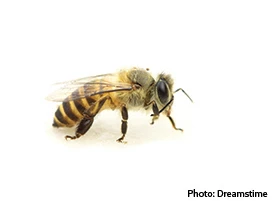
FAIRFAX, Va. — Pollinator Protection Week runs through Friday.. In its seventh year, the observance is an "international celebration of the valuable ecosystem services provided by bees, birds, butterflies, bats and beetles." With increased attention focused on bees and other pollinators in recent months, it is likely this year's observance will see heightened attention from activists, journalists, government officials, and the general public. NPMA and its consumer education arm, the Professional Pest Management Alliance (PPMA), have been working diligently to ensure the industry is poised to offer a clear, credible, authoritative voice on pollinators this week and beyond.
NEW RESOURCES AVAILABLE TO NPMA MEMBERS AND THE PUBLIC
NPMA has developed customizable bee health related collateral. The pieces - a door hanger, a bill insert, and a leaflet - can help your customers understand the difference between good pollinators and dangerous stinging insects. Additionally, NPMA has a pollinator health logo you can display on your website showing your company's commitment to pollinators. You can download these resources here.
PollinatorHealth.org, a consumer microsite, will serve as a go-to-guide for understanding pollinators, threats they face, the difference between good bees and other stinging insects, and how people can help honey bees.
WHAT TO EXPECT DURING POLLINATOR WEEK
NPMA expects activists will attempt to link pollinator health problems to the use of neonicotinoids and may encourage product or retail store bans as they have done with increasing frequency. We expect some journalists to use inaccurate science reports in coverage of pollinator issues. Further, NPMA expects the White House to issue some kind of directive in relation to bee health.
NPMA is prepared for all such dialogues. As reported last week, NPMA and PPMA have retained Dr. Rick Fell, a Professor Emeritus of Entomology at Virginia Tech, to represent the industry in pollinator-oriented media discussions. We will ensure the industry and the effective tools we have at our disposal to control harmful pests are accurately represented and we will educate the public about the importance of pollinators, yet advise of the health threats stinging insects pose.
SUMMARY OF INDUSTRY ACTION ON POLLINATORS
NPMA is working with federal and state regulators, and other stakeholders equally committed to ensuring an appropriate relationship exists between the safety of the American public and the essential role bees play in our environment. Some of the specific actions NPMA has taken to protect pollinators include:
• Educating Members of Congress about the importance of pollinator protection and encouraging their support for legislation combatting the varroa mite, other parasites and diseases and establishing more forage land
• Urging Congressional leaders to join the Pollinator Protection Caucus
• Meeting regularly with senior EPA officials and other key stakeholders to strategize on pollinator protection issues
• Encouraging USDA Secretary Vilsak to hold a bee foraging summit to address challenges related to adequate nutrition for bees
• Providing EPA and state agencies with suggestions for label improvements to protect bees during professional applications
• Supporting the Pollinator Protection Partnership
• Educating homeowners about pollinators and the importance of preserving honey bee nests
• Promoting the establishment of pollinator friendly gardens
• Educating pest management professionals about best practices related to pollinators
STATEMENT ON POLLINATORS
Pollinators play an essential role in the nation's food supply. We are dependent on bees, flies, moths and other insects to help pollinate crops and other plants. However, some of these insects - bees and wasps in particular - may pose health and safety risks to the public. In fact, stinging insects, which include the yellowjackets and hornets, send an estimated 500,000 people to the hospital every year. In light of this, stinging insects are - as some government entities have deemed them - a public safety hazard.
So how do we, the American public, protect our families and our children from insects that are both vital and potentially harmful? The answer is carefully. The federal government, farmers, the professional pest management industry, and home and business owners must cooperate to ensure effective tools are available to keep the public safe from stinging insects, yet do so in a manner that will enable pollinators to thrive in appropriate settings.
We remain committed to our leadership role in balancing the protection of pollinators with ensuring the safety of the American public. Both can be accomplished through effective action.
QUICK FACTS-AT-A-GLANCE
• Three-fourths of the world's flowering plants and about 35 percent of the world's food crops depend on animal pollinators to reproduce. More than 3,500 species of native bees help increase crop yields. (Source: USDA.gov)
• It is estimated that at least one of every three bites of food is touched by a pollinator.
• In the United States, pollination by honey bees, native bees, and other insects produces $40 billion worth of products annually. (Source Pollinator.org)
• Although we hear about honey bees most often, butterflies, birds, beetles, moths, and other animals are also pollinators.
• Though research is on-going and much more is needed, it appears pollinators are threatened by a variety of factors including Colony Collapse Disorder, diseases, genetic diversity, habitat and nutrition, improper pesticide use, and mites and other pests. Most researchers believe the greatest threats to bees are from mites and the lack of adequate habitats and nutrition sources.
NPMA will continue to be active on all issues associated with pollinator health including advocacy and stewardship. If you have any questions on pollinator health or related issues, please contact the NPMA office at (703) 352-6762.