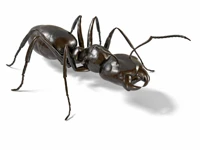
An article in the Washington Post titled “Ant Colonies Attack Queens That Don't Produce Largest Broods, Study Finds” reviews new research showing that “queen ants are wilier than previously thought, protecting themselves even if their strategy hurts the colony's survival.” The research was performed by Luke Holman, a University of Copenhagen ant researcher who recently published a paper in the Proceedings of the Royal Society B about ants in multi-queen colonies.
When an ant colony is forming, several queens will often work together to produce large broods of worker ants. But within about 45 days, those initial worker ants turn on the queens, biting them and spraying them with acid, apparently so that only one will be left to reign.
According to Holman and his co-authors, some queens in these multi-queen colonies will start to produce smaller broods, apparently in an effort to conserve energy to survive the battles with the worker ants. (In colonies with single queens, the researchers found no reduction in offspring production.) Holman said the strategy did not appear to work, because the worker ants, using chemical cues, could determine which queens were most fertile and thus most likely to keep the colony going. The workers were more likely to attack "selfish" queens that had reduced their fertility.
Click here to read the entire article.
Source: Washington Post
Latest from Pest Control Technology
- Earn CEUs from Your State at Next Week’s Mosquito Control Virtual Conference
- Preserving Culture, Providing Opportunities Key in Hoffman’s Decision
- Winter Weather Could Decide How Bad Mosquito Season Gets
- Trent Frazer Discusses How Mosquitoes Survive Winter
- Barnes Exterminating Acquires Tennessee Pest Solutions
- Pest Index Up 9% YOY in January
- Arrow Exterminators Acquires Hoffman's Exterminating
- PMPs Plan Mera Peak Summit for Parkinson's





