Brad Harbison
WEST LAFAYETTE, Ind. – The Purdue Pest Management Conference was focused on how pest management professionals can adapt to a rapidly evolving landscape.
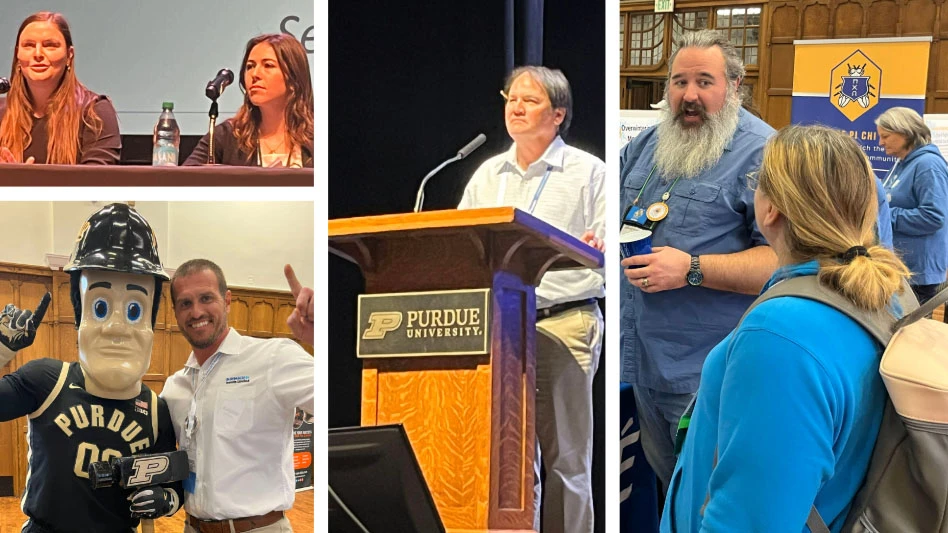
Bob Dold, Rose Pest Solutions, moderated a regulatory panel with Megan Striegel (National Pest Management Association), Isabelle Lucero (JT Eaton) and Sarah Caffery (Office of Indiana State Chemist). The panel provided an overview of recent and upcoming regulatory changes affecting the pest management industry at the federal and state levels. The panel discussed EPA efforts to comply with the Endangered Species Act, including pesticide registration reviews, proposed mitigations and the growing role of label changes and geographic use limitations. Striegel also reviewed federal activity around employment agreements, noting the decline of a nationwide non-compete ban and increasing state-by-state variability. Lucero discussed rodenticide regulations with updates on EPA's rodenticide review, including biological evaluations and anticipated restrictions. Caffery provided certification and training updates, particularly changes to applicator requirements
Grace Kolb, graduate research assistant, entomology, Purdue University, discussed delusional parasitosis, noting that this disorder causes real suffering, even when no pest exists. Pest management professionals play a critical role that requires compassion. She urged PMPs to be open-minded with inspections that should be followed up with clear, confident conclusions when no pest is found. Communication should focus on listening without judgment, validating distress without reinforcing infestation beliefs, and setting firm boundaries about what pest control can and cannot do. Professionals should avoid arguing, diagnosing or offering unnecessary treatments.
During a live Beyond the Pest podcast at the conference, Dr. Stan Cope joined hosts Jennifer Sweeney and Michael Thome to explore practical, science-based mosquito control. The discussion highlighted four key conducive conditions PMPs must identify: cool, dark, moist and out of the wind. Cope also shared end-of-season strategies that target overwintering female mosquitoes and debunked common mosquito myths. He explained why some people get bitten more than others, and emphasized evidence-based tools such as traps, drones, larvicides, and integrated mosquito management approaches over gimmicks and folklore.
University of Georgia Extension entomologist Dan Suiter shared with Purdue attendees that paradigm shifts in termite control occurred in 1995 (Sentricon) and 2000 (Termidor). "The industry went on the offensive," he said. Suiter drew on research, field experience and industry history in explaining how slow-acting, non-repellent chemistries revolutionized termite and structural pest management by reducing colony populations, lowering infestation risk and saving labor. His talk highlighted co-evolving technologies and landmark studies.
Latest from Pest Control Technology
- Terminix Strikes a Chord With Preventative Push in New ‘Ahhh’ Campaign
- Company Compassionately Solves a Severe Rodent Infestation
- Earn CEUs from Your State at This Week’s Mosquito Control Virtual Conference
- Jody Green Talks Ticks at Purdue Conference
- Truly Nolen Pest Control Promotes Freize, Hackett
- Preserving Culture, Providing Opportunities Key in Hoffman’s Decision
- Winter Weather Could Decide How Bad Mosquito Season Gets
- Trent Frazer Discusses How Mosquitoes Survive Winter