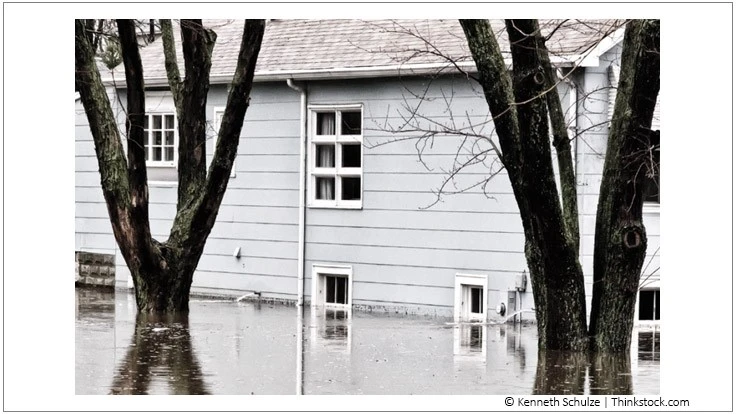
After a 100-year flood struck south central Oklahoma in 2015, a study of the insects, arthropods, and other invertebrates in the area revealed striking declines of most invertebrates in the local ecosystem, a result that researchers say illustrates the hidden impacts of natural disasters, ESA reported.
According to ESA, researchers at the University of Oklahoma and Cameron University compared the invertebrate community before and after the flood and found a 93 percent decrease in abundance, a 60 percent decrease in species presence, and a 64 percent decrease in biomass among insects and other invertebrates nine months post-flood. They also found the differences between above-ground and below-ground invertebrates to be largely erased. Only those creatures well-adapted to recolonizing a disturbed environment were quick to return.
“I will never forget picking up the traps, and it just seemed like every trap had one cricket and one spider,” said Karl A. Roeder, a doctoral student at the University of Oklahoma (OU) and lead researcher on the study. “The area had transitioned from a diverse insect community to a large expanse of crickets and spiders. We were pretty surprised at how similar everything was.”
Roeder and colleagues Diane V. Roeder, Ph.D., assistant professor of biology at Cameron University, and Michael Kaspari, Ph.D., presidential professor of biology at OU, report their findings in a new research article published in Environmental Entomology.
CLICK HERE to read the entire article.
Latest from Pest Control Technology
- PestInsight Empowering Youth in Africa and Beyond Through Education
- Guest Editorial: Making Safety the Standard on Every Service Call
- Truly Nolen Pest Control Promotes Tuck, Stewart
- Little to No Hesitance When Asking for Customer Reviews, PCOs report
- Arrow Termite & Pest Control (La.) Acquires Ark-La-Tex Exterminators
- Invicta Environmental Pest Defense Rebrands as Invicta Pest Control
- Target Specialty Products Announces Changes to Pest Organizational Structure
- UK Rodent Activity Up 10% Since 2024, Rentokil Reports