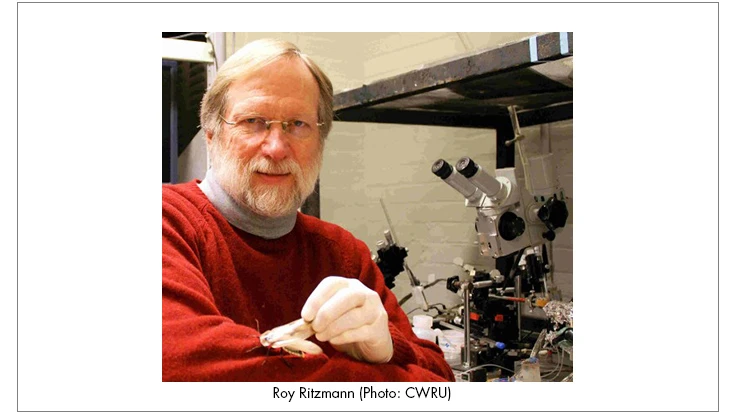
Rats, men and cockroaches appear to have a similar GPS in their heads that allows them to navigate new surroundings, researchers at Case Western Reserve University report.
The finding, published in journal Current Biology, is likely an example of convergent evolution--that is, distinct animals developed similar systems to manage the same probleme, Science Daily reports.
Due to their simpler brain, further studies on cockroaches that would be difficult--if not impossible--on mammals may yield new insights into how humans orient themselves and navigate. Or, what goes awry in people who have extreme trouble getting their bearings.
"We've known that a mammal can come into a new area and, after a short period of being disoriented, find its way around," said Roy Ritzmann, a biology professor at Case Western Reserve and an author of the new study.
Humans and other mammals rely on head-direction, place and grid cells in their brains to process, integrate and update sensory information. The cues come from the direction they look, what they see and motion, he said.
CLICK HERE to read more.
Source: Science Daily