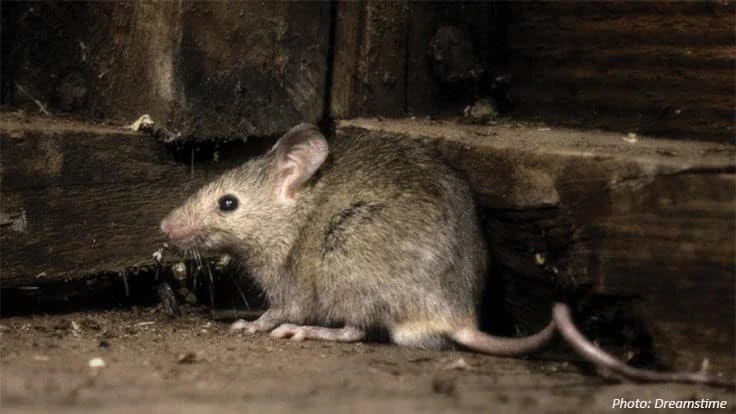
Insect and rodent pests can cause and spread many diseases that pose a serious public health threat. Worldwide, rats and mice alone can spread more than 35 diseases. While a common means of controlling rodents is the use of rodenticides, overuse of any chemical can be a public health threat as well. It is for this reason that an integrated pest management (IPM) program, which focuses first on prevention, should be key to any rodent control.
In fact, according to EPA, it, along with CDC, and many pest control professionals, believes prevention to be the most effective way to control disease-carrying pests and their associated public health risks. Thus, IPM is a key factor, as it is a “combination of preventive measures and reduced-risk treatment methods to reduce the reliance on, and therefore the corresponding risk from, the use of chemical pesticides.”
However, said The Food Safety Academy President Steven Sklare, IPM should be seen as a dynamic process and not a rigid definition that can be strictly applied to all circumstances. He sees it as best viewed as “a philosophy that can help guide the practitioner to use it as appropriate for their situation,” as was stated in an article in The Journal of Integrated Pest Management.
Additionally, as explained by P&M Pest Consulting Partner Myron Baumann, “As stewards of the earth and our environment, using non-chemical or lowest toxicity tools as our first steps to prevent and eliminate pests is important.” As such, he said, “The less chemical we introduce into the environment the less the risk of issues related to this type of control in the future.”
Pest prevention is a key to a thorough and effective IPM program. As defined by the Environmental Protection Agency (EPA), IPM is “an effective and environmentally sensitive approach to pest management that relies on a combination of common-sense practices. IPM programs use current, comprehensive information on the life cycles of pests and their interaction with the environment.” That information is then used by PCOs to select the best tools from their toolkit to manage pest damage by the most economical means, and with the least possible hazard to people, property and the environment.
It is not, however, a simple matter to effectively reduce or eliminate pests while protecting public health, as pest problems can be complex, and many pests have adapted to living with humans. For example, the three most common rodent pests, the house mouse, Norway rat and roof rat have evolved through time to live with man and are, thus, referred to as commensal rodents, that is “communing with man,” Baumann said. “Because of this evolution, they can successfully live in proximity of our homes, businesses, and food supply.”
And the 2020 COVID-19 pandemic has increased the issues of the commensal nature of rats. “With the pandemic, rodents have become more aggressive ‘super rats,’” said Missouri Pest Consultants Owner Terry Hoselton. With food-service establishments closed, it has become a matter of survival of fittest as they search out food — fighting and even cannabilizing other rats.
But it is humans, ourselves, who often provide the harborage areas and easy access to food sources, that have made it easier for the rodents and other pests to successfully thrive and grow their populations, Baumann said. And it also makes IPM more important. “This proximity to man makes it harder to use chemical control measures without impacting our food, businesses and homes,” he said.
Latest from Pest Control Technology
- Earn CEUs from Your State at Next Week’s Mosquito Control Virtual Conference
- Preserving Culture, Providing Opportunities Key in Hoffman’s Decision
- Winter Weather Could Decide How Bad Mosquito Season Gets
- Trent Frazer Discusses How Mosquitoes Survive Winter
- Barnes Exterminating Acquires Tennessee Pest Solutions
- Pest Index Up 9% YOY in January
- Arrow Exterminators Acquires Hoffman's Exterminating
- PMPs Plan Mera Peak Summit for Parkinson's





