Photos: Natasha Wright
AGAWAM, Mass. — When cold weather strikes, people often stay inside. Unbeknownst to them are the small mammals that find refuge in their stationary and unused vehicles, as well as garages.
Natasha Wright, technical director and entomologist at Braman Pest Elimination, Agawam, Mass., explained why.
“Rodents are really small mammals,” she said. “When you’re really tiny, you lose heat very rapidly and hypothermia is a real risk. Vehicles and garages are protected from harsh elements. It’s like being out in the wilderness and you stumble across an abandoned cabin.”
While temperatures in a rodent’s new dwelling may not be ideal, Wright said they use any insulative material they can find to stay warm, including cardboard, newspaper, vehicle upholstery and insulation, grass, string, dryer lint and dead leaves.
“They’re using all of that,” she said. “They’re chewing it up and they’re manipulating it into a barrier against the cold and also an area that keeps in their body heat.”
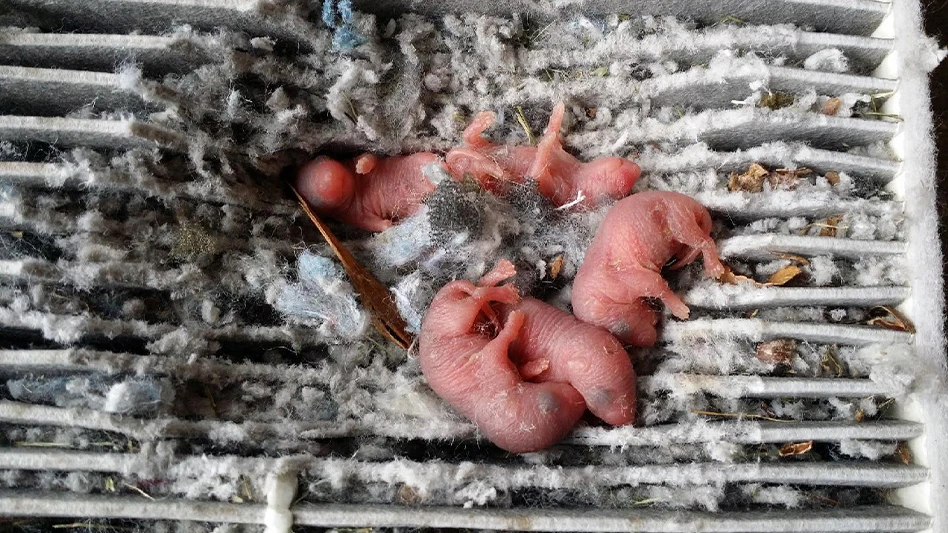
The small spaces found in vehicles and garages also provide protection from predators giving even more reasons for small mammals to move in when temperatures drop. Wright said engine bays and cabin air filters, especially, seem to be common places based on her personal experience, as well as anecdotes she’s heard from colleagues.
“It’s easily carved out and mice will make this cool little depression,” Wright said. “It’s insulative and they just kind of make a little bowl that they lay in. I’ve also seen them underneath vehicle seats where they’ll chew their way up, or in a glove box using all of those napkins that you’ve collected from daily coffee runs.”
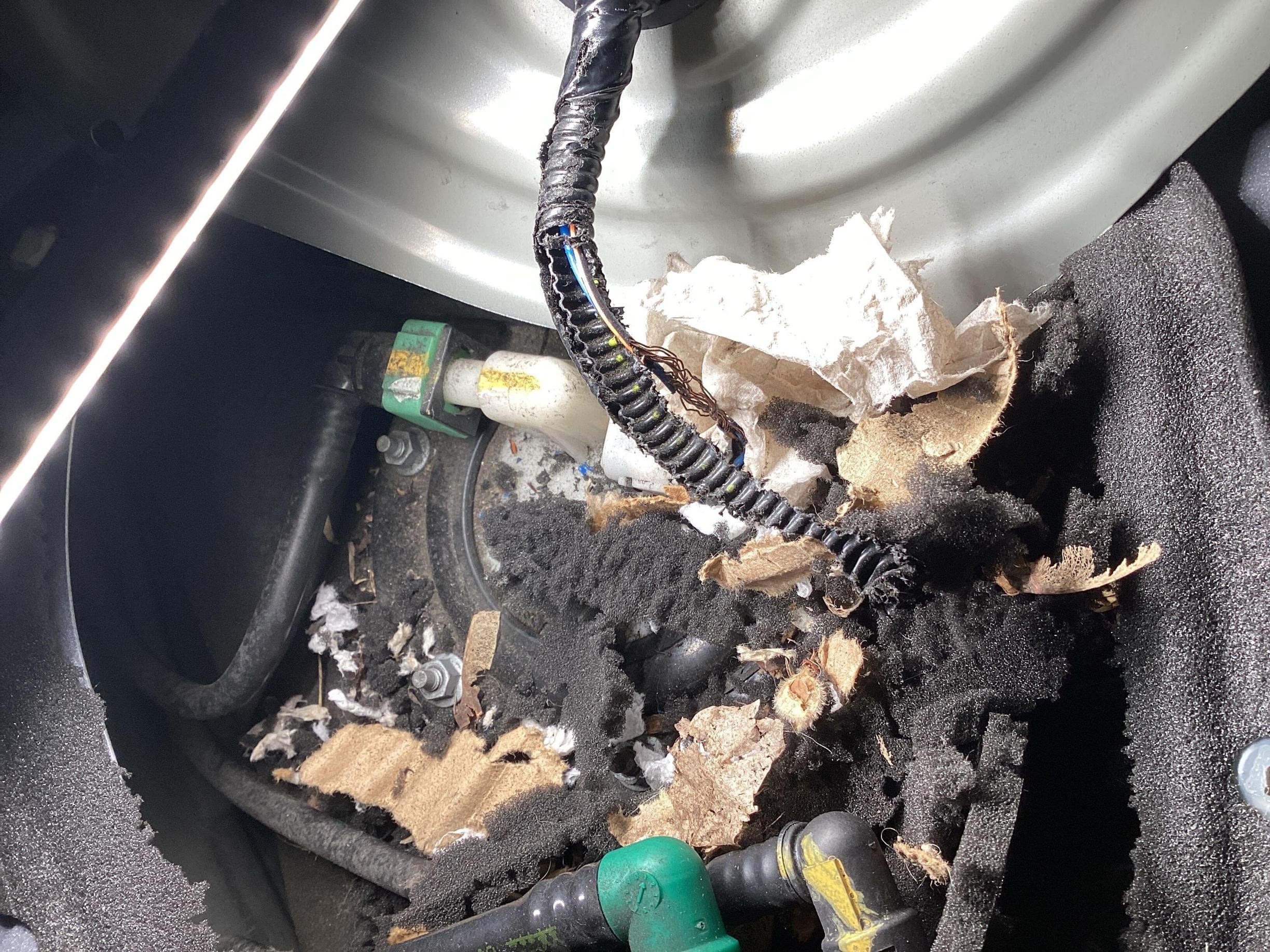
The damage done by rodents when making a vehicle a winter home is not just superficial, in some instances rodents will chew through vital wiring and hosing. Wright said other concerns stem from the gathered materials that pose a fire risk if they are not removed before the vehicle is started.
Contaminants including urine, feces and saliva left by rodents also pose a risk, since they can carry diseases like salmonella, lymphocytic choriomeningitis and hantavirus.
“If you have a mouse nest in that cabin air filter and you’re blowing air that’s contaminated into that vehicle, you could be inhaling little pieces of all of this,” she said.
When assessing a vehicle for a possible rodent invasion, Wright said it is best to look for nests, droppings, stored food, gnaw marks and a smell of ammonia when the vehicle is running. She also recommends storing vehicles in a secure space, like a garage, when possible, to better prevent an invasion.
“If you protect that garage, you protect everything that’s inside of it,” she said. "So, sealing up gaps and holes, using something like a stainless-steel mesh or some other kind of sturdy material, and avoiding spray foam, because rodents can chew through that like it’s made of butter," are recommended practices.
Wright said education is essential to keep pests out of vehicles. Ensuring that the garage door makes a tight seal to the ground, having regular vehicle inspections, using bait stations and other rodent control methods, as well as keeping a vehicle clean can all help in stopping a rodent invasion of a vehicle.
Watch Wright discuss the subject in a video with PCT here.
Latest from Pest Control Technology
- Arrow Exterminators Acquires Hoffman's Exterminating
- PMPs Plan Mera Peak Summit for Parkinson's
- NPMA Announces 2026 Impact Awards for Women in Pest Management Recipients
- Massey Services Promotes Farrell to GIS Director
- Earn CEUs at Next Week's Mosquito Control Virtual Conference
- NCPMA Graduates New Premier Technicians
- Pest Management Foundation Announces New Scholarships
- Coast Releases Report on Fuel Spend